
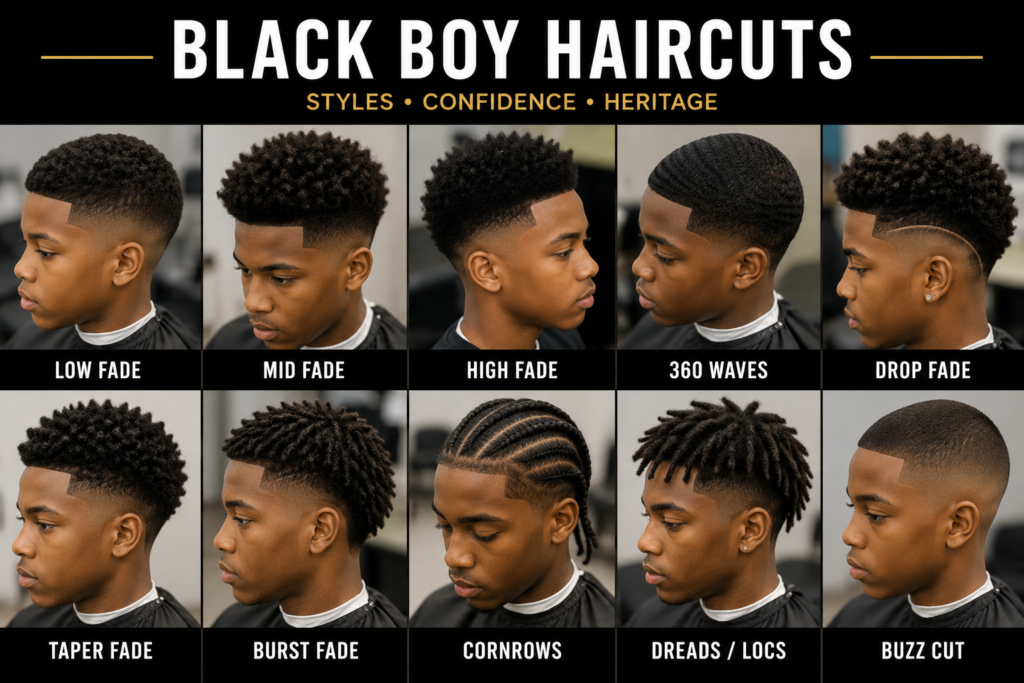
Finding the right cut for a black boy takes more than a photo. Coily and curly hair behaves differently under the clippers. It grows in a different direction from straight hair. That means the technique, the products, and the timing all shift.
This guide breaks down the best black boy haircuts by age, texture, and occasion. You’ll get real barber logic, not just a list of trendy names. We’ll also cover how little black boy haircuts differ from styles for older boys. By the end, you’ll know exactly what to ask for in the chair.
Whether you’re a parent, a barber, or just researching for yourself, this is built to be useful. Every section includes what to say to your barber. We’ve also added upkeep tips so the cut lasts past week one. Let’s get into it.
Why Black Boy Haircuts Deserve Their Own Guide
Black hair typically grows in a coiled, spiral pattern rather than straight down. This shape changes how a fade blends and how curls sit on top. A barber who understands this can create sharper lines and cleaner transitions. One who doesn’t often leaves patchy fades or uneven curl definition.
Density is another factor most generic haircut guides skip entirely. Black hair is frequently thicker per strand, with more strands per square inch. That density holds shape well, which is great for structured styles like the afro or twist-outs. It also means clippers need the right guard and blade angle to avoid bulk.
Moisture matters more here than with straighter hair types. Coily hair loses moisture faster because oils struggle to travel down the twisted shaft. That’s why the best haircuts for black boys pair the cut itself with a simple care routine. We’ll cover that routine later in this guide.
Top Black Boy Haircuts Trending Right Now
These are the styles parents and barbers are requesting most this year. Each one works across a range of ages, from toddlers to teens. We’ve noted which textures suit each style best. Use this section as your quick-reference menu before booking a barber visit.
1. Taper Fade with Design Line
The taper fade is the single most requested cut in black boys haircuts searches. Hair stays longer on top and gradually shortens down the sides and back. A thin design line along the part adds a sharp, custom finishing touch. It works on straight, wavy, curly, and coily textures alike.
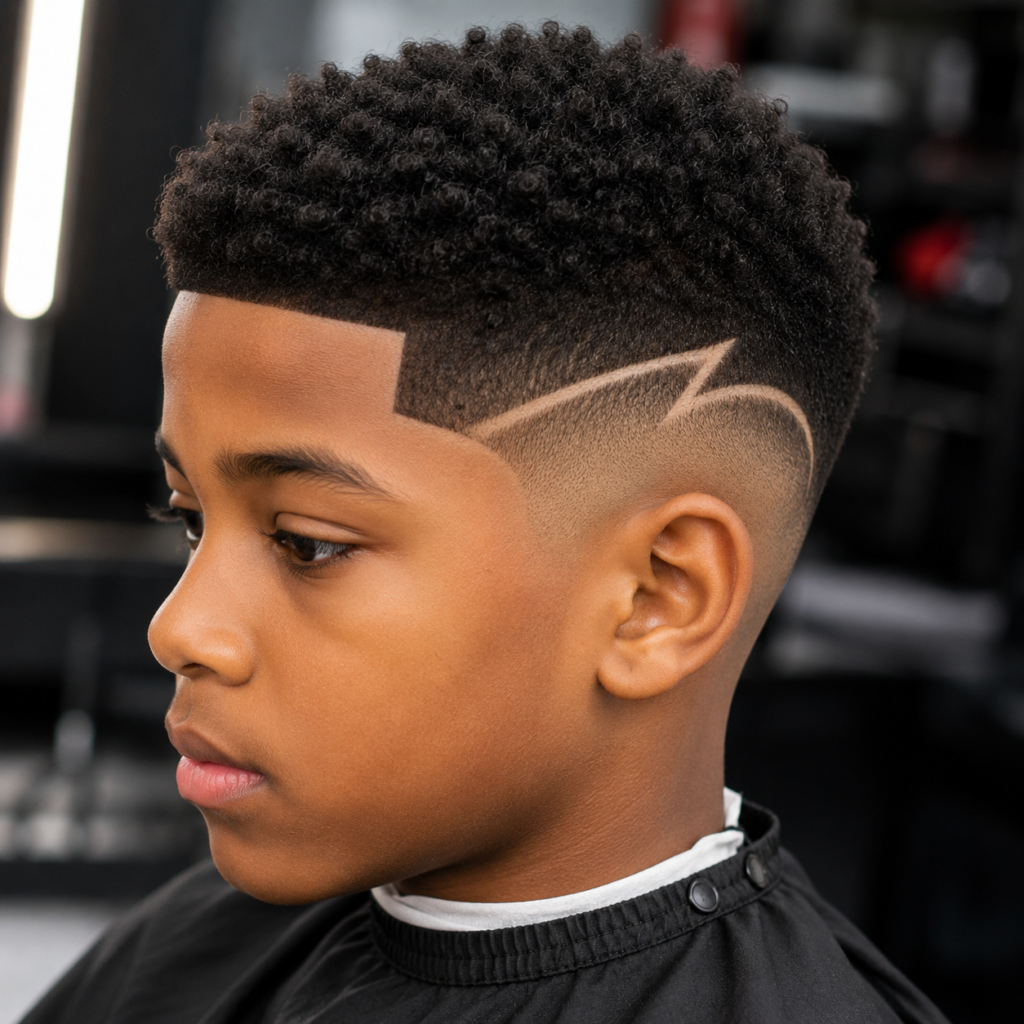
Ask your barber for a “low taper with a skin fade at the neckline.” Specify how much length you want left on top, in inches if possible. Most barbers can add a part line free of charge during the same visit. This cut suits school-age boys who want something clean but still low-maintenance.
2. Classic Afro
The afro remains a timeless choice for boys with type 3C to 4C curl patterns. Hair is cut into a rounded shape and left to grow outward naturally. Regular trims keep the shape even without cutting length dramatically. Moisturizing cream or curl butter keeps the texture soft and defined.
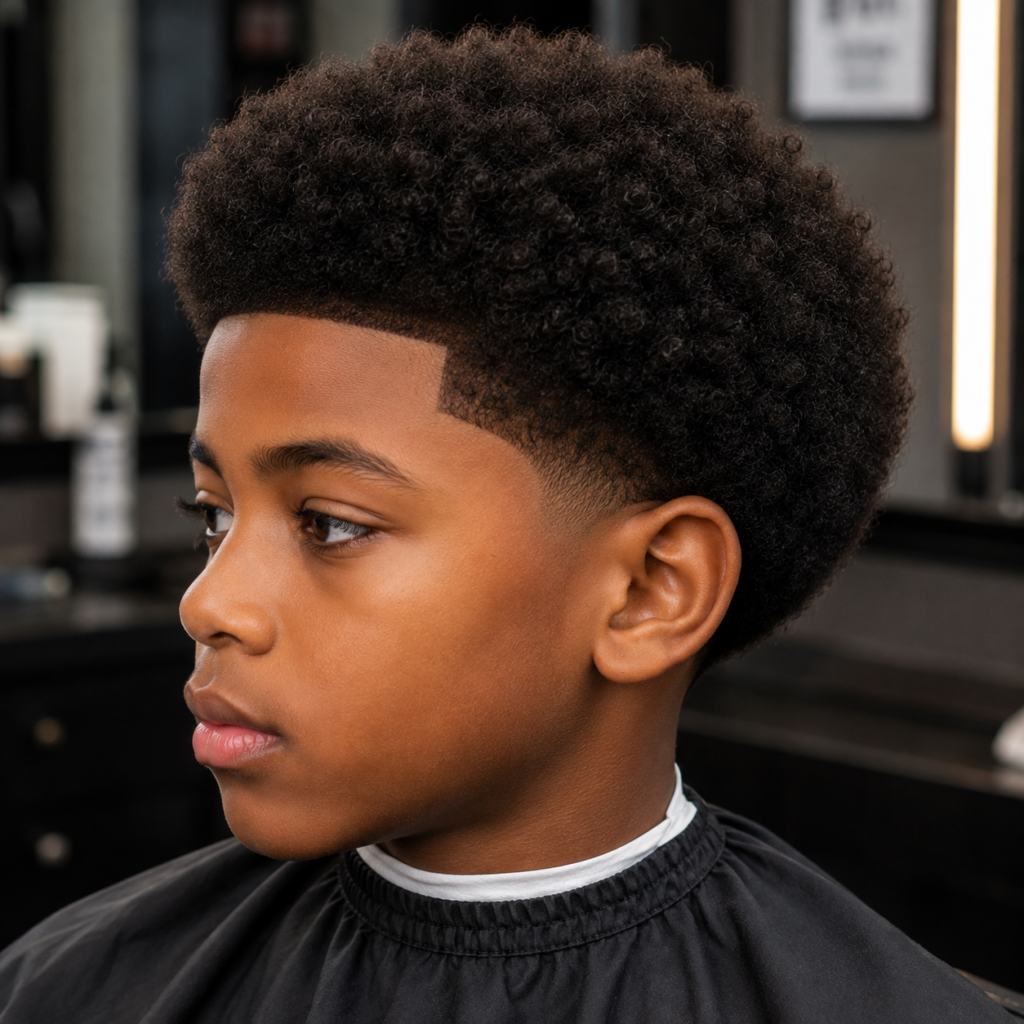
This style photographs beautifully, which makes it a favorite for Pinterest boards. It requires almost no daily styling beyond a light comb-through. Barbers recommend trimming every 6 to 8 weeks to maintain the round silhouette. It’s ideal for boys who don’t want tight lines against their scalp.
3. Braids and Twists
Cornrows, box braids, and two-strand twists are popular for longer black boys haircuts. These protective styles reduce daily manipulation, which helps hair retain length. Patterns can be straight back, curved, or geometric depending on personal taste. A skilled braider can complete most styles in one to three hours.
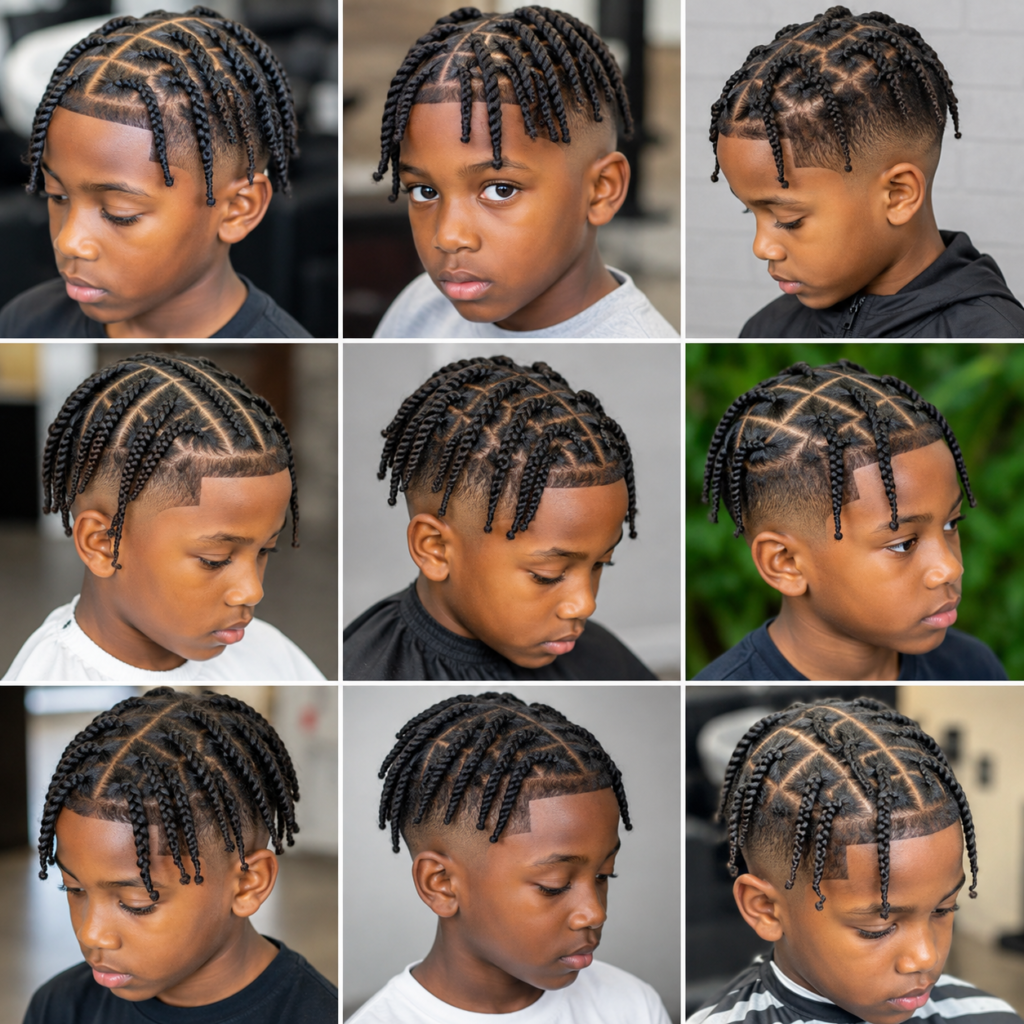
Twists work especially well on medium-length hair between one and four inches. Braids hold longer, often lasting two to four weeks with proper care. Both styles pair well with a shaved design or fade on the sides. This combination is trending heavily across Pinterest style boards right now.
4. Waves with a Low Fade
Waves form when curly or coily hair is brushed consistently in one direction. A low fade underneath keeps the sides neat while the top ripples outward. This look requires a durag or wave cap at night to maintain the pattern. It’s a popular request from preteens and teens who want a more mature style.
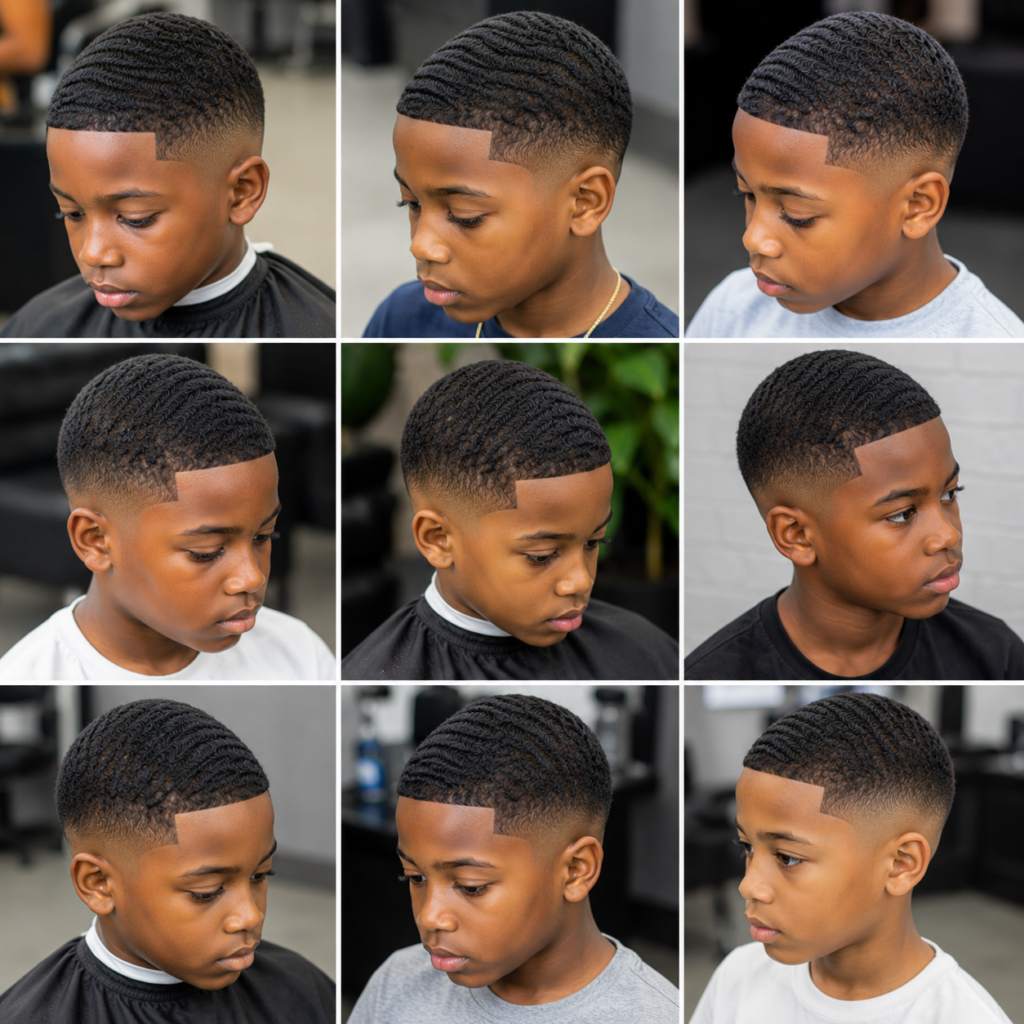
Getting waves takes daily brushing for two to four weeks before the pattern fully forms. A moisturizing pomade helps lock the hair down between brushing sessions. Barbers often call this style “540s” or “360 waves” depending on coverage. Either version pairs well with a sharp shape-up around the hairline.
Little Black Boy Haircuts: What’s Different for Younger Kids
Little black boy haircuts need a gentler approach than styles for older boys and teens. Toddlers often have sensitive scalps and shorter attention spans in the chair. Barbers usually recommend softer fades without harsh skin lines for kids under six. Comfort and speed matter just as much as the finished look.
The mini taper is the most popular request for boys between two and five years old. It mimics the adult taper fade but keeps more length overall for a softer finish. Curls or coils are typically left longer on top, around one to two inches. This gives room to style without needing frequent trims.
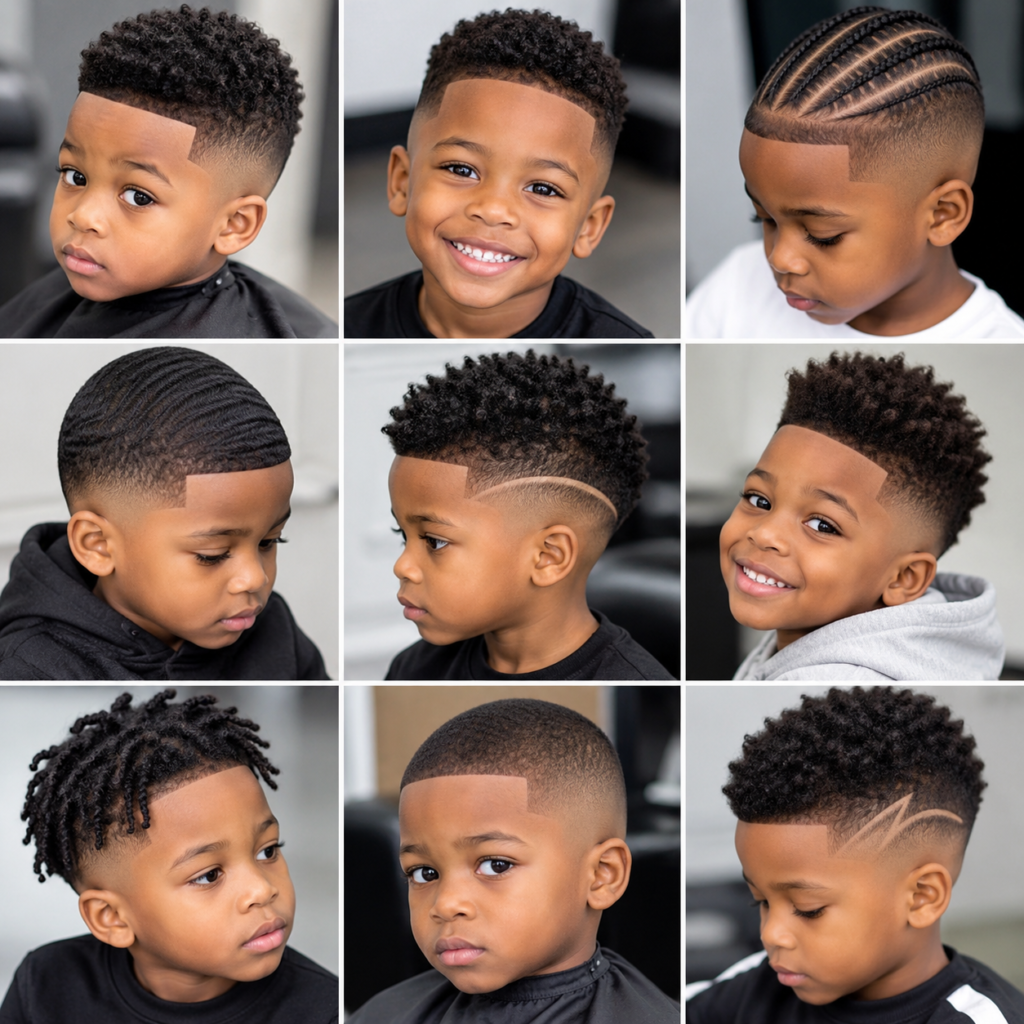
Buzz cuts are another practical option for very young or first-time haircut visits. A single guard length across the whole head keeps things simple and even. This works well for boys who wiggle or feel nervous during their first few cuts. It also grows out evenly, so mistakes are far less noticeable.
For toddlers, ask your barber about clipper-over-comb instead of a skin fade. This technique blends hair without touching the scalp directly with a razor. It’s gentler on sensitive skin and easier for a fidgety child to sit through. Bring a tablet or a favorite toy to help hold their attention.
Taper Black Boy Haircuts: A Closer Look at the Fade
Taper black boy haircuts specifically refer to fades that stay contained near the hairline. Unlike a full fade, a taper keeps more hair on the sides and back. This creates a subtler transition that still looks sharp and intentional. It’s often the safer starting point for boys new to fades.
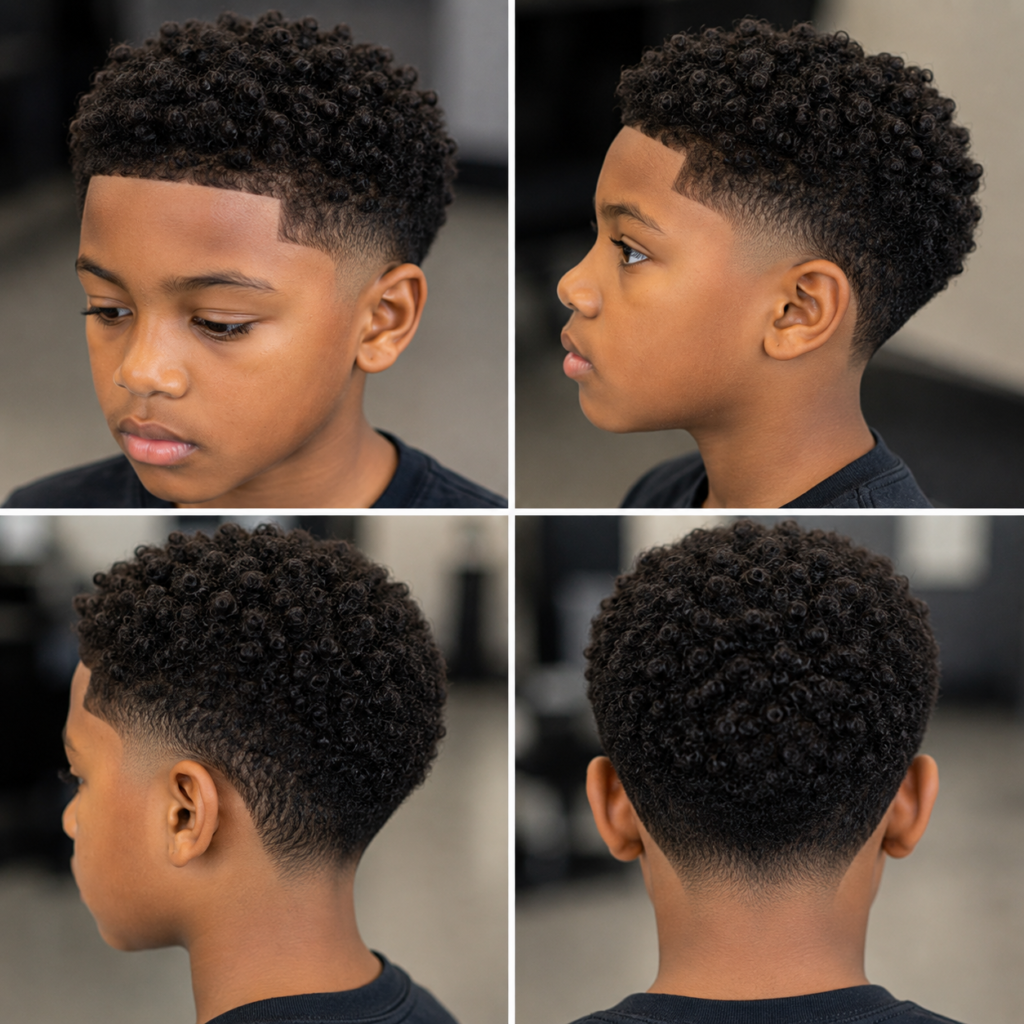
There are three common taper heights worth knowing before your appointment. A low taper starts fading just above the ears and neckline. A mid taper begins around temple height for more visible contrast. A high taper starts near the crown, creating the boldest, most dramatic transition.
Texture affects how crisp a taper looks once it’s finished and styled. Coily hair holds a taper’s shape well because the curl pattern adds natural volume. Straighter hair may need product to keep the taper looking intentional rather than simply short. A light hold gel or edge control works well for both.
When booking, bring a reference photo showing the exact taper height you want. Barbers interpret “taper” differently, so visuals prevent miscommunication in the chair. Mention your child’s hair texture and how much length to leave on top. This small step saves a return trip for adjustments later.
Haircuts for Black Boys by Hair Texture
Not every black boy has the same curl pattern, so haircuts for black boys vary by texture type. Understanding your child’s specific pattern helps you choose a style that actually holds up. Below is a breakdown by common texture categories. Use this as a starting point, not a strict rule.
Type 3A to 3C (curly): These curls form loose to tight spirals with visible definition. Layered cuts and curl-focused fades show off natural bounce and shape. A curl-defining cream helps prevent frizz between wash days.
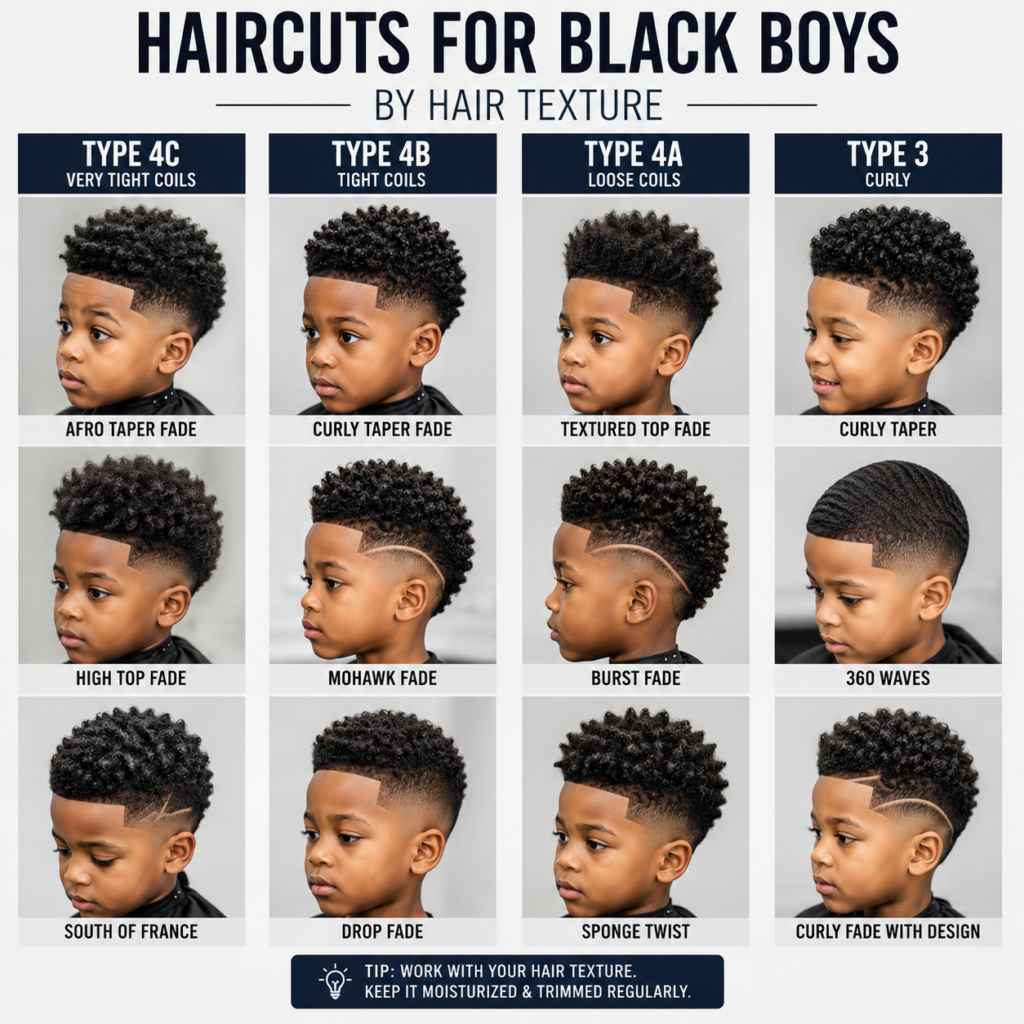
Type 4A to 4B (coily): These patterns are tighter, springier coils with more shrinkage when dry. Afros, twist-outs, and structured fades work particularly well here. Moisture is the priority, since this texture dries out fastest.
Type 4C (tightly coiled): This is the tightest curl pattern, often appearing almost zig-zagged up close. Protective styles like braids and twists help retain length and moisture. Low-maintenance buzz cuts are also a strong option for busy families.
Black Boys Haircuts for School, Photos, and Special Occasions
Different settings call for different levels of polish and formality. A school haircut usually needs to survive gym class, recess, and five straight days of activity. Special-occasion cuts, on the other hand, are about looking sharp for a few key hours. Knowing the difference helps you brief your barber correctly.
For everyday school wear, choose low-maintenance black boys haircuts that don’t need daily restyling. A taper fade with a slightly longer top works well here. It looks neat without requiring gel or a comb every single morning. Buzz cuts and mini tapers are also excellent choices for younger, more active kids.
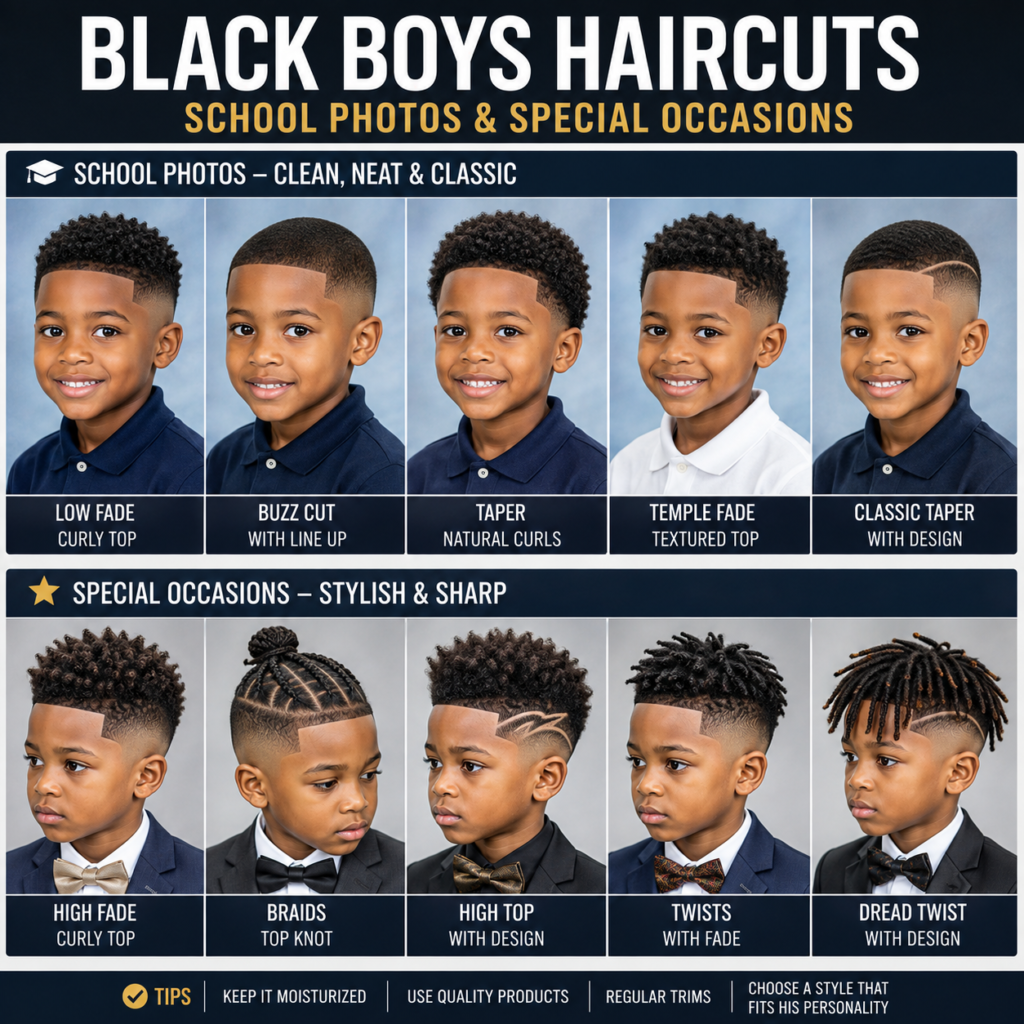
For picture day, graduation, or a family event, a fresh trim two to three days beforehand looks best. Hair settles slightly after a cut, softening any harsh clipper lines. Ask your barber for a light line-up around the hairline and edges. A small amount of edge control adds shine without looking overly styled.
Consider booking recurring appointments every three to four weeks to keep styles sharp year-round. Many barbershops offer standing time slots for regular child clients. This consistency also helps kids grow more comfortable with the haircut process. Comfort in the chair often leads to better sitting behavior over time.
Mixed Boys Haircuts: Blending Two Textures
Mixed boys haircuts often combine two different curl patterns within the same head of hair. This can mean tighter coils at the crown and looser waves near the hairline. Barbers need to account for both textures when planning a fade or taper. One-size styling advice rarely works well here.
Layered cuts tend to perform best on mixed textures because they follow natural curl clusters. Rather than forcing uniform length, layers let each curl type fall where it wants. This reduces frizz and creates a more effortless, undone look. It also cuts down on daily styling time significantly.
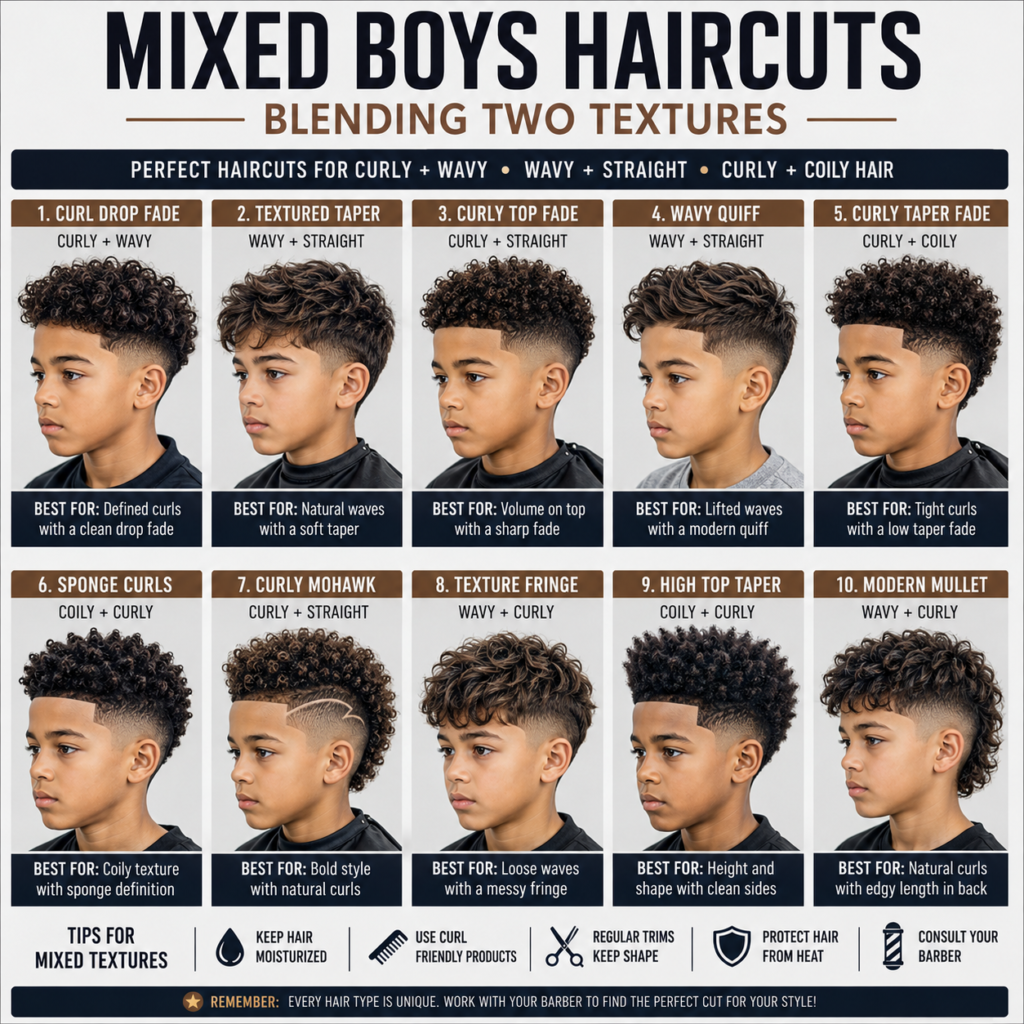
Fades still work beautifully on mixed hair, but blending takes a bit more skill. A barber may use a combination of clippers and shears for a smoother transition. Ask specifically for someone experienced with textured or multicultural hair types. This single question often makes the biggest difference in the final result.
Product choice matters more for mixed textures than for a single, consistent curl pattern. A lightweight curl cream usually works better than heavier butters or pomades. Heavy products can weigh down looser curls while barely reaching tighter coils. Test a small amount first and adjust based on how the hair responds.
Black Boy Haircuts vs. White Boy Haircuts: What Actually Differs
The core difference between black boy haircuts and white boy haircuts comes down to hair texture, not style trends themselves. Straighter hair, more common in white boy haircuts, tends to lie flatter against the head. Coily hair adds natural volume and holds shapes like the afro without extra product. Both textures can wear nearly identical cuts, like tapers, fades, and buzz cuts.
Fade technique is where barbers adjust most between the two textures. Straight hair often blends with fewer clipper passes because it lies in one direction. Coily hair may need cross-hatching or additional blending passes to avoid patchy transitions. This isn’t about difficulty, just a different technical approach.
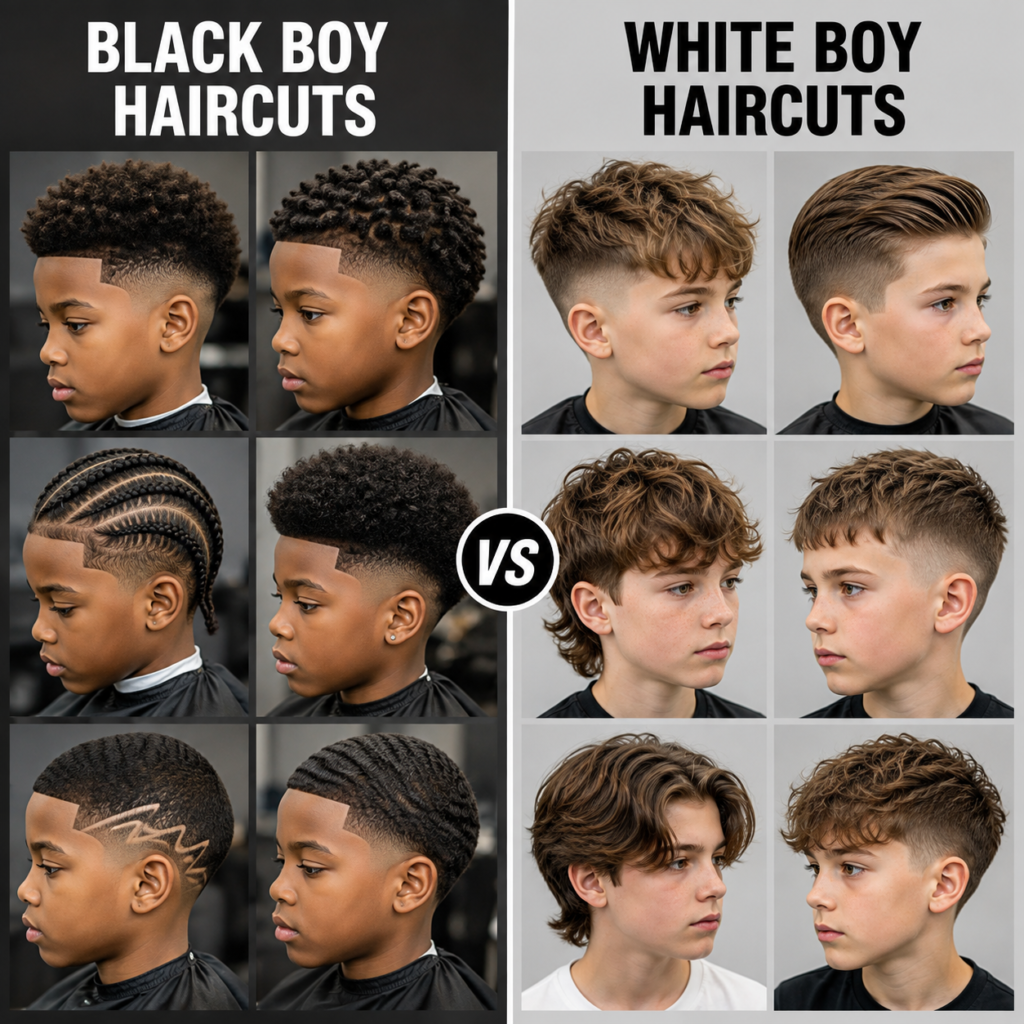
Styling routines differ more than the cuts themselves do in most cases. Coily and curly hair generally needs more moisture to stay manageable day to day. Straighter hair often relies more on hold products like wax or clay. Neither routine is more complex, just suited to how each hair type naturally behaves.
The bottom line: almost any trending cut can work across hair types with small technique tweaks. A skilled barber adjusts their approach based on texture, not the name of the style. If you’re searching both black boy haircuts and white boy haircuts for inspiration, that’s smart. Cross-texture research often reveals creative combinations worth trying.
How to Ask Your Barber for the Right Cut
Clear communication prevents the most common haircut disappointments. Bring one or two reference photos instead of describing a style verbally. Photos remove guesswork about length, fade height, and finishing details. Barbers appreciate visual references far more than vague descriptions like “make it neat.”
Mention your child’s hair texture and any past haircut issues upfront. If previous fades looked patchy or uneven, say so before the clippers start. This gives your barber a chance to adjust technique proactively. It also builds trust for future visits at the same shop.
Always specify a guard number or length in inches when possible. “Short” means different things to different barbers and different clients. A number 2 guard on the sides with scissor-cut length on top is specific and clear. Specificity is the single best tool for avoiding a haircut you don’t love.
At-Home Maintenance: Making the Cut Last
A great haircut fades fast without the right at-home care routine. Wash hair every 5 to 7 days using a moisturizing, sulfate-free shampoo. Washing too often strips natural oils that coily and curly hair need most. Follow every wash with a lightweight leave-in conditioner to lock in moisture.
Nighttime care matters just as much as the wash routine itself. A satin or silk bonnet prevents friction that causes frizz and breakage overnight. Cotton pillowcases absorb moisture and roughen curl texture over time. Swapping to satin is one of the cheapest upgrades for longer-lasting styles.
Touch up fades and tapers every two to three weeks for a crisp look. Hairlines and neck areas grow out fastest and need the most frequent attention. Many barbershops offer discounted “line-up only” appointments between full haircuts. This keeps the style sharp without paying for a full service every time.
For braids, twists, or protective styles, moisturize the scalp every two to three days. A light oil, like jojoba or grapeseed, prevents itching and buildup. Avoid heavy products that can cause residue along the braid or twist pattern. A satin scarf at night also extends the life of these styles significantly.
Common Haircut Mistakes to Avoid
Cutting too much length on the first visit is a frequent parent regret. Once hair is gone, there’s no shortcut back to the original length. Start conservative, especially with a new barber or an unfamiliar texture. You can always go shorter at the next appointment.
Skipping a patch test with new products causes unnecessary scalp irritation. Coily and curly hair can react to heavy silicones or fragrances differently than expected. Apply a small amount behind the ear first and wait 24 hours. This simple step prevents a bad reaction on the whole scalp.
Waiting too long between fade touch-ups is another common issue. A sharp taper starts looking overgrown and shapeless after roughly three weeks. Set a recurring reminder rather than waiting for the style to visibly fall apart. Consistency is what makes a fade look intentional rather than accidental.
Using the wrong comb can also damage curl pattern over time. Fine-tooth combs pull and break coily strands, especially when hair is dry. A wide-tooth comb or detangling brush works far better on textured hair. Always detangle on wet hair with conditioner still in for the least breakage.
Finally, choosing a barber without textured-hair experience often leads to uneven, patchy fades. Not every barbershop specializes in coily or curly textures equally well. Read reviews, check portfolio photos, and ask directly about experience with your child’s hair type. A five-minute phone call before booking can save a disappointing haircut.
Products Worth Adding to the Routine
A good leave-in conditioner is the single most valuable product for textured hair. Look for one with glycerin, shea butter, or aloe near the top of the ingredient list. Apply it to damp hair right after washing for the best absorption. This one step dramatically reduces daily frizz and dryness.
Edge control helps define hairlines after a fresh line-up or taper. A small amount, smoothed with a soft brush, keeps edges sharp for hours. Avoid overusing it, since buildup can look greasy and clog pores near the hairline. A pea-sized amount is almost always enough for boys’ hair.
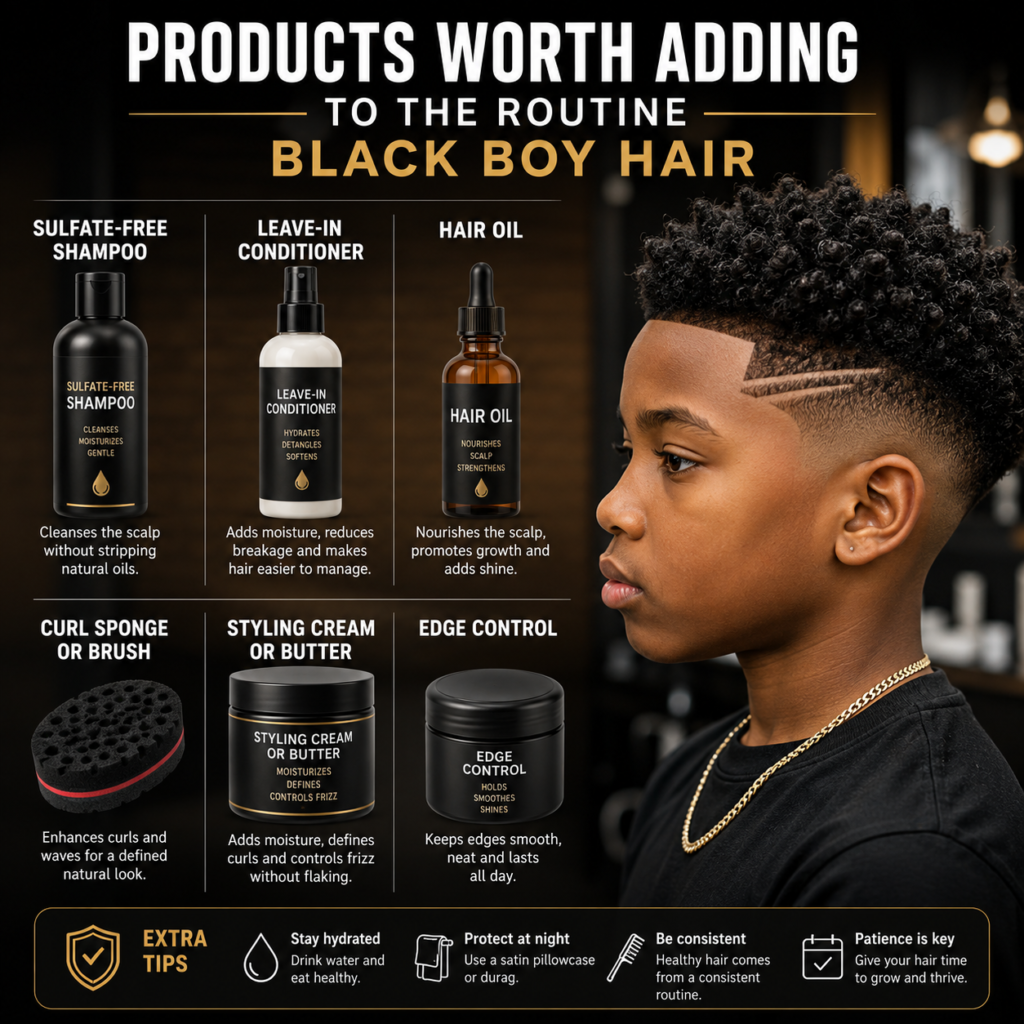
For curl definition, a lightweight curl cream outperforms heavier butters in most cases. Butters work well for very dry, coarse hair but can weigh down looser curls. Start light and build up if more hold or moisture is needed. This prevents the crunchy or overly greasy look some products cause.
A boar-bristle or nylon-bristle brush helps train waves and distribute natural oils evenly. Brushing in one consistent direction, morning and night, builds the wave pattern over time. Pair it with a durag during sleep for the fastest, most even results. This combination is standard practice among boys chasing the waves trend.
Finally, a satin bonnet or pillowcase protects any style overnight, regardless of cut. Cotton fabric absorbs moisture and creates friction that leads to frizz and breakage. Satin or silk lets hair glide instead of catching on the fabric. It’s an inexpensive swap that extends the life of every haircut on this list.
Frequently asked
questions
Everything parents ask us before bringing their child in for a first cut, a fresh fade, or a fix.
Still have a question?Our barbers are happy to walk you through it.
Book a visitFinal Thoughts
The best black boy haircuts start with understanding texture, not just chasing trends. From little black boy haircuts to taper fades and protective styles, technique matters most. A clear conversation with your barber, backed by good reference photos, prevents most disappointments. Pair the right cut with a simple care routine, and the style will hold up for weeks.
Whether you’re exploring mixed boys haircuts, comparing black boy haircuts vs white boy haircuts, or just hunting for your next great style, this guide has you covered. Save your favorite look, book the appointment, and walk in with confidence.