
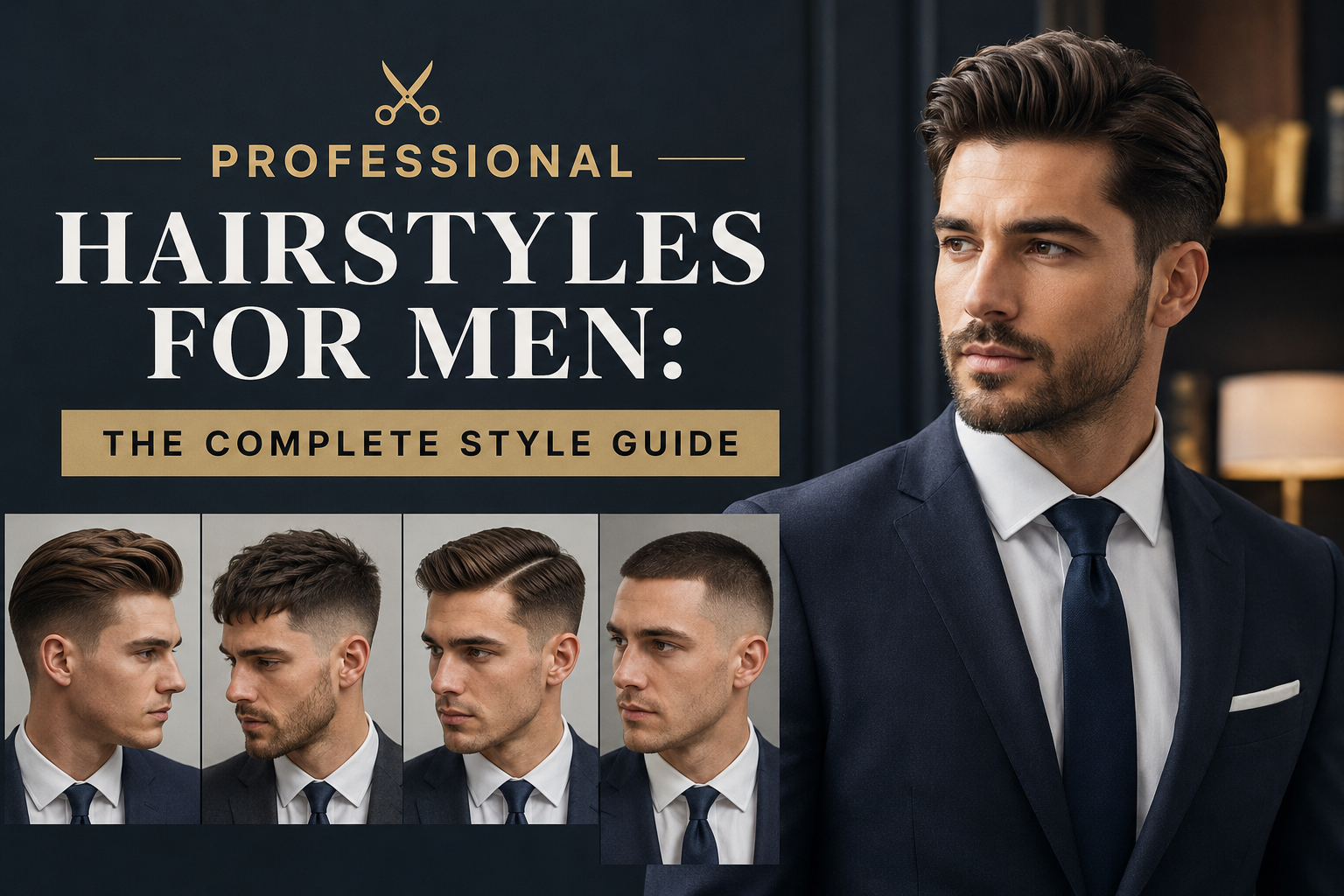
This is the complete men’s hairstyles guide for 2026: every hairstyle category explained, from the shortest buzz to the longest flowing styles, with face shape guidance, product recommendations, and daily styling advice for every option. While a haircut describes how the hair is cut, a hairstyle describes how the hair is worn and finished. This guide covers both what to get at the barbershop and how to style it at home.
Men’s hairstyles in 2026 span a wider range than at any previous point in grooming history. Short textured crops sit alongside long natural styles, classic side parts coexist with modern curtain bangs, and low-effort natural looks are as valued as high-craft styled results. This guide navigates every option.
Men’s Hairstyles by Length: Quick Reference
| Style Category | Length Range | Daily Styling Time | Best For | Key Products |
|---|---|---|---|---|
| Buzz / very short | Under 1 inch | 0 minutes | Low maintenance, any lifestyle | None required |
| Short textured | 1 to 2 inches | 2 to 5 minutes | Modern, casual, professional | Matte clay or paste |
| Short classic | 1 to 3 inches | 5 to 10 minutes | Professional, formal | Pomade, cream |
| Medium casual | 3 to 5 inches | 5 to 10 minutes | Versatile, lifestyle flexibility | Cream, light clay |
| Medium styled | 3 to 6 inches | 10 to 15 minutes | Pompadour, quiff, slick back | Pomade, strong clay |
| Long natural | 5+ inches | 5 to 10 minutes | Natural, bohemian, artistic | Leave-in conditioner, oil |
| Long styled | 5+ inches | 10 to 20 minutes | Man bun, braid, flow | Oil, leave-in conditioner |
Short Men’s Hairstyles
1. Buzz Cut
The buzz cut is applied with a single clipper guard length all over. No styling required, no products needed. The length is determined by the guard number: number one (one-eighth inch) for a near-shave shadow; number four (half inch) for a fuller buzz. The buzz cut suits oval, square, and diamond face shapes and works with all hair types. Daily maintenance is zero. The style exists as it grows. Fresh cuts every two to three weeks keep the length consistent. The buzz cut is the definitive no-effort, all-performance men’s hairstyle. See our men’s haircuts guide for buzz cut guard number comparisons.
2. Textured Crop with Fade
The textured crop with mid or high skin fade is the dominant men’s hairstyle of the mid-2020s: a short, choppy top section styled with matte clay or paste, combined with clean faded sides. The textured crop’s top section typically sits between one and two and a half inches, with the texture created by scissor work and finished with a small amount of product. Daily styling: apply a pea-sized amount of matte clay to slightly damp hair, work through with fingers, and shape naturally. No heat tools required. Suits all face shapes. Fresh cuts every three weeks maintain the fade and fringe line. See our professional hairstyles guide for workplace-appropriate textured crop variations.
3. French Crop
The French crop features a horizontal fringe that falls forward onto the forehead, blunt-cut or textured, with close-cut or faded sides and back. Daily styling is minimal: the fringe sits naturally with no product required; matte paste can enhance texture if preferred. The French crop suits oval, square, and diamond face shapes and works particularly well for men with high foreheads. It is one of the lowest-maintenance non-buzz hairstyles for men. The fringe requires no daily effort to look intentional. Fresh cuts every three weeks keep the fringe line sharp. For Asian hair specifically, see our Asian hairstyles guide for French crop variations suited to straight, dense hair.
4. Crew Cut
The crew cut keeps one to two inches on top tapering into shorter sides. It is the most universally appropriate professional men’s hairstyle. Daily styling is minimal: a light cream or pomade combed through the top gives it a finished appearance in under five minutes. No heat required. All face shapes carry the crew cut. It suits straight, wavy, and coarse hair types equally. The crew cut works in every professional environment from creative agencies to corporate finance. It is the safest hairstyle choice available to men. See our professional haircuts guide for crew cut styling by industry.
5. Classic Side Part
The classic side part combs the top hair to one side from a defined parting line, creating a clean, polished appearance. It requires straight or lightly wavy hair and three to five minutes of daily styling with a comb and medium-hold product. The classic side part is the most formally appropriate longer short haircut available. It suits every conservative professional environment and formal occasion. All face shapes carry it. The modern side part uses lighter products (matte cream or light clay) for a less structured, more relaxed finish compared to the high-shine pomade of the traditional version. See our professional haircuts for men guide for side part product and styling advice by workplace.
6. Ivy League
A longer crew cut, two to three inches on top, that provides enough length to part and style while maintaining the clean, tailored proportions of the crew cut. The Ivy League is the ideal haircut for men transitioning between very short professional cuts and longer styled looks. Daily styling: a small amount of pomade or cream combed through the top gives a polished, finished appearance. It suits all face shapes and all professional environments. The Ivy League is the choice of men who want styling versatility. The top can be worn combed, natural, or slightly textured depending on the occasion, without committing to a fully long style.
Medium Men’s Hairstyles
7. Quiff
The quiff lifts and sweeps the front section of the hair upward and backward: shorter and more textured than the pompadour, with a natural rather than slick finish. The quiff requires three to four inches of top length and five to ten minutes of daily styling. Daily process: apply medium-hold matte or low-sheen clay to slightly damp hair, blow-dry the front upward with a round brush or fingers, then shape with hands. The quiff suits oval, square, oblong, and heart face shapes. It adds height that benefits most face types. Modern textured quiff versions require only product and hand styling, with no brush or blow dryer needed. See our professional hairstyles guide for office-ready quiff styling.
8. Pompadour
The pompadour builds a voluminous, swept-back front section. The larger and more defined the volume, the more formal and dramatic the effect. Modern pompadours range from the low, relaxed version (minimal volume, matte product) to the classic high pompadour (maximum volume, high shine). Daily styling: blow-dry the front section upward and back while the hair is damp, then apply pomade and comb into shape. Ten to fifteen minutes for the full version; five minutes for the low relaxed pompadour. The pompadour suits oval, square, and heart face shapes. See our professional hairstyles for men guide for the work-appropriate pompadour.
9. Slick Back
The slick back combs all the top hair straight back from the forehead with no parting line. The classic version uses high-hold, high-shine pomade for a wet, lacquered look. Modern versions use lower-hold, lower-shine products for a natural finish. The slick back requires three to five or more inches of top length and straight or slightly wavy hair. Daily styling: five minutes with a comb and product. The slick back suits oval, oblong, and square face shapes. The slicked-back undercut and slicked-back fade pair the styling approach with modern clipper work on the sides for a contemporary version of the classic look. See our men’s haircuts guide for undercut and fade pairings.
10. Wolf Cut
The wolf cut blends 1970s shag-cut aesthetics with modern curtain bang styling. It is shaggy, layered, and textured throughout. The top section is left longer with heavy layering; the sides and back are shorter but also layered for a shaggy, natural finish. The result has a deliberately unfinished, undone appearance that is fully intentional. The wolf cut suits oval, square, and heart face shapes and works particularly well on wavy and curly hair, where the natural texture enhances the layered shag aesthetic. Daily styling: apply a curl cream or light oil to damp hair and allow to air dry. Five minutes of effort for a fully styled look. For the middle-parted wolf cut variation, see our middle part hairstyles guide.
11. Curtain Bangs and Curtain Hair
Curtain bangs, where the front section parts in the middle and falls to either side of the forehead, have become one of the most popular men’s hairstyle choices of the 2020s. The curtain bang requires at least three to four inches of front length and falls naturally with minimal styling. Daily styling: apply a small amount of cream or oil to damp hair, part in the middle, and allow to air dry or blow-dry gently outward. The curtain bang suits oval, square, and heart face shapes. It is the most low-effort medium-length look for men who want visible style without significant daily investment. See our complete middle part hairstyles for men guide for curtain bang variations.
12. Wavy Natural Style
Men with naturally wavy hair (Type 2A to 2C) have an enormous styling advantage: the wave pattern creates natural texture and movement that many men pay stylists to achieve with straight hair. The wavy natural style lets the natural wave pattern express at medium length, three to six inches, with minimal product enhancement. Daily styling: apply a small amount of leave-in conditioner or curl cream to damp hair, scrunch upward, and air dry or diffuse. The result is naturally textured, full, and attractive without daily effort. All face shapes carry wavy natural styles well. Products to avoid: heavy waxes, strong pomades, and anything that disrupts the natural wave pattern.
Long Men’s Hairstyles
13. Man Bun
The man bun requires eight to twelve inches of length across the top to execute cleanly. The classic man bun gathers all the hair at the crown; the low bun sits at the nape. The undercut man bun, with closely clipped sides and a long top bun, is the most popular combination. Daily styling: five minutes to gather, smooth, and secure. The man bun is one of the most practical long hairstyles for men who are physically active. It keeps the hair completely off the face and neck. Oval and oblong face shapes carry it best. Regular deep conditioning prevents long hair from becoming dry and brittle. See our haircuts guide for the undercut pairing detail.
14. Long Natural Flow
“Flow” describes long hair that falls naturally around the face and neck without being pulled back or deliberately styled into a specific shape. It requires twelve or more inches of top length. Flow suits straight and wavy hair types naturally; curly hair develops its own version of flow through the curl pattern. Daily styling: five minutes with leave-in conditioner and light oil. The flow style does not need to look deliberately styled. Oval and oblong face shapes carry flow best. The long hair with curtain part is a specific flow variation that suits square and heart faces by softening the jaw and forehead. See our middle part hairstyles guide for long flow with centre part detail.
15. Viking and Long Warrior Styles
Long, braided, or deliberately rugged hairstyles inspired by Norse, Celtic, or historic warrior aesthetics. These include loose long hair with beard combinations, braided styles, undercut top knots, and Viking braid variations. These are expression-first hairstyles, suited to men who actively choose hair as a statement of identity rather than simply grooming compliance. See our warrior cut guide and Viking haircuts guide for the full range of historic-inspired long men’s hairstyles with detailed face shape and execution guidance.
16. Natural Curly and Afro Styles
Natural curly and afro styles embrace Type 3 and Type 4 hair in its natural state, without heat straightening or heavy processing. The natural afro allows the hair to grow outward in its natural curl pattern and maintains a rounded shape. The tapered afro combines natural volume on top with a fade or taper at the sides. Defined curl styles use curl-defining creams and gels to enhance individual curl definition. Daily styling: apply curl cream or gel to damp hair, section and scrunch, air dry or diffuse. Oval, diamond, and heart face shapes benefit most from the volume that natural styles create. Protective moisture, including regular deep conditioning and nightly satin bonnet use, is the foundation of healthy natural hair care. See our men’s haircuts guide for natural afro fade and taper pairing.
17. 80s Inspired Styles
1980s men’s hairstyle aesthetics have experienced a significant cultural revival. The mullet, the perm, the feathered shag, and the high-volume quiff all carry renewed relevance as self-aware style statements. The modern mullet in particular has evolved from ironic reference to genuine mainstream popularity, particularly in Australia and the UK. The 80s-inspired perm (soft, loose wave rather than tight curl) suits men with naturally straight hair who want texture and volume. See our 80s hairstyles for men guide for the full range of decade-inspired options with modern execution advice.
18. Asian Men’s Hairstyles
Men with Asian hair, typically straight, dense, with strong growth direction, have specific style considerations. The hair’s natural strength and density creates excellent volume and structure for certain styles, but resists others. The two-block cut, the textured crop, the perm, the curtain bang, and the slick back all perform exceptionally well with Asian hair characteristics. The two-block cut is specifically popular across East and Southeast Asia. It keeps the top long while clipping the sides and back short with no fade gradient, creating a sharp disconnected contrast. See our complete Asian hairstyles for men guide for the full two-block detail, perm considerations, and style-by-hair-density guidance.
19. Older Men’s Hairstyles
Hair changes after 50. Density, texture, and grey presence all shift the styling calculus. The best hairstyles for men over 50 work with the hair as it is rather than trying to replicate younger-era styles. Short, clean cuts (crew cut, Ivy League, short side part, textured crop) almost always outperform longer styles on thinning hair. Gray and salt-and-pepper hair texture benefits from regular conditioning and products that add softness. See our detailed haircuts for men over 50 guide and thinning hair haircuts guide for the complete age-appropriate styling resource.
20. Middle Part Styles
Middle part hairstyles, where the parting runs centrally through the top of the hair rather than to one side, have become one of the dominant men’s styling trends of the 2020s. This was driven by the popularity of curtain bangs, the wolf cut, and the revival of 1990s aesthetics. The middle part suits oval, square, and heart face shapes best; it typically softens strong jaw lines and frames wider foreheads effectively. See our complete middle part hairstyles for men guide for the full twenty-style breakdown with face shape analysis and styling technique for each variation.
Men’s Hair Products Guide
| Product | Hold Level | Finish | Best For |
|---|---|---|---|
| Matte clay | Medium to strong | Matte / natural | Textured crop, modern quiff, wolf cut |
| Water-based pomade | Medium to strong | Low to medium sheen | Side part, Ivy League, modern pompadour |
| Oil-based pomade | Strong | High shine | Classic side part, slick back, formal styles |
| Hair cream | Light to medium | Natural | Crew cut, natural styles, wavy hair |
| Curl cream | Light | Natural | Curly hair, wavy styles, natural afro |
| Hair paste | Medium | Low sheen | Textured, casual daily styles |
| Leave-in conditioner | None | Natural | Long hair, curly hair, moisture maintenance |
| Beard and hair oil | None | Natural | Long hair, afro, moisture and shine |
Frequently Asked Questions
What men’s hairstyle suits my face shape?
Oval faces carry any hairstyle. Square faces benefit from texture and volume that softens the strong jaw, with quiffs, pompadours, and textured crops all working well. Round faces benefit from height, so quiffs, high fades, and pompadours elongate effectively. Oblong and rectangle faces benefit from horizontal emphasis: crew cuts, French crops, and Caesar cuts add visual width. Heart faces benefit from styles with volume at the jaw level and should avoid very high, narrow tops. Diamond faces benefit from styles with width at crown and forehead, including natural styles, textured crops, and side parts. Use the face shape information in this guide as a starting point and confirm with your barber, who can assess your specific proportions in person.
What men’s hairstyle requires the least maintenance?
The buzz cut requires zero daily maintenance, the lowest possible daily effort of any style. The shaved head is similarly effort-free, adding only scalp moisturiser to the routine. The textured crop and French crop require two to five minutes of daily product application with no heat tools. These are the lowest-maintenance non-buzz options. The natural wavy style and natural curly/afro style require five minutes of damp-hair product application and air drying. The highest-maintenance styles are the pompadour, slick back, and classic side part, which require heat tools, combing, and product application totalling ten to fifteen minutes daily.
Which men’s hairstyle looks best with a beard?
The shaved head with full beard is the most commanding hair and beard combination for men. The contrast between bare scalp and full beard creates a deliberately masculine, intentional aesthetic. The textured crop with short beard or stubble is the most popular everyday pairing. The pompadour or slick back with a medium beard creates a full grooming statement that suits formal and social contexts equally. The undercut with any beard length creates strong visual contrast. The key principle: the contrast between haircut and beard should feel deliberate rather than incidental. See our beard and mustache styles guide and beard styles guide for hair-and-beard pairing detail.
How do I find the right hairstyle for my hair type?
Straight hair (Type 1) handles virtually any style but needs product to create texture. Wavy hair (Type 2) benefits from styles that embrace natural movement, such as wolf cuts, curtain bangs, natural styles, and textured crops. Curly hair (Type 3) benefits from moisture-first styling and styles that work with curl definition rather than against it. Coily/afro hair (Type 4) benefits from protective moisture care and styles that honour the natural curl pattern. The fundamental rule: work with your natural hair texture rather than against it. Any style you see that requires dramatically different hair from your own will require either chemical processing or significant daily effort. Factor that into your decision. For hair-type-specific style guides, see our complete resources linked throughout this guide.
This complete guide covers every major men’s hairstyle category. For deeper detail on specific topics, explore our full resource library: men’s haircuts guide, professional hairstyles for men, professional haircuts for men, middle part hairstyles, Asian hairstyles for men, haircuts for men over 50, 80s hairstyles for men, warrior cuts, and beard styles for men.