Blog

  • 20 Best Haircuts for Balding Men: Styles That Actually Work for Thinning Hair (2026)

    20 Best Haircuts for Balding Men: Styles That Actually Work for Thinning Hair (2026)

    Best Haircuts for Balding Men

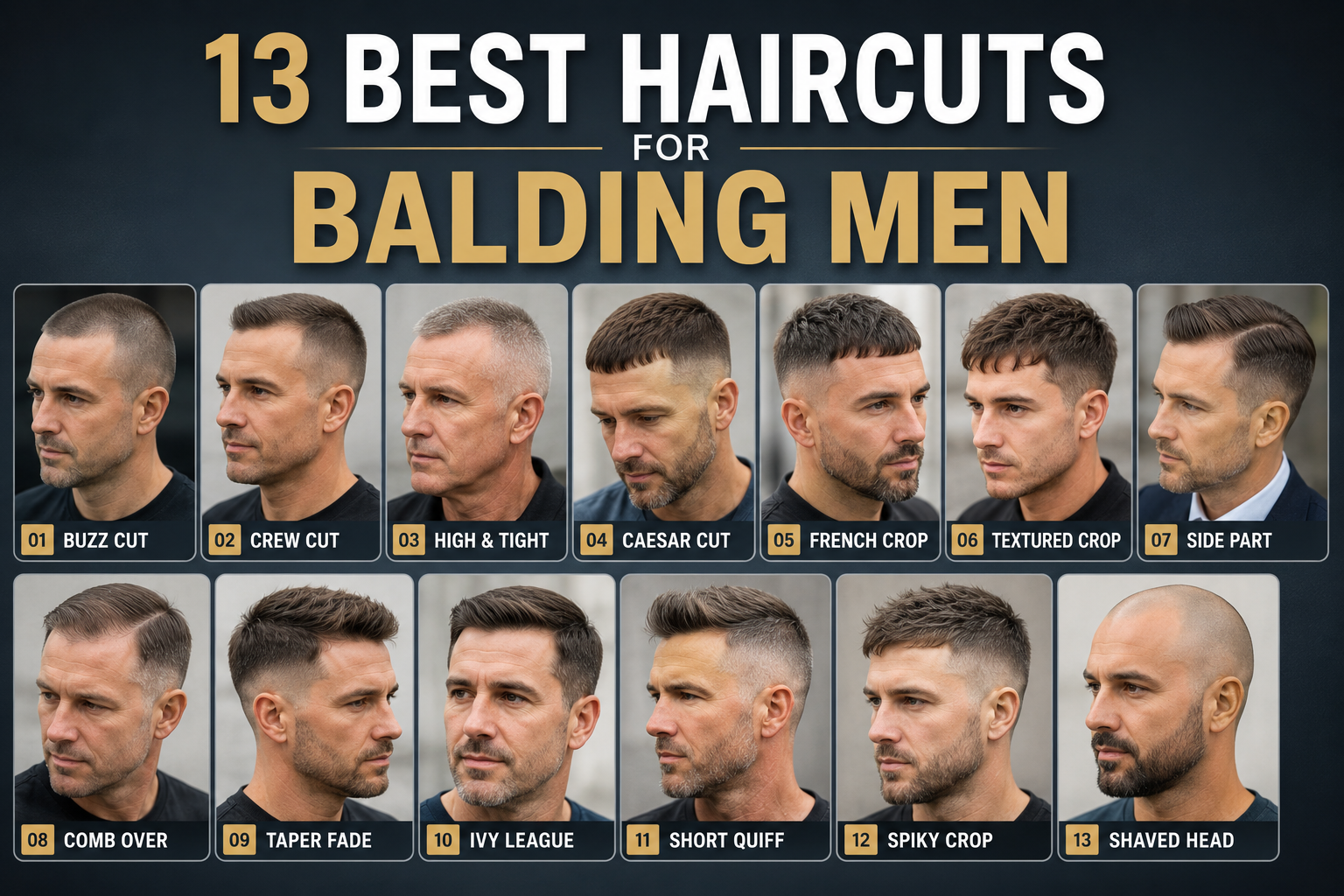
    Haircuts for balding men are more important than most people realise. The wrong cut draws attention to thinning spots. The right cut works with your hairline instead of fighting it, giving you a clean, confident look that reads as deliberate rather than defensive. The good news: there are more great options than ever.

    This guide covers 20 of the best haircuts for balding men in 2026. Every style includes what it does for thinning hair, face shape guidance, and what to tell your barber. You will also find a receding hairline type chart, a face shape table, and a full FAQ section to help you choose and own your look.

    Why the Right Haircut Matters More When You’re Balding

    Thinning hair changes the game for styling. Volume disappears. Hairlines shift. The scalp shows through in patches that feel impossible to conceal. Many men make the mistake of growing remaining hair longer to cover thinning spots, a strategy that almost always backfires, drawing more attention to exactly what it tries to hide.

    The best approach is counterintuitive: shorter is usually better. Short haircuts reduce contrast between thin and full areas, make the scalp less visible, and give a clean, intentional appearance that projects confidence. Pairing a smart short cut with a well-groomed beard completes a look that many men find more stylish than what they had before balding started.

    Receding Hairline Type Quick-Reference Chart

    Hairline TypeDescriptionBest Haircut ApproachStyles to Avoid
    Slight Temple RecessionM-shape forming, crown fullShort sides, textured topSlicked-back styles that expose temples
    Moderate RecessionDistinct M-shape, some crown thinningBuzz cut, fade, short cropsComb-overs, long tops
    Diffuse ThinningEven thinning across the topUniform short cuts, skin fadesStyles that rely on volume
    Crown Bald SpotThinning at crown, hairline intactShort all over, minimise crown visibilityLonger top styles
    Horseshoe PatternHair only at sides and backBuzz cut, shaved head, skin fadeAnything that attempts coverage
    Full BaldnessNo significant hair remainingShaved head with beardPartial coverage styles

    The 20 Best Haircuts for Balding Men

    1. The Buzz Cut
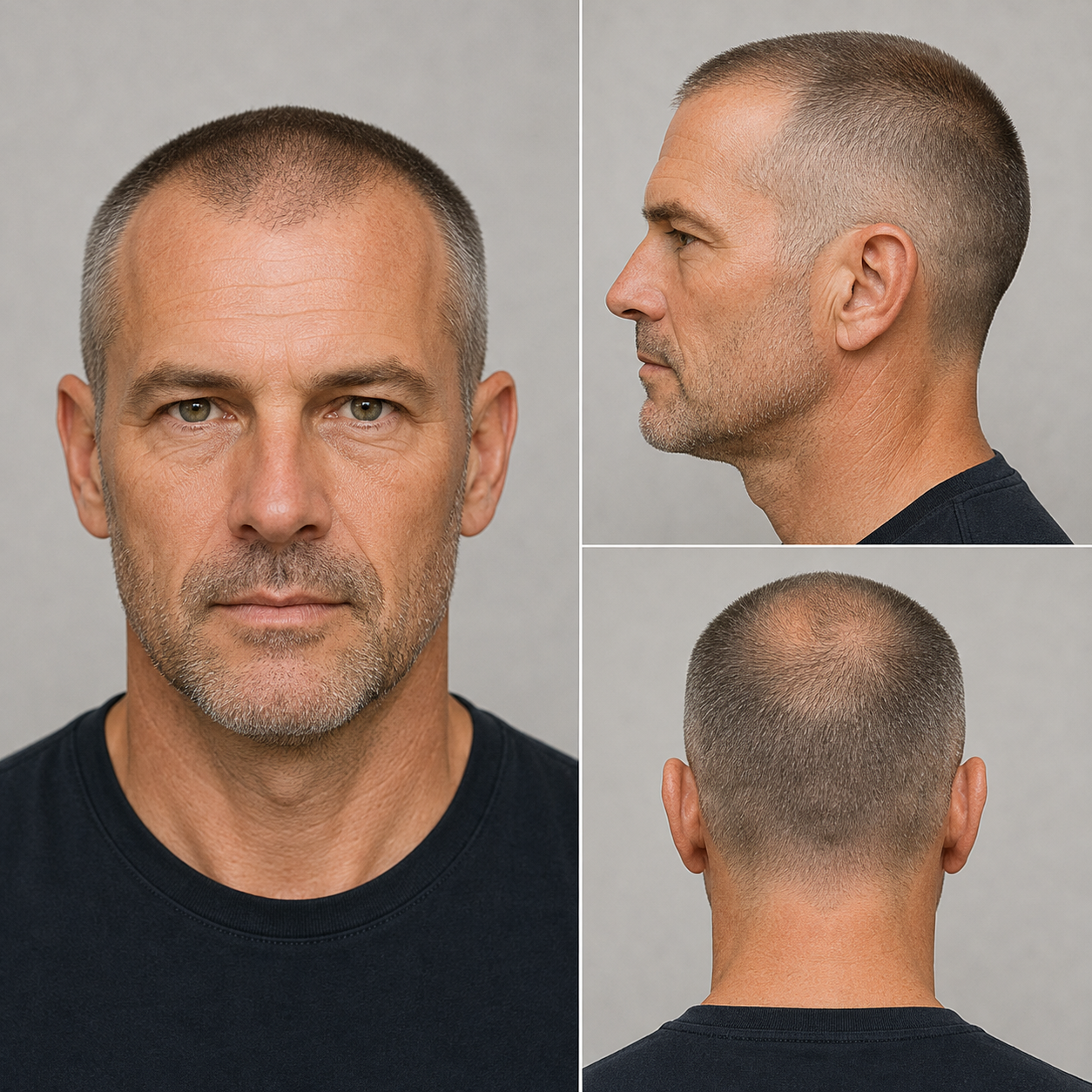
    Classic buzz cut for balding men

    The buzz cut is the gold standard for balding men. It cuts all hair to the same uniform length, typically a grade 1, 2, or 3, eliminating any visible contrast between thinning and full areas. The result looks intentional, clean, and confident. It works at any stage of hair loss, from slight temple recession to near-full baldness. Weekly home maintenance with clippers is all it needs. Almost universally flattering, and particularly strong on square and oval face shapes.

    2. The Skin Fade
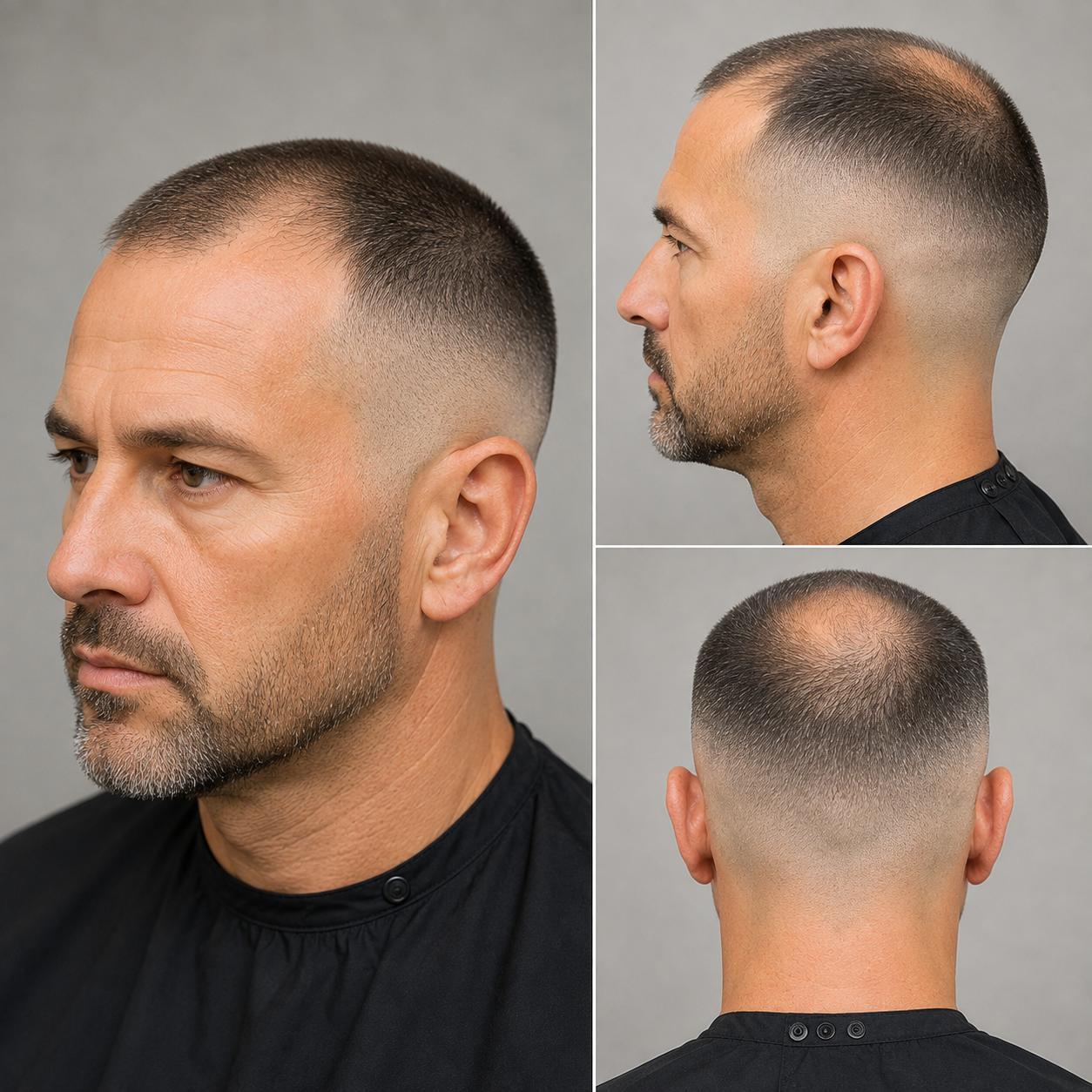
    Skin fade bald fade for balding crown

    A skin fade takes the sides and back down to skin level, blending into slightly longer hair on top. For balding men, this removes all visual bulk from areas where hair is thinning fastest: the temples and sides, while keeping a touch of length on top for styling options. High skin fades work best for more advanced recession. Ask your barber for a “high skin fade” or “bald fade” with a grade 1 or 2 on top. Touch up every two to three weeks.

    3. Shaved Head with Beard
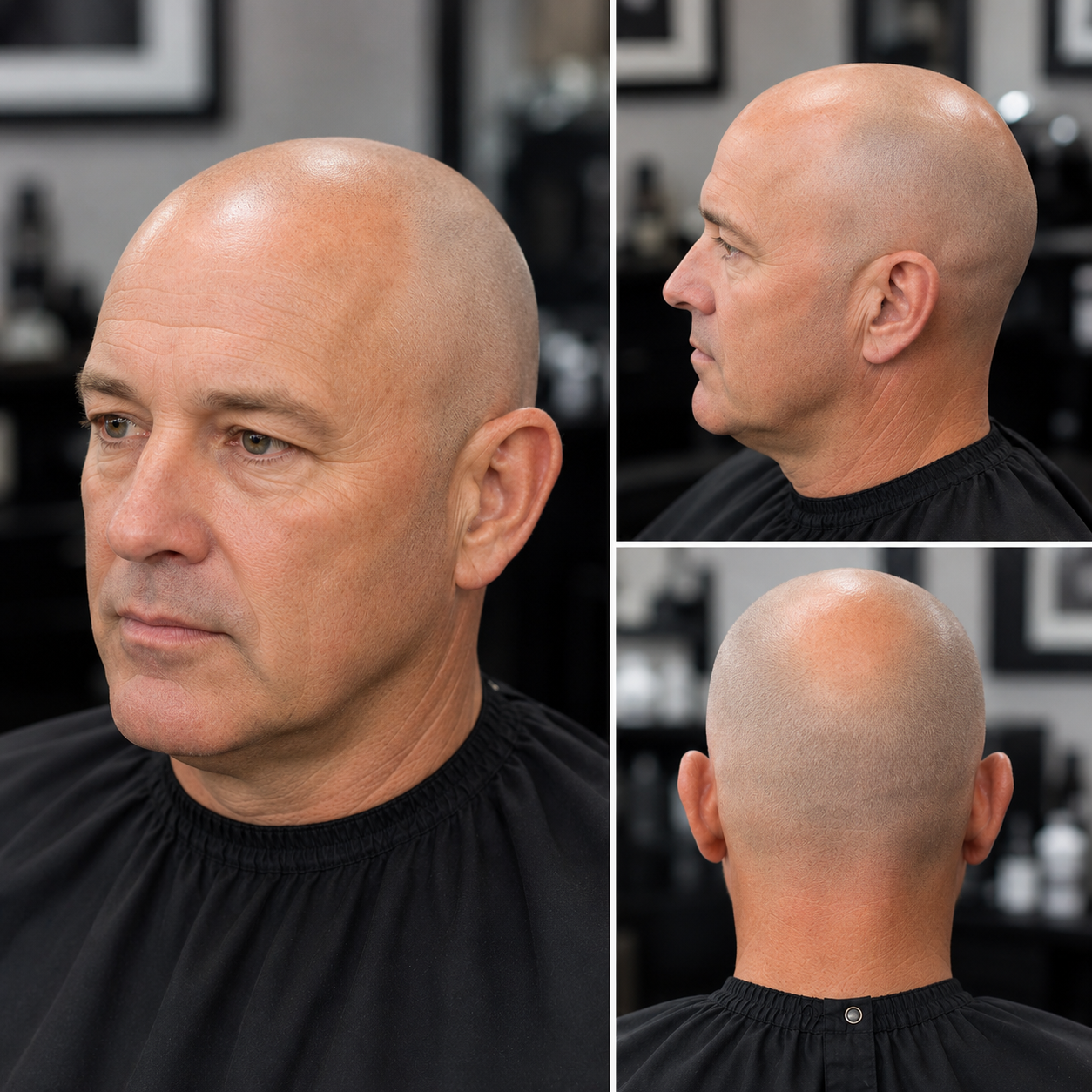
    Clean shaved head for balding men

    Shaving the head entirely and growing a beard is one of the most powerful style moves a balding man can make. It reframes the entire conversation: the beard becomes the focal point, not the hairline. Men who make this switch overwhelmingly report increased confidence. A well-shaped short beard or a fuller medium beard both work well. Keep the beard clean and well-oiled. This is the definitive solution for horseshoe-pattern or full baldness. Round faces benefit from a longer beard to add vertical length.

    4. Short Textured Crop

    Textured crop for widow's peak and thinning hair

    A short, textured crop cuts the top hair to around 1 to 2 inches with a disconnected or faded undercut on the sides. The texture on top creates the illusion of density: when individual strands move in different directions, the hair appears fuller than it is. Matte texturising paste or clay achieves the effect. This works best for men with diffuse thinning rather than complete hairline recession. Oval and diamond face shapes carry it best.

    5. Caesar Cut

    Caesar cut for receding hairline and widow's peak

    The Caesar cut features a short, horizontal fringe that covers a receding hairline without attempting a traditional comb-over. Hair is cut uniformly short, typically 1 to 2 inches, with a forward-falling fringe. This creates a natural-looking hairline even where the real one has receded. It is a subtle, effective solution that works for slight to moderate recession. Great for men who want a classic, uncluttered look. Square and oval faces suit it best.

    6. French Crop

    French crop for thin hair men

    Similar to the Caesar but with a longer, choppier fringe and more texture through the top. The French crop is currently one of the most popular men’s cuts in barber shops, and it works remarkably well for balding men because the textured fringe creates a visual hairline. Faded or disconnected sides keep it modern. Matte clay or paste gives the top definition. Works best for slight to moderate temple recession. Heart and oval faces suit the strong fringe well.

    7. Ivy League Cut
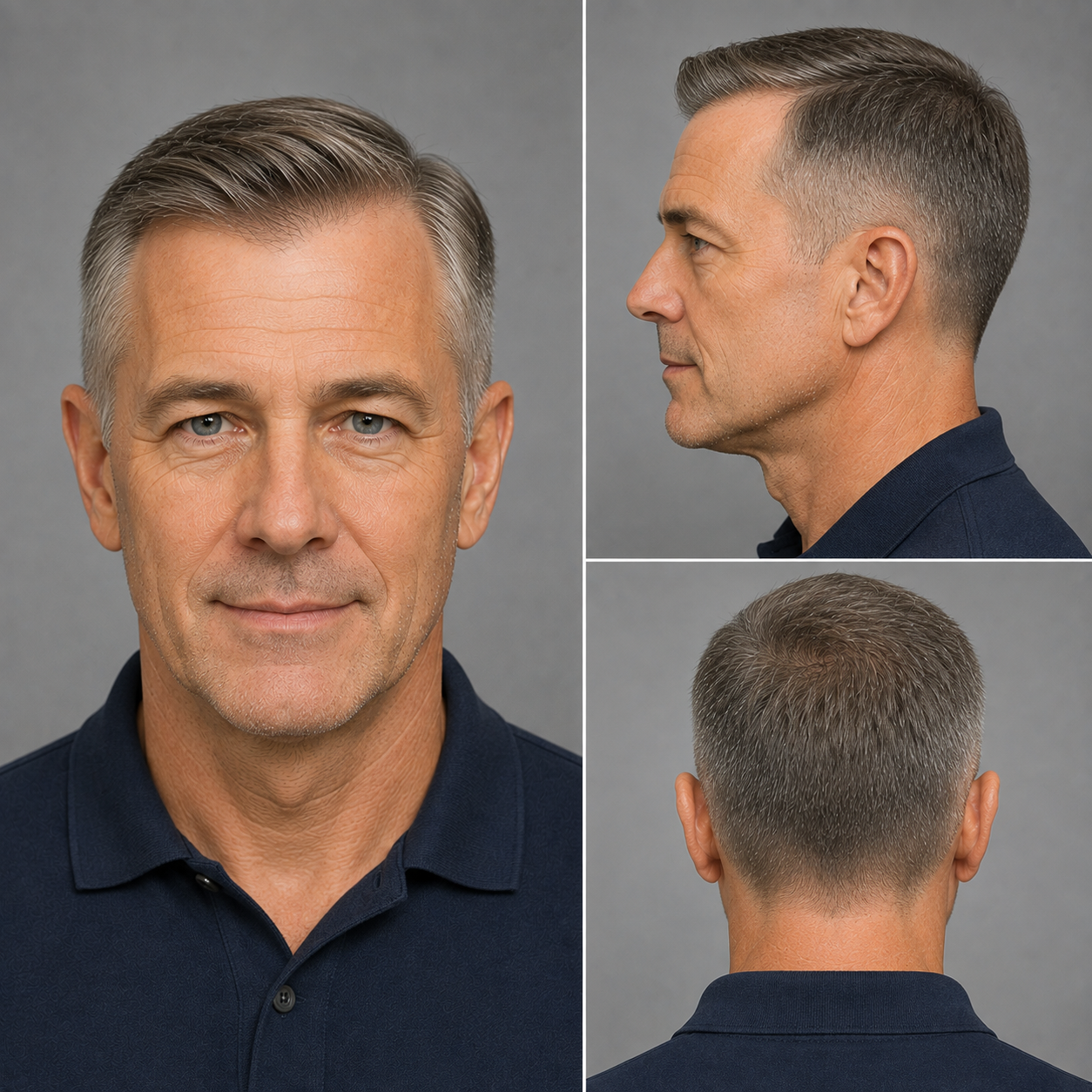
    Ivy league cut for older men with thinning hair

    The Ivy League is a longer version of the crew cut: slightly more length on top allows for a side part or forward sweep. For men with mild recession, this cut disguises the hairline with a natural-looking side part. It works in professional settings effortlessly. A light pomade or matte cream styles the top. This is the most workplace-appropriate option on the list. Square and rectangular faces benefit most from the structured part.

    8. Short Side Part
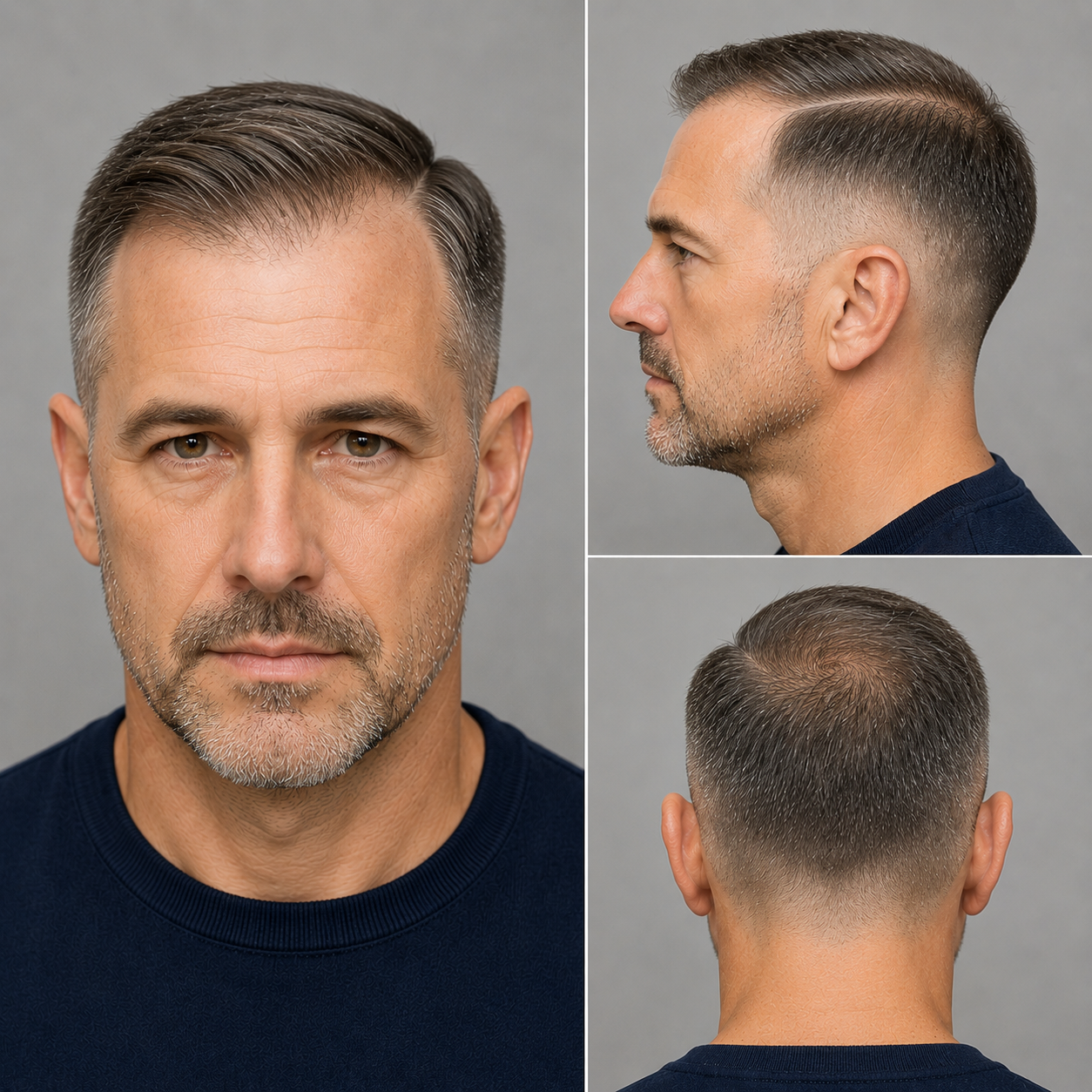
    Side part fade for thinning hair

    A short, neat side part keeps hair close on the sides and slightly longer on top, divided cleanly by a part line. For balding men, keeping everything short means the contrast between thin and full areas is minimal. The side part gives an intentional, groomed appearance without trying to conceal recession. Use a light pomade to define the part and keep the top in place. Works best for slight to moderate recession. Rectangle and oval faces suit it well.

    9. Number One All Over

    Running a grade 1 clipper over the entire head creates the uniform, close-cropped look that sits just above a full shave. For men transitioning toward the shaved head or not ready to go fully bald, this is the bridge cut. It minimises all visible thinning, maintains some shadow on the scalp, and requires minimal maintenance. Home clippers handle upkeep easily every one to two weeks. All face shapes carry this cut comfortably.

    10. Faux Hawk with Fade

    A faux hawk lifts the central section of hair upward while fading the sides, adding vertical height that offsets the visual effect of a receding hairline. For balding men, the key is keeping the top section relatively short so thin areas do not show through. Strong-hold matte clay or wax creates the upward sweep. This works for men at the early stages of recession who still have enough top hair to style. Square and oval faces suit it best.

    11. Undercut with Short Top

    A sharp undercut with shaved or closely clipped sides and longer hair on top creates strong visual contrast that distracts from thinning. For balding men, the top should stay short enough to minimise the appearance of sparse areas. Swept back or slicked to the side, the top creates a clean, sharp profile. This is one of the more assertive options for men with moderate recession. Diamond and oval face shapes handle the contrast best.

    12. Slicked Back Undercut

    Slicking the remaining hair directly backward with a strong-hold pomade creates a commanding, polished look. The undercut removes bulk from the sides, putting focus on the face. For balding men this only works if there is enough top hair to cover the crown: it is best suited to temple recession with a full or near-full crown. A matte or medium-shine pomade avoids the wet-look that can emphasise thinning. Oval and rectangle faces suit it best.

    13. High and Tight
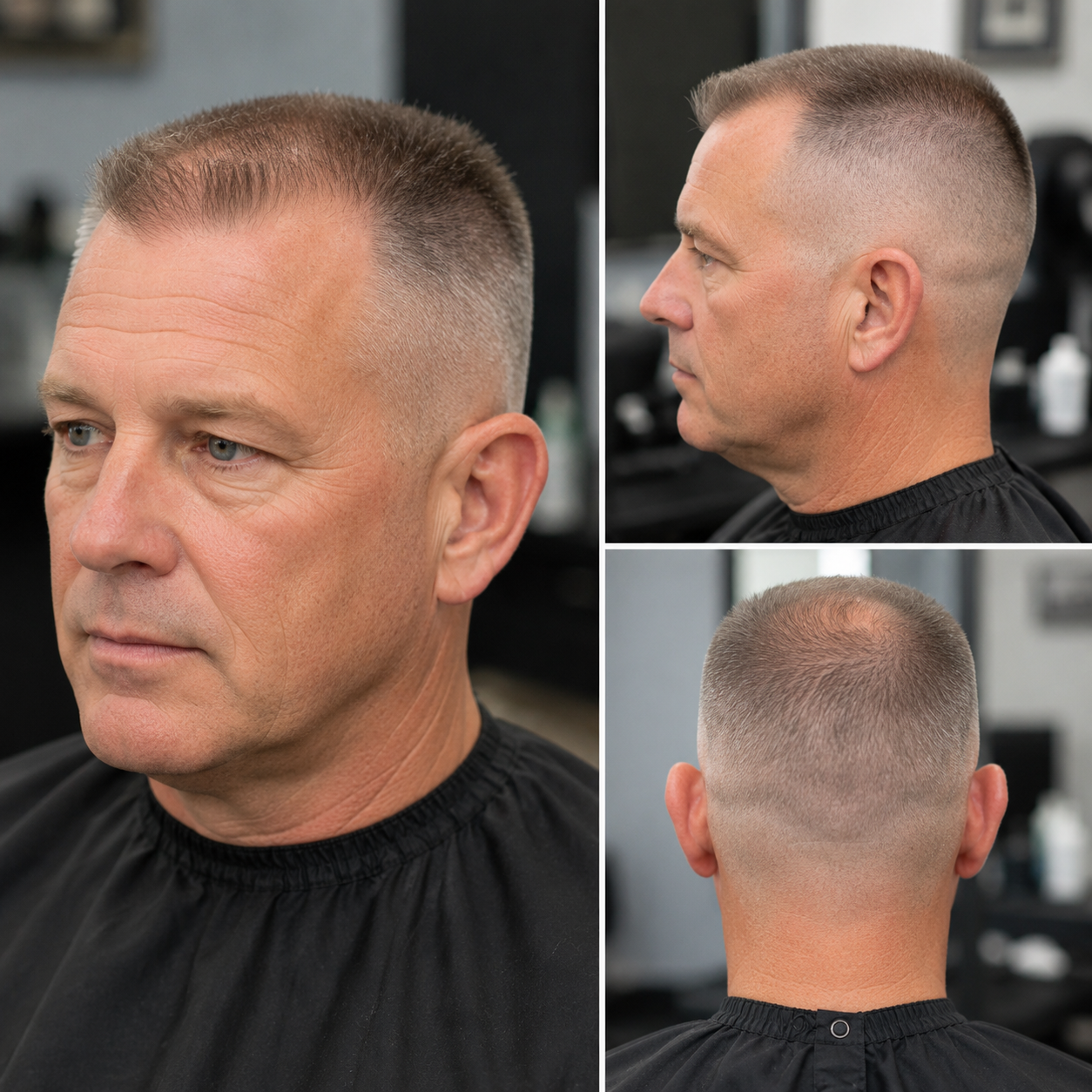
    High and tight haircut for thinning hair men

    A military-inspired cut that shaves or closely crops the sides very high, sometimes up to the temples, with a short, flat top. For balding men, the high and tight minimises every visible thinning area and projects confident, clean masculinity. It is the barber cut of choice for men with moderate to advanced recession. Square and oval face shapes carry it best. Very easy to maintain with home clippers between barber visits.

    14. Crew Cut
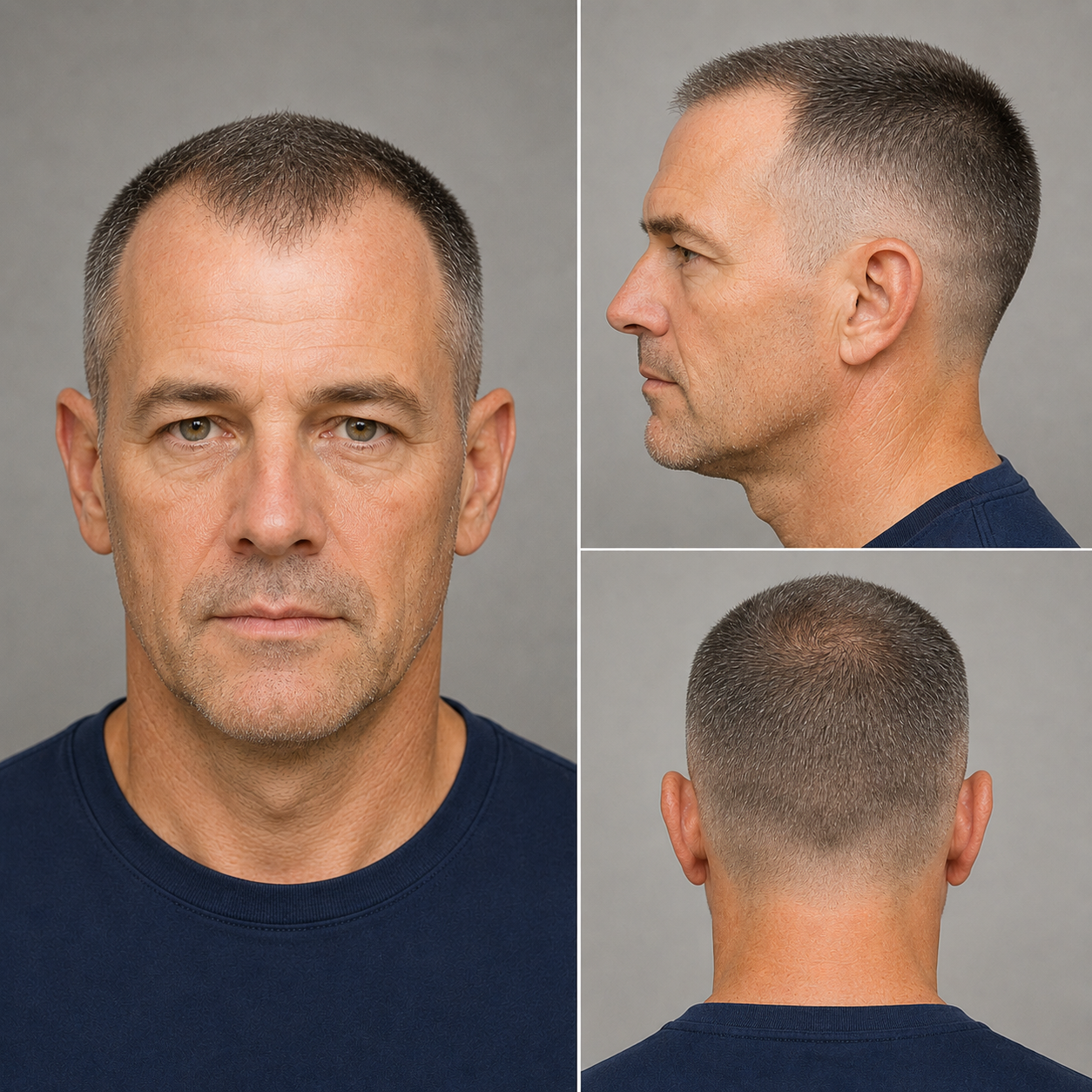
    Crew cut for receding hairline men

    The crew cut tapers the sides and back while keeping slightly more length on top, graduating from longer at the front to shorter at the crown. For balding men, this graduation actually helps: the longer front creates a visual hairline while the shorter crown reduces the appearance of thinning there. A timeless, low-maintenance choice that suits most workplace environments. Light pomade or nothing at all keeps it neat. Works for most face shapes.

    15. Textured Quiff with Fade

    Textured quiff for balding crown men

    A short textured quiff pushes a small amount of hair forward and upward at the front, creating height and a visual hairline even with significant temple recession. The fade removes all bulk from the sides. For this to work, the quiff section needs enough hair density: it suits mild to moderate recession best. Matte clay gives the most natural-looking texture. Oval and square face shapes benefit from the added front height.

    16. The Induction Cut

    The induction cut is the shortest clippers setting, almost a shave but with a trace of shadow remaining on the scalp. It represents the step just before going completely bald. For men with significant hair loss, this eliminates virtually all visible thinning while maintaining a trace of hair. Some men prefer this to a full razor shave as it hides scalp imperfections better. Home maintenance with a grade 0 or 0.5 clipper. All face shapes carry it well.

    17. Side Part Fade

    A clean side part combined with a high fade creates a neat, office-ready look that handles mild recession well. The fade eliminates thin temple areas while the part gives the top section a structured, intentional feel. Keep the top section short, under two inches, to avoid exposing thinning on the crown. Matte pomade defines the part cleanly. Rectangle and oval face shapes suit it best.

    18. Disconnected Undercut

    The disconnected undercut creates a sharp, visible line between the shaved sides and the longer top, with no blending between the two sections. This maximises visual contrast and makes the top hair appear thicker by comparison. For balding men, the top section should stay relatively short to avoid exposing thin areas. A strong matte clay creates texture and apparent density. Heart and diamond face shapes benefit from the width this style adds to the jaw area.

    19. Short Pompadour with High Fade

    A compressed, short pompadour lifts a small amount of hair at the front while a high fade removes all bulk below the temples. For balding men, the short pompadour creates height and a visual hairline without requiring significant top hair coverage. Keep the pompadour section under two inches to avoid exposing thin areas on the crown. Strong-hold matte pomade creates the lift. Oval and square face shapes suit the front height best.

    20. The Modern Comb-Over Fade
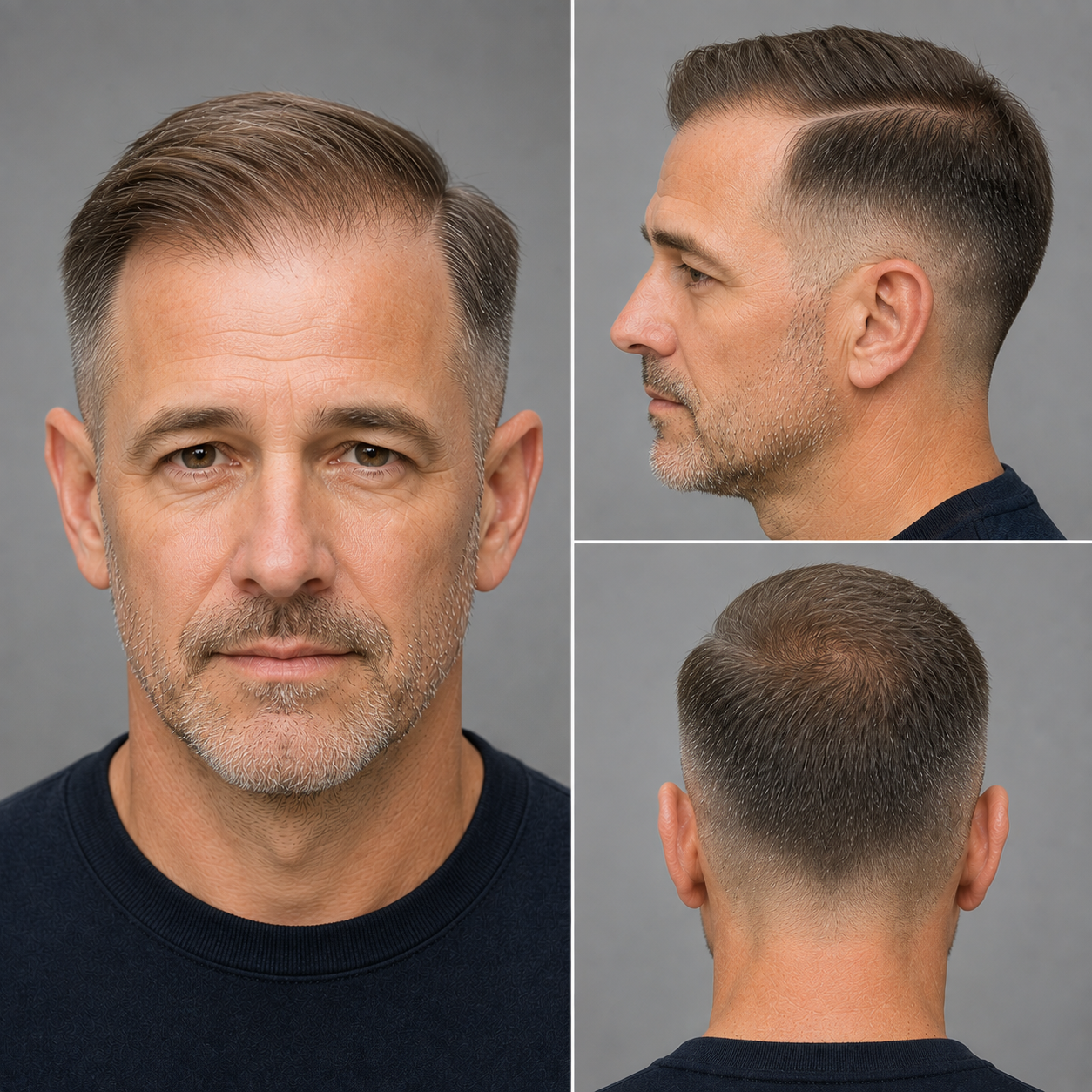
    Comb over fade for thinning hair

    Not the desperate comb-over of the past: the modern comb-over fade uses a high fade on the sides and combs a short top section to one side with matte product. For mild temple recession, this creates the impression of a natural hairline at the part. The key is keeping everything short and the product matte: shine accentuates thinning, while matte product fools the eye into seeing density. Oval and rectangle faces carry it best. This is the most polished-looking short option for the office.

    Face Shape Guide for Balding Men

    Face ShapeBest HaircutsBeard RecommendationWhy It Works
    OvalAny style, most versatileAny length worksBalanced proportions suit all cuts
    SquareBuzz cut, skin fade, faux hawkMedium beard softens jawShort sides balance the strong jaw
    RoundHigh and tight, faux hawk, shaved with beardLonger beard adds vertical lengthVertical lines elongate the face
    RectangleCrew cut, modern comb-over, CaesarShort to medium beardWidth at the sides balances face length
    DiamondTextured crop, undercut, side partShort beardWidth at jaw balances cheekbones
    HeartFrench crop, disconnected undercut, number oneFuller beard at chin adds balanceWidth below balances the wide forehead

    What to Tell Your Barber

    Show a photo of the style you want: barbers read pictures faster than descriptions. Name the fade height clearly, whether that is a low fade, mid fade, or high skin fade. Specify the top length by grade number or inches, something like “grade 2 on top” or “about half an inch on top.” Tell them where your hairline is receding most so the barber can shape accordingly. Ask for a matte finish product recommendation for your hair type. Mention if you want the beard shaped and blended at the same appointment.

    Frequently Asked Questions

    What is the best haircut for a man with a receding hairline?

    The buzz cut, skin fade, and French crop are the three most reliable options for a receding hairline. All three work with the hairline rather than against it. The buzz cut is the most universally flattering. The French crop and Caesar cut work well for men who want a little more length and a visual front hairline. The shaved head with beard is the definitive solution for advanced recession.

    Should balding men shave their heads?

    Not necessarily, but it is often the most confident and cleanest-looking solution for moderate to advanced hair loss. Men who shave their heads consistently report increased confidence and reduced anxiety about their hairline. If you are not ready, start with a grade 1 all over and work shorter over several haircuts. It becomes easier each time.

    Does a beard help with baldness?
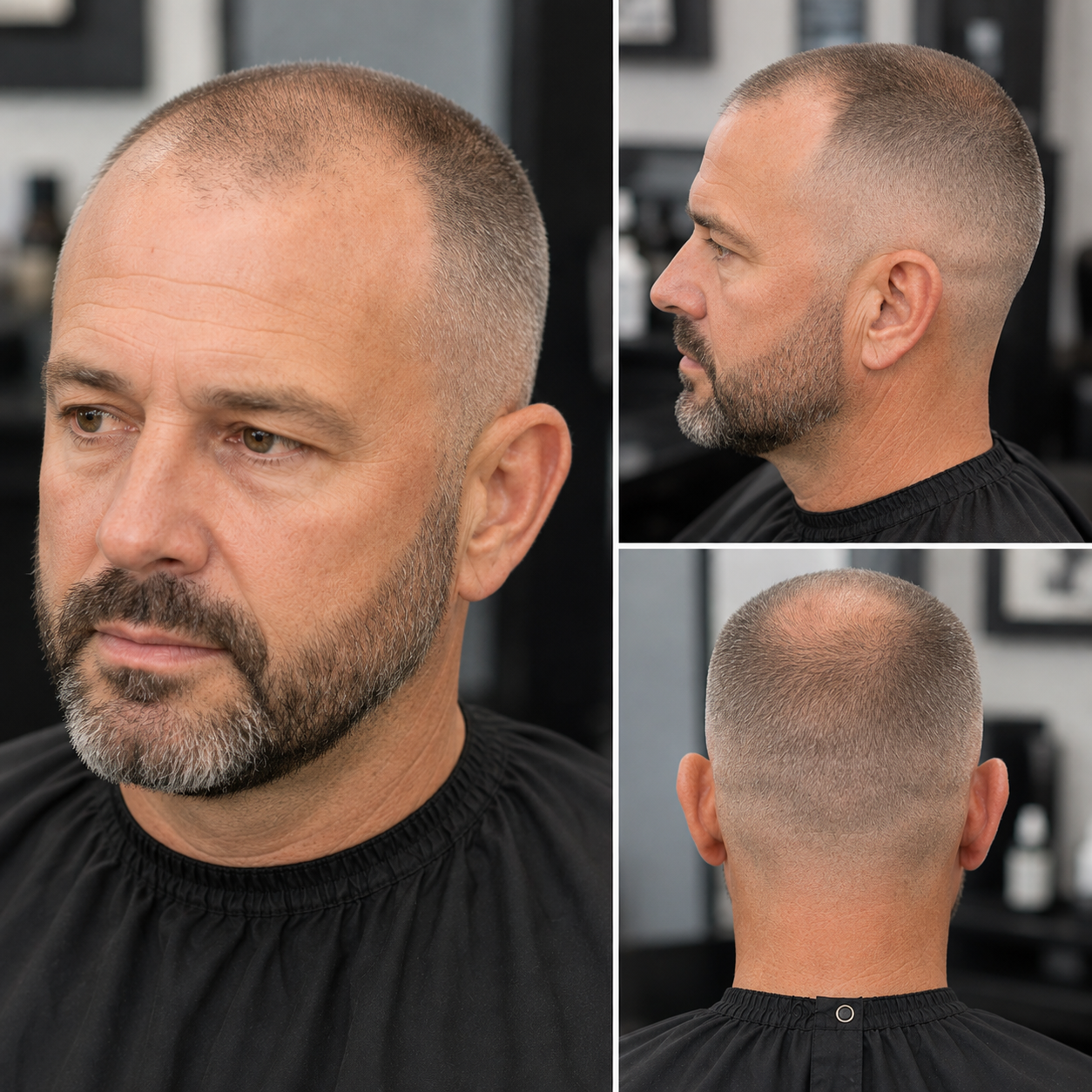
    Buzz cut and beard combo for balding men

    Yes, significantly. A beard shifts the focal point from the hairline to the lower face, rebalancing the head’s overall proportions. Men with a shaved or closely cropped head consistently look more striking with a beard than without one. Even a short, neat beard makes a substantial visual difference. See our short beard styles guide for ideas on what works.

    What haircuts should balding men avoid?

    Avoid comb-overs, long tops designed to cover thinning spots, and styles that rely on volume or lift where hair is sparse. These draw far more attention to hair loss than a clean, short cut would. Also avoid harsh side parts that sweep hair over clearly bald areas: the shadow line gives it away immediately. Longer hair at the back and sides with baldness on top is the most ageing combination available.

    Can a haircut make balding look better?

    Absolutely. The right haircut makes a dramatic difference. The difference between a man who looks like he is “losing his hair” and one who looks deliberately styled often comes down entirely to haircut choice. Short, clean cuts that work with the hairline rather than concealing it project confidence, and confidence is what people actually see.

    How often should balding men get haircuts?

    More often than men with full hair. Short cuts for balding men grow out faster visually because even a few weeks of growth makes a noticeable difference. Fades and buzz cuts look best when touched up every two to three weeks. If you maintain with home clippers between barber visits, monthly professional appointments are sufficient for shape and fade work.

    Final Thoughts

    Balding is not a style problem: it is a style opportunity. The men who wear it best are the ones who choose a haircut that works with their hair rather than against it, pair it with a well-maintained beard, and carry the whole thing with confidence. Any of the 20 haircuts above will get you there.

    Related reading: Haircuts for Older Guys with Thinning Hair · Short Beard Styles · Professional Haircuts for Men · Beard Styles for Men
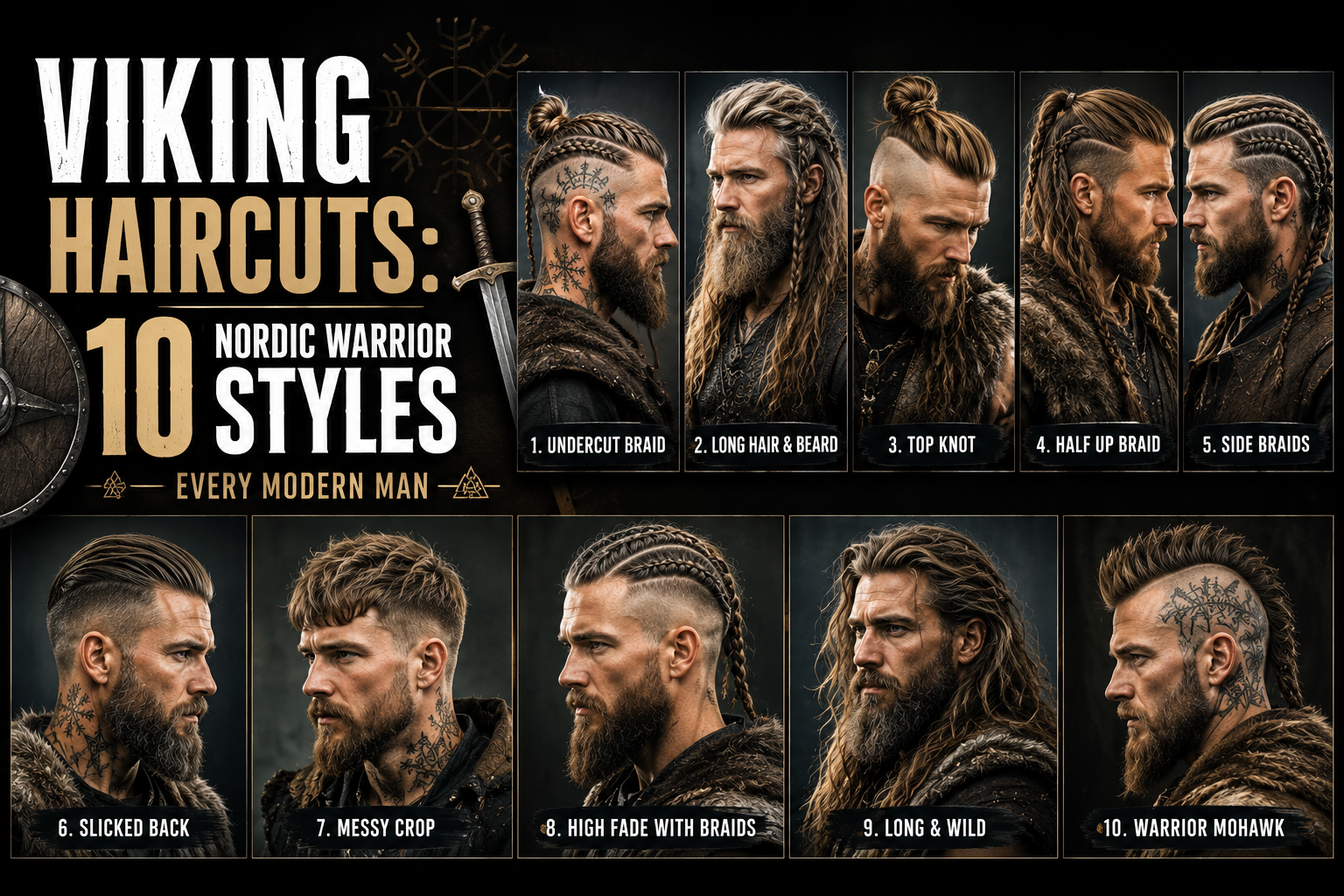
  • 20 Best Viking Haircuts for Men: Norse Warrior Styles That Still Turn Heads (2026)

    20 Best Viking Haircuts for Men: Norse Warrior Styles That Still Turn Heads (2026)

    Viking Haircuts for Men

    Viking haircuts are one of the most requested styles in modern barbershops, and for good reason. Norse warriors understood that hair conveyed power, rank, and identity long before grooming brands existed. Today these cuts blend authentic historical style with modern technique, giving any man a bold, unmistakable look.

    This guide breaks down 20 Viking haircuts you can actually wear in 2026. Every style includes face shape guidance, styling notes, and maintenance advice. You will also find a complete difficulty chart, face shape table, and FAQ section to help you choose the right Norse look for your life.

    Why Viking Haircuts Are Surging in Popularity

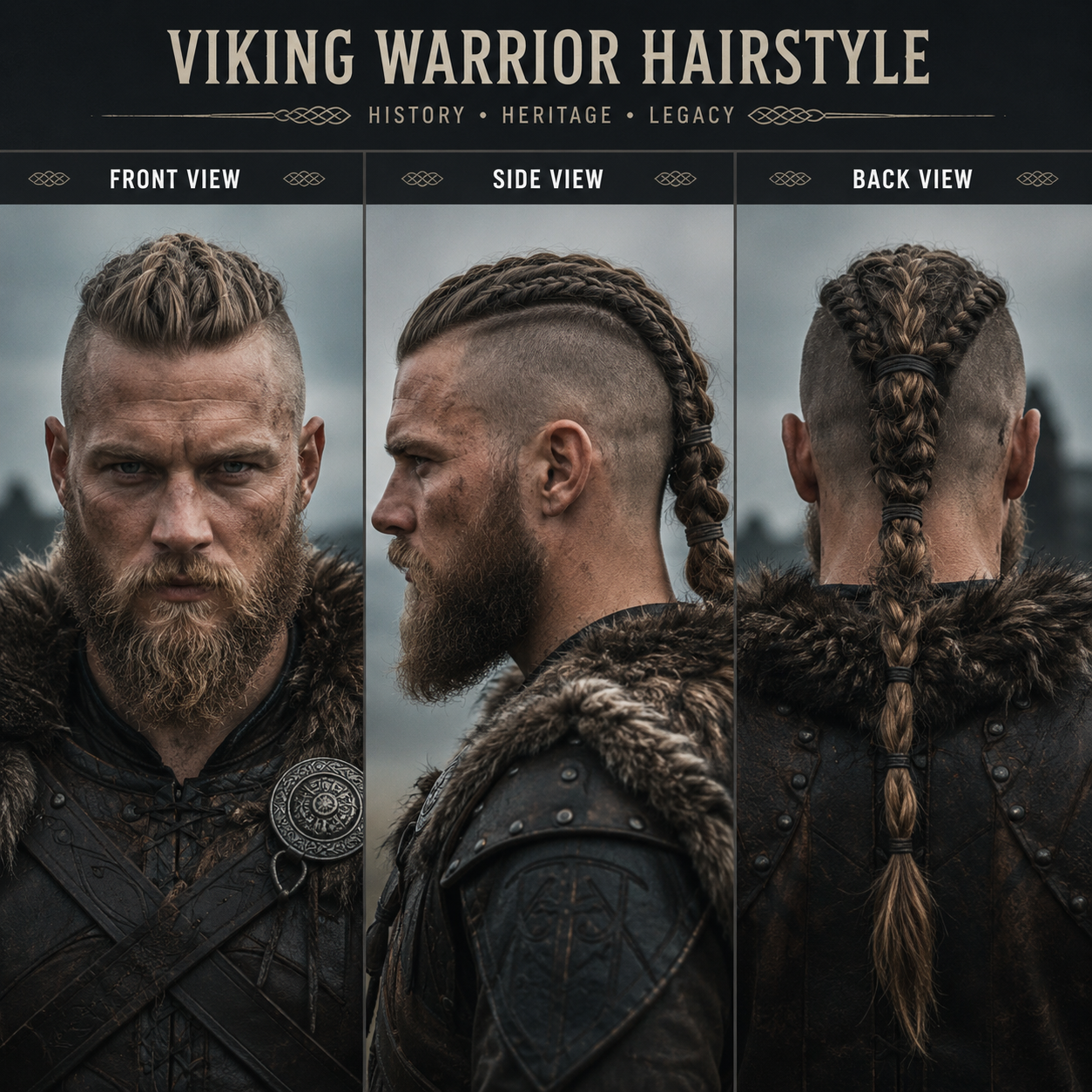
    Viking warrior hairstyle history

    Streaming shows, social media, and a broader cultural appetite for bold masculinity have all fueled the Viking hair revival. Men who once stuck to conservative cuts are now asking barbers for braided undercuts, shaved sides, and long warrior locks. The appeal is real: these styles are distinctive, historically grounded, and infinitely adaptable to modern workplaces and lifestyles.

    Archaeological evidence confirms that Viking-Age Norse men were unusually well-groomed for their era. Combs, tweezers, and razors appear regularly in burial sites. Hair length and braiding also signalled social rank. Longer, more decorated styles belonged to wealthier men, while shorter cuts were common among working men. That intentional approach to grooming is exactly why Viking haircuts feel so deliberate today.

    Viking Haircut Quick-Reference Chart

    StyleHair Length NeededBraidingUpkeep LevelBest For
    Braided Top KnotMedium to LongModerateWeeklyEveryday, casual
    Undercut with Long BraidLongHeavyWeeklyStatement look
    Viking MohawkMediumNone to LightBi-weekly trimBold events
    Bjorn Ironside PonytailLongLightBi-weekly trimCostume, cosplay
    Classic Long Hair and BeardLongOptionalMonthly trimRugged everyday
    Cornrow Crown BraidsMedium to LongHeavyWeeklyFormal Viking events
    Half-Up Half-DownMedium to LongOptionalLowCasual, versatile
    Shaved Head with Full BeardNoneNoneWeekly shaveLow-maintenance bold
    Man Bun with FadeMediumNoneLowOffice-friendly
    Nordic Fade with Braided SidesShort to MediumLightEvery 3 weeksModern office
    Viking War BraidLongHeavyWeeklyFestival, events
    Ragnar Lothbrok StyleMediumModerateBi-weeklyTV-inspired bold look
    Dreadlock VikingLongNoneMonthlyAlternative style
    Norse Warrior Slicked BackMediumNoneLowSmart casual
    Double Viking BraidsMedium to LongHeavyWeeklyAuthentic warrior look
    Side-Swept Viking UndercutMediumNoneBi-weekly trimModern workplace
    Viking Textured CropShortNoneBi-weekly trimLow-maintenance
    Warrior Ponytail with BeardLongNoneLowRugged everyday
    Norse Fade with Temple BraidShort to MediumLightEvery 3 weeksModern hybrid
    Full Viking with Braided BeardLongHeavyWeeklyMaximum impact

    Long-Hair Viking Haircuts: Maximum Warrior Energy

    Long hair sits at the heart of authentic Viking style. It allows for braiding, layering, and dramatic movement. Expect four to twelve months of growth before full styling options open up, and trim every eight weeks to keep the process looking intentional, not messy.

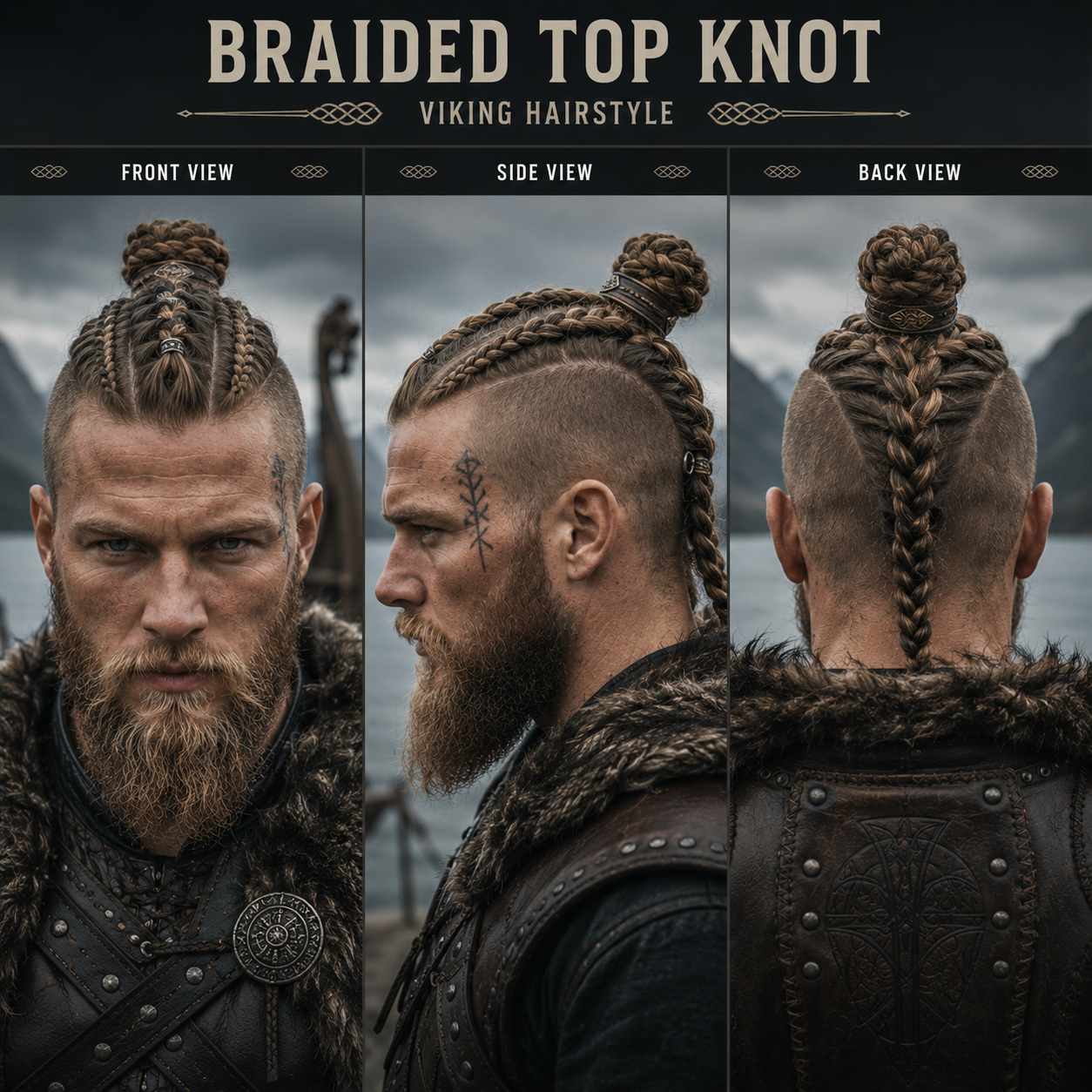
    1. Braided Top Knot

    Braided top knot Viking hairstyle

    The braided top knot gathers long hair into a raised, secured bun with one or two feed-in braids. This creates a distinctly Nordic silhouette from every angle. Sides can stay long, short, or faded for contrast. A strong-hold pomade keeps loose strands from escaping. Works equally well for daily wear and reenactments. Oval and square face shapes suit the raised volume best.

    2. Undercut with Long Braid

    Undercut with long braid Viking hairstyle

    A fully shaved undercut paired with one long braid on top. The contrast between skin and hair reads as bold immediately. Barbers use clippers for a skin fade underneath, then braid the top from front to back. Matte wax controls flyaways along the braid’s edges. Diamond and oval face shapes handle the sharp contrast best. Touch up the fade every three weeks to keep lines crisp. This remains one of the most requested modern Viking styles.

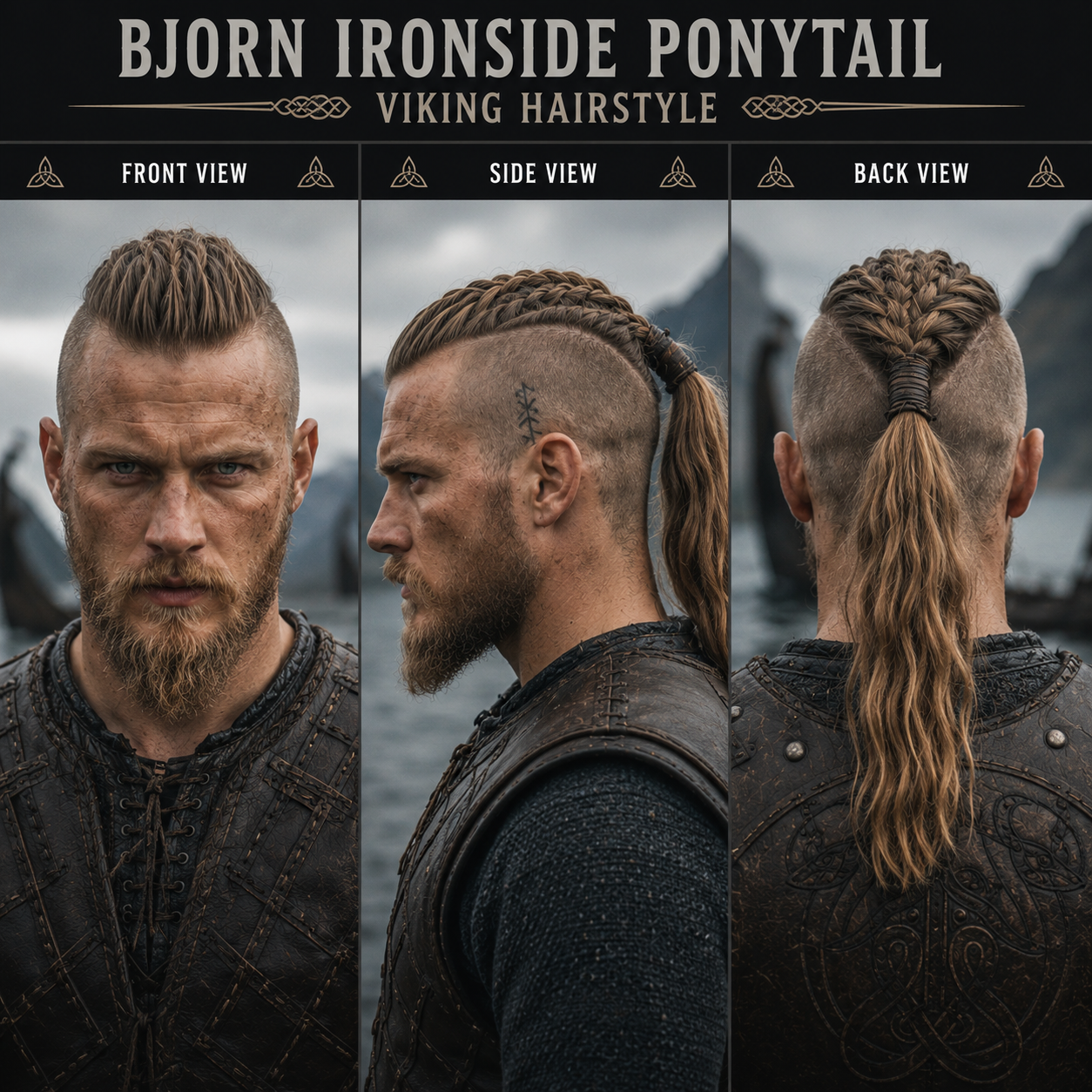
    3. Bjorn Ironside Ponytail with Shaved Sides

    Bjorn Ironside ponytail Viking hairstyle

    Inspired by the Vikings TV series, this look shaves the sides completely while the top forms a long, clean ponytail. Braiding the ponytail adds extra texture and authenticity. A leave-in cream keeps the ponytail smooth and controlled. Skin fades require frequent touch-ups every two to three weeks. Fans of Norse pop culture and cosplay gravitate to this look. Oval and rectangle face shapes suit the streamlined silhouette well.

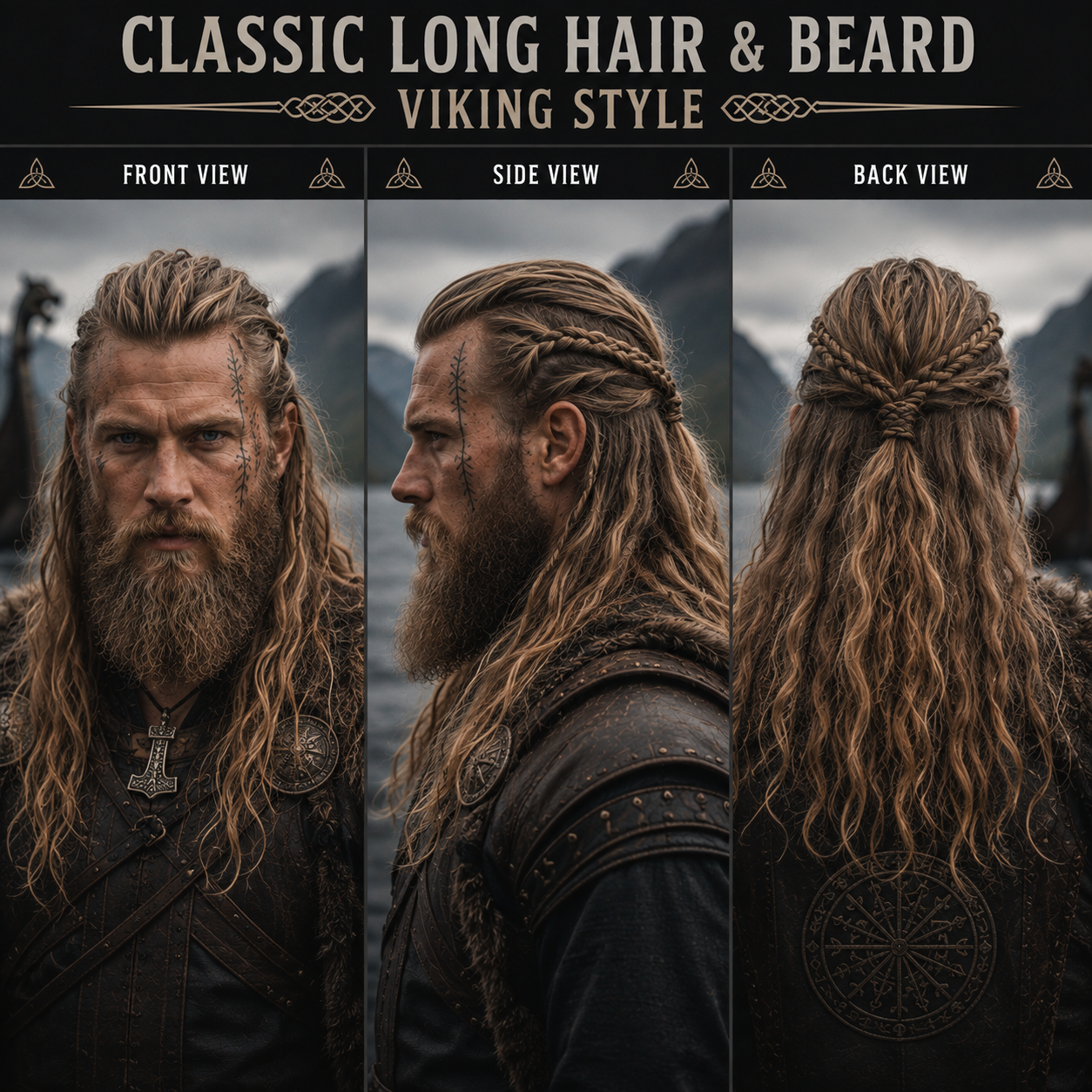
    4. Classic Long Hair and Beard

    Classic long hair and beard Viking style

    The most recognizable Viking silhouette: hair falls loose or lightly tousled past the shoulders with a thick, full beard completing the effect. Sea salt spray adds natural texture without extra effort. Regular trims every six to eight weeks prevent split ends. This style requires the least structured styling on this entire list. Almost every face shape wears loose long hair comfortably. The easiest entry point into genuine Viking style.

    5. Warrior Ponytail with Beard

    A clean high ponytail paired with a full beard creates a rugged but put-together warrior look. Unlike the Bjorn style, sides are kept rather than shaved, giving a softer overall profile. This suits men who want Viking energy without committing to a dramatic undercut. A strong elastic holds the ponytail in place through long days. Pairs naturally with a well-trimmed medium-length beard. Rectangle and oval faces benefit most from this combination.

    Braided Viking Haircuts: Authentic Norse Structure

    Braiding separates authentic Viking looks from generic long hairstyles. These styles use braids as the main visual feature. Learning basic three-strand and Dutch braids covers most of what you need. Patience during the first few attempts pays off quickly.

    6. Cornrow Crown Braids

    Cornrow crown braids Viking hairstyle

    Cornrow crown braids run tightly against the scalp from front to back, meeting at a bun or ponytail. This creates a striking symmetrical warrior crown effect. A skilled barber or braider handles this style best. Braids last one to two weeks before needing redoing. Light oil keeps the scalp comfortable between sessions. Nearly every face shape handles cornrows comfortably. Works beautifully alongside a decorated or braided beard.

    7. Double Viking Braids

    Two thick Dutch braids run from the temples to the back, meeting in a combined tail or bun. This style has strong historical backing. Norse warriors used it to keep hair controlled in combat. The look suits men with medium to long hair. Braiding wax or a light gel keeps the plaits defined. Great for festivals, reenactments, or any event where maximum Viking impact is the goal. Heart and oval face shapes carry this style most naturally.

    8. Viking War Braid

    A single thick braid runs from the top of the head to the nape, with the sides left loose or lightly braided. The asymmetry of this style gives it an authentic, unpolished warrior quality. It suits longer hair and works best with some natural texture in the strands. Finish with a light oil for shine without grease. This look works for music festivals, Viking events, and confident everyday wear. All face shapes can carry it, with oval and square shapes benefiting most.

    9. Ragnar Lothbrok Inspired Style

    This TV-inspired look features medium-length hair with small braids at the temples or sides and loose, slightly messy texture on top. It is achievable at a shorter length than most Viking styles, making it accessible to men still growing their hair out. Texturizing spray and minimal product keep it looking lived-in. This style appeals to men who want recognizable Viking energy without long commitment. Square and oval face shapes suit this silhouette best.

    10. Full Viking with Braided Beard

    Long loose hair combined with a fully braided beard represents maximum Viking impact. The beard braid, typically two or three small plaits, adds symmetry and intentionality to the look. Beard wax holds the braids in place through daily activity. This combination takes genuine commitment: months of hair and beard growth plus regular maintenance. The payoff is a look that stops people on the street. All face shapes can carry this, though rectangular and oval shapes get the most flattering result.

    Viking Mohawk and Bold Shaved Styles

    11. Viking Mohawk

    Viking mohawk hairstyle with shaved sides

    A central strip of hair with both sides shaved. Ancient Norse warriors reportedly wore this to look more intimidating in battle. The modern version keeps that fierce energy intact. Length on the strip ranges from short spikes to a long flowing mane. Strong-hold gel or wax shapes the strip upright. A long beard often balances the boldness of the shaved sides. Square and round faces gain sharp definition from the vertical lines. Weekly maintenance on the shaved areas keeps everything sharp.

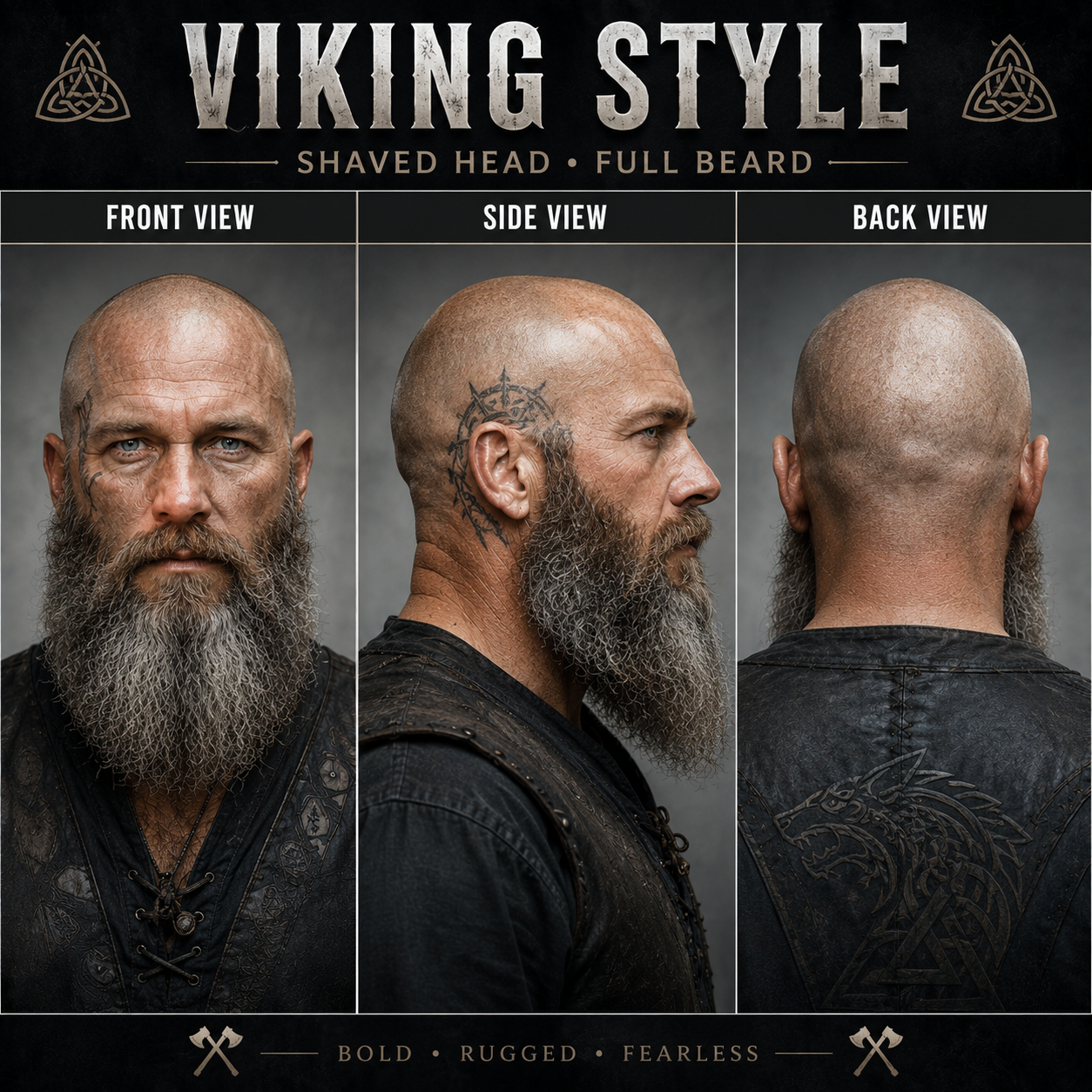
    12. Shaved Head with Full Beard

    Shaved head full beard Viking style

    A fully shaved head paired with a long, thick beard draws attention squarely to the jawline and facial hair. Many men with receding hairlines favor this rugged alternative. Balding clippers or a straight razor create the smooth finish. Beard oil and regular trims keep the facial hair defined. Confidence carries this style more than any product ever could. Round and oval faces gain strong definition from the contrast. One of the lowest-maintenance Viking looks available.

    13. Dreadlock Viking

    Dreadlocks carry genuine Norse historical precedent. Some archaeological findings suggest matted, rope-like hair among certain Viking populations. The modern dreadlock Viking combines thick, natural locs with a full beard for maximum rugged presence. This style takes significant time to develop, typically one to two years from scratch. Maintenance involves monthly retwisting and regular washing. It suits all face shapes and grows more visually impressive with time.

    Short and Modern Viking Haircuts

    Not every Viking look requires months of growth. These styles work for shorter hair and transition seamlessly into professional environments while keeping that warrior-inspired edge.

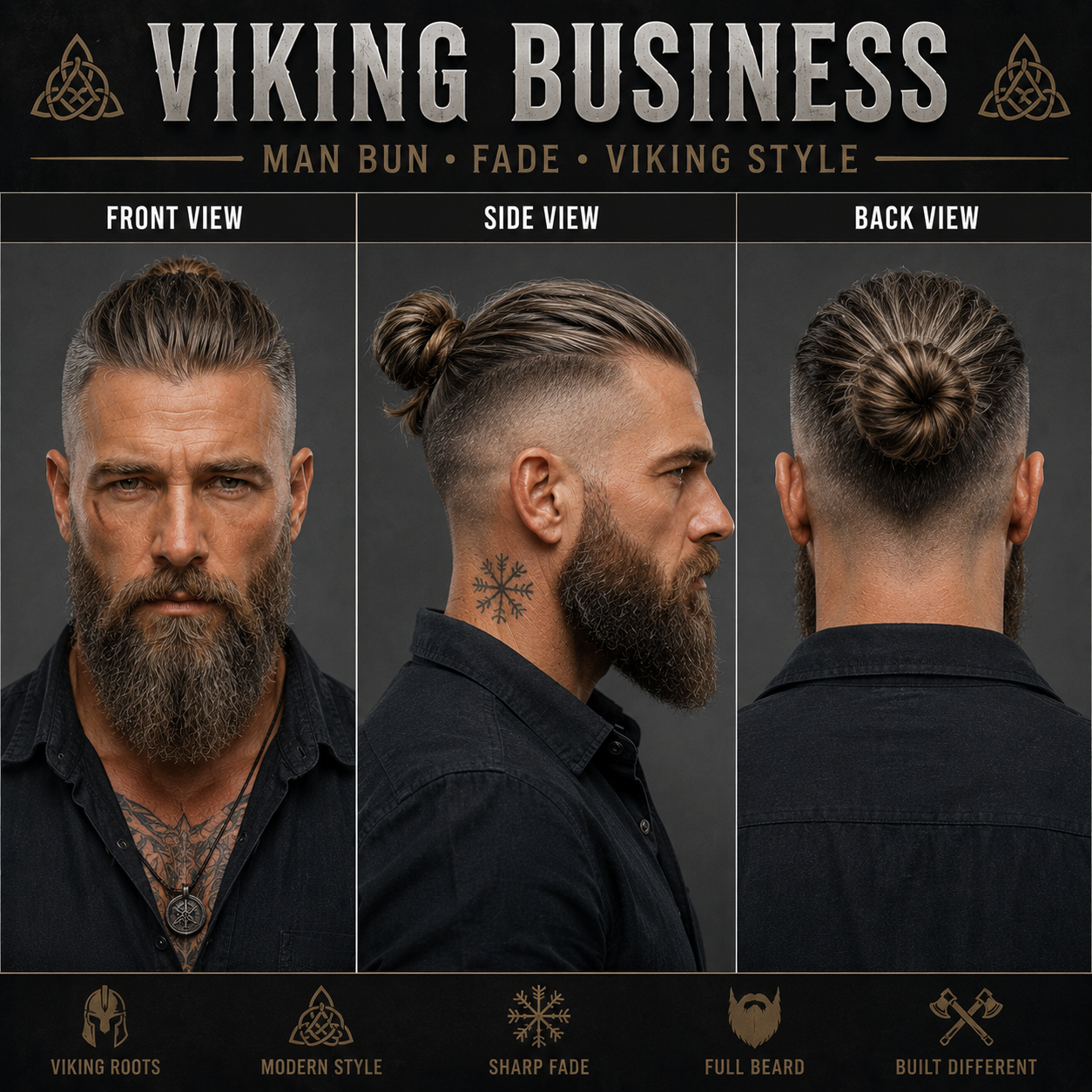
    14. Man Bun with Fade

    Man bun with fade Viking business hairstyle

    Medium-length top hair gathered into a small, neat bun with sharply faded sides. The contrast keeps the look modern and workplace-friendly. Barbers create the fade with clippers while the top hair is tied back with a small elastic. This style needs only minutes of daily effort. Business settings and creative offices both welcome it. Oval and square faces carry the bun shape naturally. Regular fade touch-ups every three weeks maintain the sharp contrast.

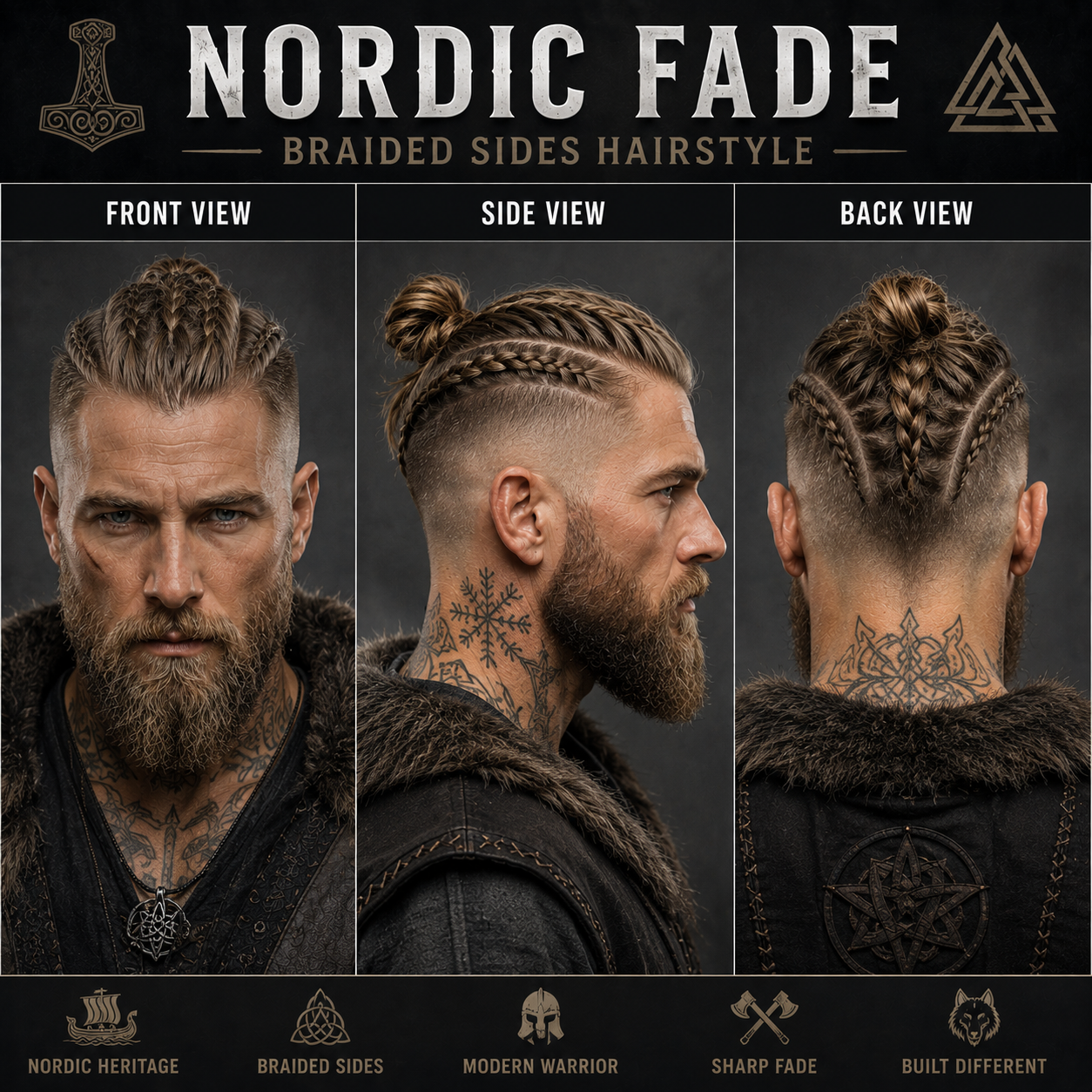
    15. Nordic Fade with Braided Sides

    Nordic fade with braided sides hairstyle

    Short hair on top with a skin fade and thin braids along the sides. A modern Viking hybrid that works in offices and casual settings alike. The braids take under thirty minutes to create. Touch-ups every two to three weeks keep the fade sharp. Square and heart-shaped faces benefit from the tight, tailored look. This proves Viking style can absolutely fit modern professional life.

    16. Half-Up Half-Down Viking Style

    Half up half down Viking hairstyle

    The top section is tied back while the rest of the hair flows freely down the back. This balances practicality with genuine Nordic flair. A small braid or twist often secures the top knot to prevent hair from falling forward. Minimal product keeps the loose sections looking natural. Casual settings and everyday wear both suit this style. Oval and diamond face shapes benefit most from the added height. It transitions easily from work to weekend without adjustment.

    17. Side-Swept Viking Undercut

    A sharp undercut on one or both sides with longer hair swept dramatically to one side on top. This modern take on the Viking undercut is cleaner and more office-appropriate than a full mohawk but retains that edgy Norse contrast. A medium-hold pomade styles the top section. Heart and oval face shapes suit the asymmetric look well. Great for men who want Viking confidence without full commitment to braids or long hair.

    18. Norse Warrior Slicked Back

    Medium-length hair slicked straight back with a strong-hold gel or clay. Clean, commanding, and subtly Nordic without obvious warrior signifiers. This look suits smart casual dress codes effortlessly. It is the most workplace-versatile style on this list. Any face shape can carry it. Pair with a short beard for best results. Reapplication of product after physical activity keeps the shape intact.

    19. Viking Textured Crop

    A short, textured crop with disconnected or faded sides and a slightly forward-falling fringe. The Viking edge comes from the sharpness of the disconnect and the deliberate, structured texture on top. Matte clay or texturizing paste creates the finished look. This is the most low-maintenance style on the entire list. Bi-weekly trims keep it sharp. Suits all face shapes. Ideal for men who want to reference Viking style subtly without dramatic length or braids.

    20. Norse Fade with Temple Braid

    A clean fade with one or two small braids running along the temple, adding a Nordic accent to an otherwise conventional short cut. The temple braids take under twenty minutes to create and last several days. This hybrid suits men at any stage of growing toward a fuller Viking style. It works in professional settings without raising eyebrows. Square and round faces benefit most from the structured lines. A great entry point into Viking haircuts for men new to the style.

    Viking Haircut Face Shape Guide

    Face ShapeBest Viking StylesWhy It WorksStyles to Approach Carefully
    OvalAny style on this listBalanced proportions suit all cutsNone, most versatile shape
    SquareBraided top knot, Viking mohawk, man bun with fadeRaised height softens the strong jawVery wide, horizontal styles
    RoundViking mohawk, shaved head with beard, textured cropVertical lines elongate the faceVery full, round bun styles
    RectangleClassic long hair, warrior ponytail, full Viking with beardVolume at the sides balances lengthVery tall top knots
    DiamondUndercut with long braid, side-swept undercutWidth at top and jaw balances cheekbonesVery narrow, tight styles
    HeartDouble braids, nordic fade with braided sides, Ragnar styleVolume at the sides balances the wide foreheadVery tall, narrow styles

    How to Choose Your Viking Haircut

    Your current hair length is the biggest deciding factor. Short hair suits fades, mohawks, and shaved styles first. Long hair opens up braiding and ponytail options immediately. Face shape plays a meaningful role. Lifestyle and workplace culture matter just as much as aesthetics. Client-facing roles may favor the man bun with fade or Norse fade. Creative or remote workers have far more freedom to experiment boldly.

    Maintenance Tips for Every Viking Hairstyle

    Braided styles need redoing every one to two weeks, and a light oil keeps the scalp comfortable between sessions. Long, loose hairstyles need trims every six to eight weeks to prevent split ends. Sea salt spray adds texture to long and medium styles without weight. Faded sides require touch-ups every two to three weeks to stay sharp. Shaved styles need weekly maintenance at home. Beards deserve equal attention: wash, oil, and comb daily for the best shape. A well-groomed beard elevates every single Viking haircut on this list.

    Frequently Asked Questions

    What is a true Viking haircut?

    A true Viking haircut typically combines long top hair with shorter or shaved sides, often incorporating braids for practical and status reasons. Historical accounts describe Norse men as unusually well-groomed. Braids and clean fades were not purely aesthetic choices but carried social meaning within Norse society.

    Do you need long hair for a Viking hairstyle?

    No. Several Viking-inspired looks work well with short hair: the shaved head with beard, the nordic fade, the textured crop, and the temple braid all require minimal length. Braided and ponytail styles do require longer hair, typically six months of growth or more to execute properly.

    How long does it take to grow Viking-length hair?

    Most men need eight to twelve months to reach shoulder-length hair. Growth speed depends on genetics, diet, and hair care habits. Regular trims during the growth phase, every six to eight weeks, keep the process looking intentional rather than messy. Using a good conditioner and limiting heat styling significantly improves growth quality.

    Can Viking haircuts work in a professional office environment?

    Yes, several styles on this list are entirely office-appropriate. The man bun with fade, the Norse warrior slicked back, the side-swept undercut, and the Norse fade with temple braid all pass in most professional environments. The key is clean lines, fresh fades, and a well-maintained beard. Industries like tech, creative, and healthcare have more flexibility than banking or law.

    What beard style works best with a Viking haircut?

    A full beard, long beard, or braided beard all complement Viking haircuts naturally. For shorter Viking cuts like the textured crop or man bun with fade, a medium-length stubble or short boxed beard keeps the look balanced without overwhelming it. For long Viking styles, a full or long beard completes the warrior silhouette. See our long beard styles guide for detailed pairing advice.

    Are Viking hairstyles hard to maintain?

    It depends on the style. Faded, shaved, and short Viking cuts are among the lowest-maintenance haircuts available. Braided styles require the most upkeep: redoing braids every one to two weeks and oiling the scalp regularly. Long, loose Viking hair falls between the two; monthly trims and basic conditioning are all that is needed. Choose the maintenance level that fits your lifestyle, not just your aesthetic preference.

    Final Thoughts: Claim Your Nordic Look

    Viking haircuts offer far more than a passing trend. They connect modern men to centuries of warrior history, with every braid and shaved line carrying genuine cultural weight. Whether you are drawn to the drama of a full braided warrior look or the subtle edge of a nordic fade, there is a style on this list built for your face, your hair, and your lifestyle.

    Start with your current hair length and choose one style from the 20 above. Book a consultation with a skilled barber who understands fade techniques and braiding. Commit to the maintenance schedule, and within weeks you will have a look that few men attempt and fewer still pull off as well as you will.

    Related reading: Long Beard Styles · Beard and Mustache Styles · 80s Hairstyles for Men · Beard Styles for Men · The Warrior Cut

  • 15 Best Professional Haircuts for Men: Business-Ready Styles That Command Respect (2026)

    15 Best Professional Haircuts for Men: Business-Ready Styles That Command Respect (2026)

    Professional Haircuts for Men

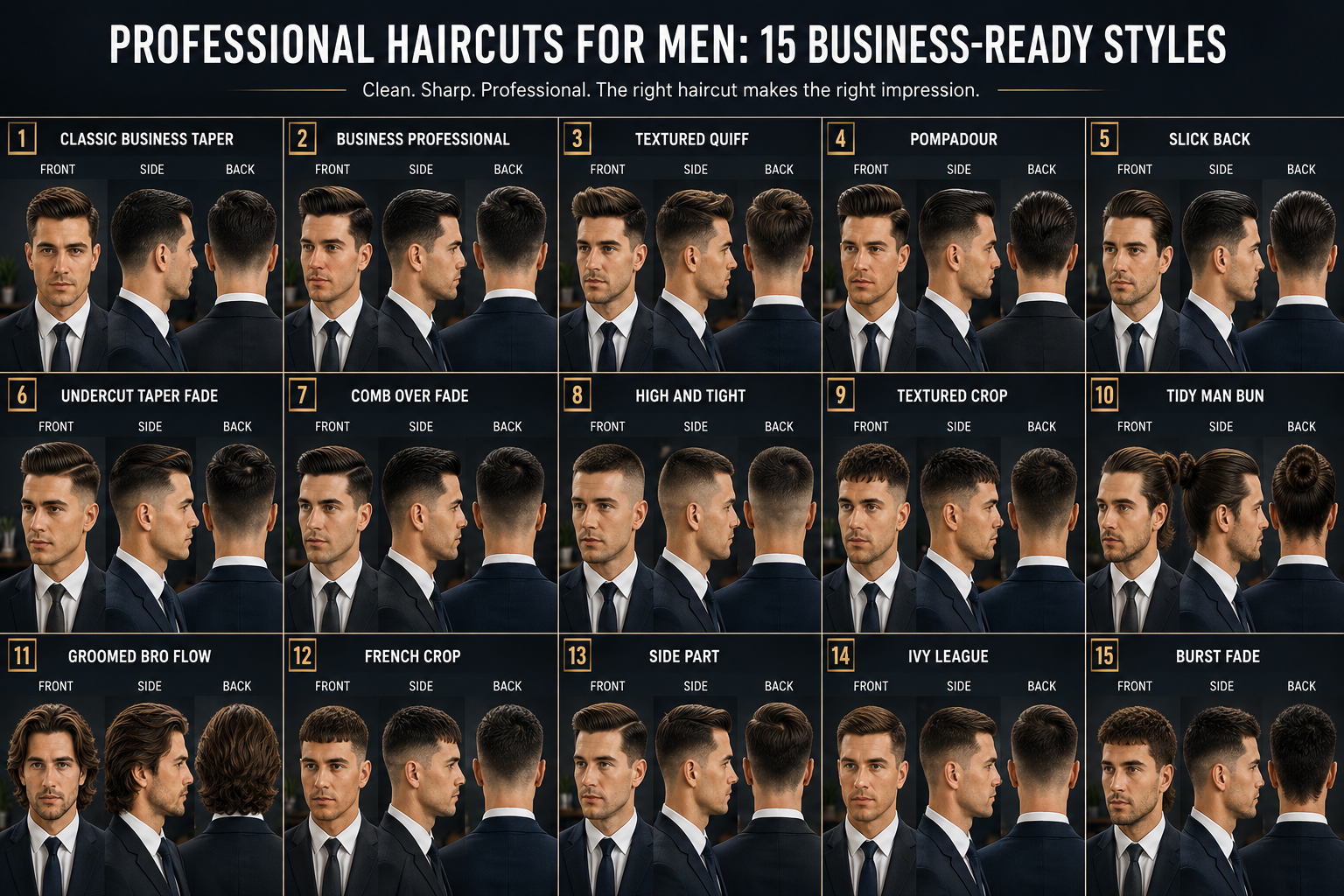
    Your haircut says something before you open your mouth. Walk into a job interview, a client meeting, or a performance review with the right cut and you’re already ahead. Walk in with a grown-out mess and you’re fighting an uphill battle, no matter how sharp your suit is.

    The good news? You don’t need to spend a fortune or sit in a barber’s chair every two weeks to look polished. You just need the right cut for your face shape, hair type, and workplace environment. This guide covers the 15 best professional haircuts for men in 2026, with practical advice on who each style works for and how to maintain it.

    What Makes a Haircut “Professional”?

    A professional haircut isn’t about being boring. It’s about looking intentional. The key markers are clean necklines, controlled volume, and a style that stays put throughout a full workday. Whether you’re in a conservative law firm or a creative agency, the best professional cuts share one quality: they look like you meant to have them.

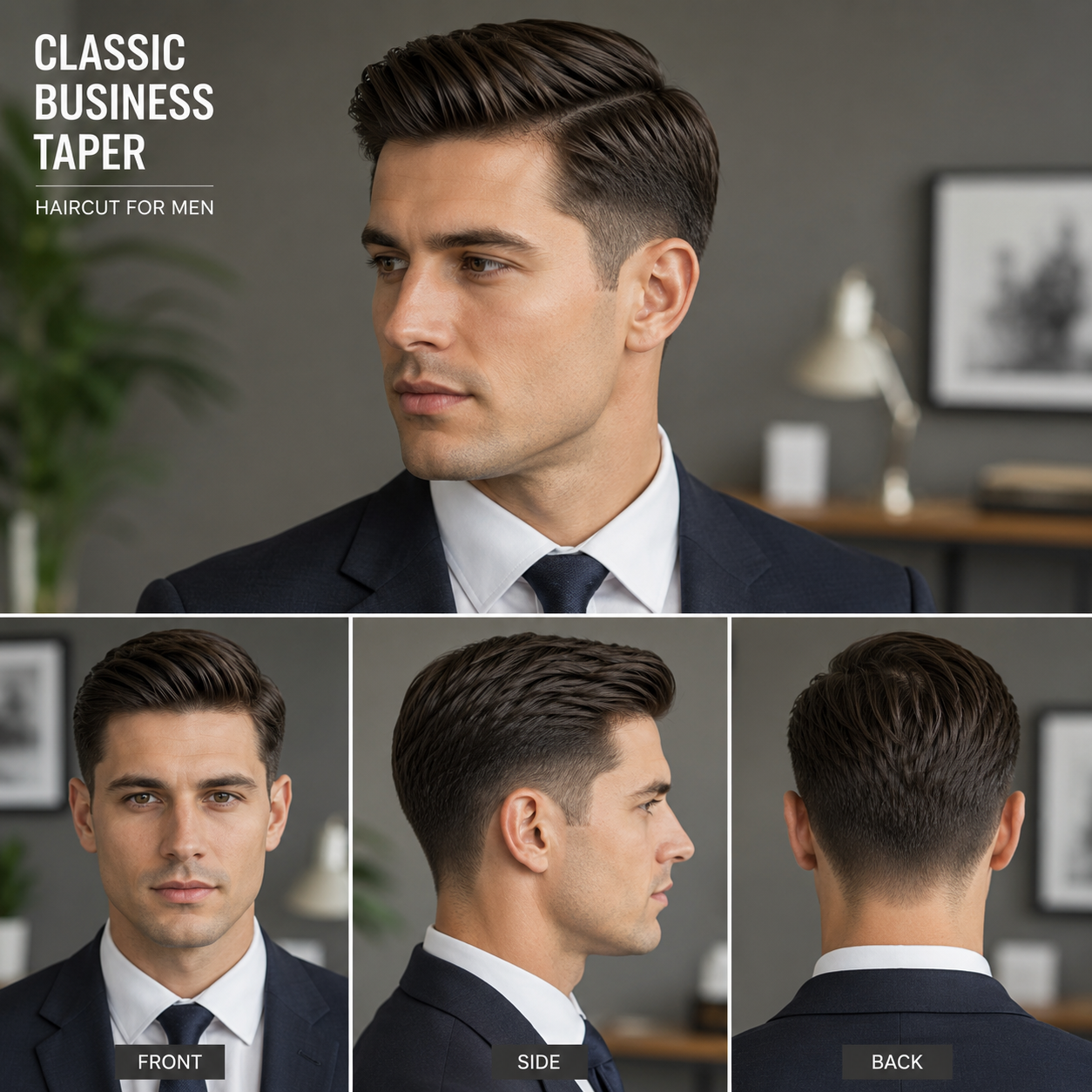
    1. Classic Business Taper

    Classic business taper haircut for men

    The classic business taper is the benchmark for professional grooming. Hair is longer on top (typically 1.5 to 2 inches), tapering down through the sides and back to skin or a close clipper grade at the neckline. It’s the cut that’s been landing men jobs since the 1950s and hasn’t lost its edge since.

    This cut works for virtually every face shape, though it’s especially flattering on oval and square faces. It suits straight to slightly wavy hair best. For styling, a small amount of matte pomade worked through slightly damp hair gives you all-day hold without looking slick or overdone. Tell your barber you want a 1.5-inch length on top with a medium taper on the sides.

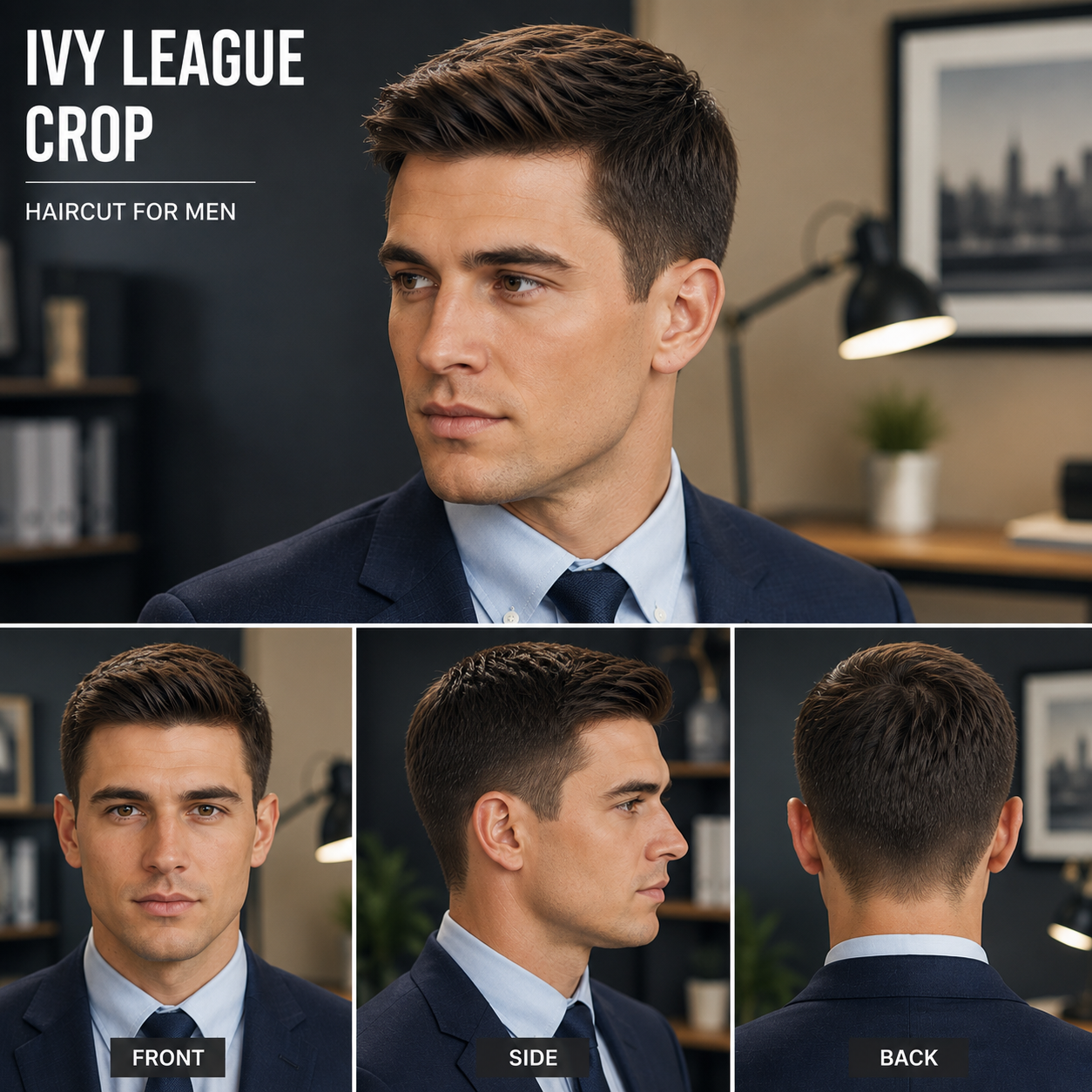
    2. Ivy League Crop

    Ivy League crop haircut for the office

    Think of the Ivy League as a crew cut that grew up. The top is left slightly longer (around 1 to 2 inches), allowing for a side part or a subtle forward sweep. The sides and back are still kept tight, but not as severe as a military cut. It’s the kind of haircut you can wear to a board meeting on Monday and a client dinner on Friday without anyone blinking.

    It’s ideal for men with fine or medium hair. Thicker hair tends to get bulky with this cut unless your barber texturizes the top properly. A light hold cream keeps the style neat without weighing it down.

    3. Crew Cut

    Crew cut professional hairstyle for men

    The crew cut is the low-maintenance workhorse of professional hairstyles. Short all over, slightly longer on top, with a clean taper or fade on the sides. It takes about 90 seconds to style in the morning, looks sharp all day, and grows out gracefully between cuts.

    If you’re the kind of man who doesn’t want to think about his hair, this is your cut. It works across nearly every hair type and face shape, though it’s especially good for round faces because the slightly longer top adds vertical proportion. A quick run-through with a small-tooth comb after towel-drying is all it typically needs.

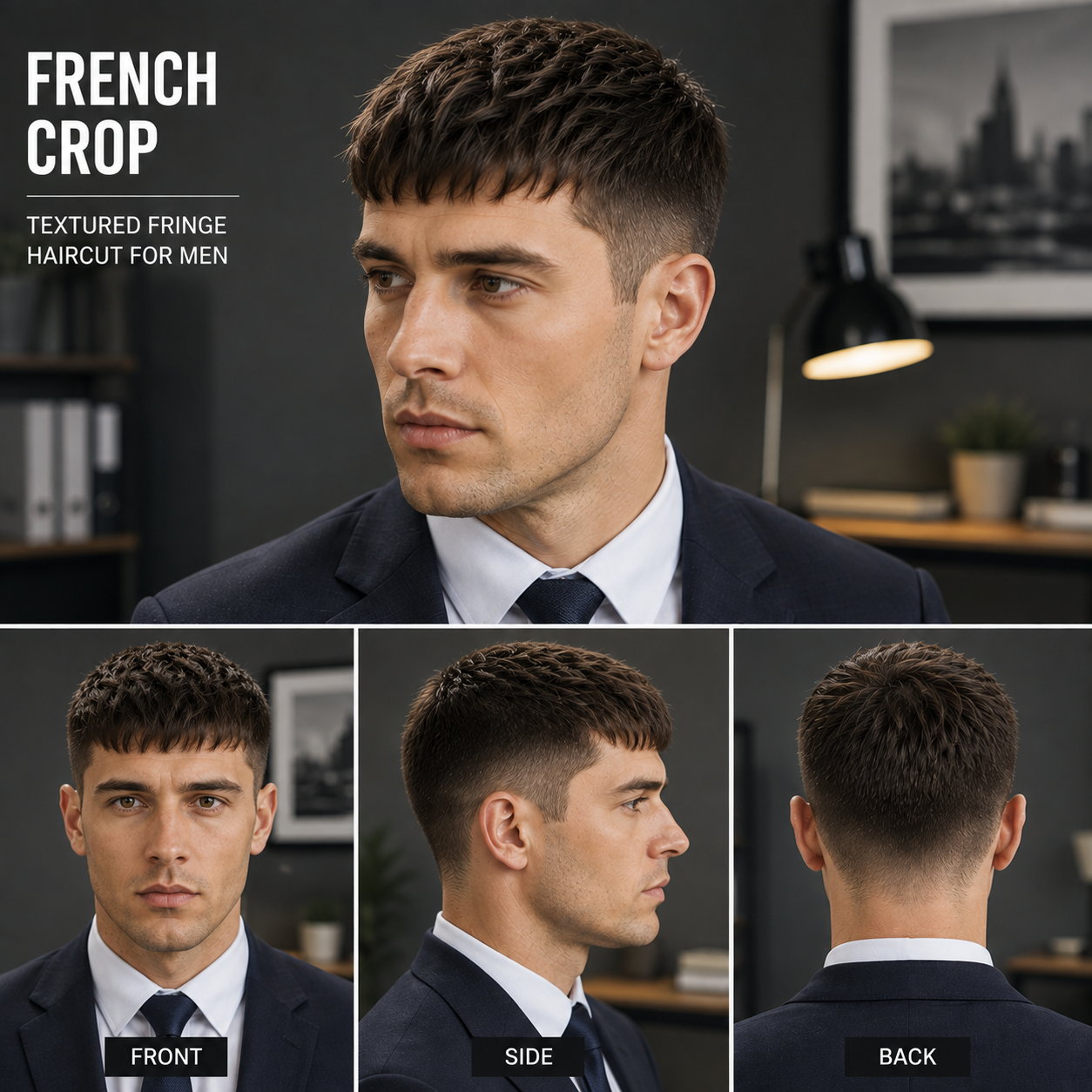
    4. French Crop

    French crop haircut with textured fringe

    The French crop has quietly become one of the most popular professional cuts for men who want something slightly more contemporary. It features a short fringe cut straight across the forehead, tight sides, and a textured top. The result is clean enough for conservative environments while having enough personality for creative workplaces.

    This cut is particularly good for men with a larger forehead, as the fringe brings balance to the face. It suits all hair textures but looks especially sharp on thicker hair. Styling takes about 30 seconds with a small amount of matte clay pushed forward through the fringe.

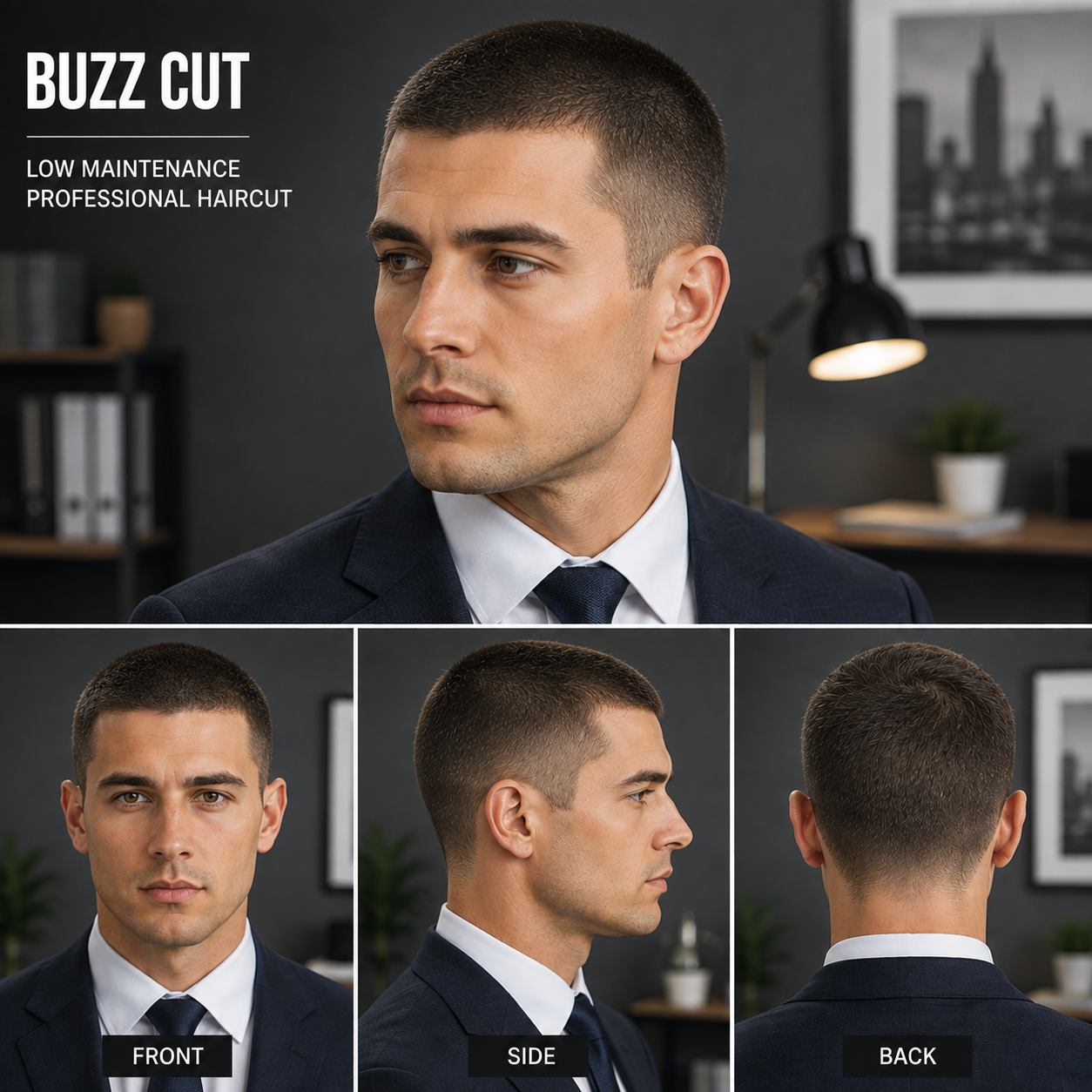
    5. Buzz Cut

    Buzz cut low maintenance professional haircut

    The buzz cut gets unfairly dismissed as a “no-style” haircut, but when worn confidently, it’s one of the most commanding looks a man can have. A uniform clipper grade all over (typically a #2 or #3) gives you a clean, decisive appearance that reads as confident and no-nonsense.

    It’s the most practical option if you have thinning hair, as it eliminates the patchiness that longer styles can expose. It suits oval, square, and diamond face shapes best. If your head is on the rounder side, a slight fade on the sides with a touch more length on top can add definition. No styling products needed, just keep the skin on your head moisturized.

    6. Executive Side Part

    Executive side part haircut for men

    If the classic business taper is the standard, the executive side part is the premium version. The hair on top is longer (sometimes 2 to 3 inches) and combed to one side with a clean, defined part. The sides are tapered short. The overall effect is polished, authoritative, and timeless.

    This is the cut you see on courtroom lawyers, senior executives, and anyone who needs to command a room. It requires straight or slightly wavy hair to hold the part cleanly. A medium-hold pomade with some sheen, applied to damp hair and combed through, gives you the classic structured look. If you want something more modern and matte, a fiber paste works well too.

    7. Textured Quiff

    Textured quiff hairstyle professional

    The textured quiff sits at the intersection of professional and stylish. Volume is built through the front and top, with the sides kept shorter to frame the face. Unlike the slicked-back pompadour, the textured quiff has a more relaxed, modern feel that reads well in contemporary professional environments.

    It suits men with medium to thick hair that has some natural movement. Fine hair can work too with the right volumizing product. Apply a small amount of sea salt spray to damp hair, rough-dry with a blow dryer while lifting the roots, then finish with a light matte clay for hold. The whole process takes under 5 minutes once you have the technique down.

    8. Pompadour

    Pompadour haircut for business professional

    The modern business pompadour is nothing like the towering rockabilly versions of decades past. Today’s professional pompadour keeps the volume controlled and the sides tight, resulting in a style that’s distinctive without being distracting. It works beautifully in industries where personal style matters, like marketing, advertising, real estate, and sales.

    It requires medium to thick hair and some commitment to styling. A blow dryer is essentially non-negotiable here. Work a medium-hold pomade through slightly damp hair, blow dry while brushing backward and upward, then shape the front with a fine-tooth comb. The payoff is a look that photographs well and ages you slightly in the best possible way.

    9. Slick Back

    Slick back power hair professional

    The slick back is power hair. All the length goes straight back from the forehead, held in place with a pomade or wax. It’s confident, assertive, and in the right setting, genuinely intimidating in the best possible way. Think Gordon Gekko, but with better judgment.

    It works best on men with straight or slightly wavy hair that has enough length to stay put (usually 3 inches or more on top). Apply a strong-hold pomade to damp hair and comb everything straight back. Some men prefer a water-based pomade for a more natural look; others go for an oil-based version for that classic high-shine finish. Keep the neckline clean and the sides tight to prevent the style from looking messy.

    10. Undercut with Taper Fade

    Undercut taper fade modern professional haircut

    The undercut with a taper fade is the modern professional haircut for men who want contrast and structure in their style. The disconnect between the longer top and the faded sides creates a sharp, deliberate look that communicates attention to detail. In forward-thinking work environments, it’s become as standard as the crew cut was for previous generations.

    It suits most hair types, though thicker hair creates the most dramatic and flattering contrast. The top can be styled in multiple ways, from slicked back to textured and pushed forward, giving you versatility without needing a different cut. Talk to your barber about how aggressive you want the fade and where you want the disconnect to sit.

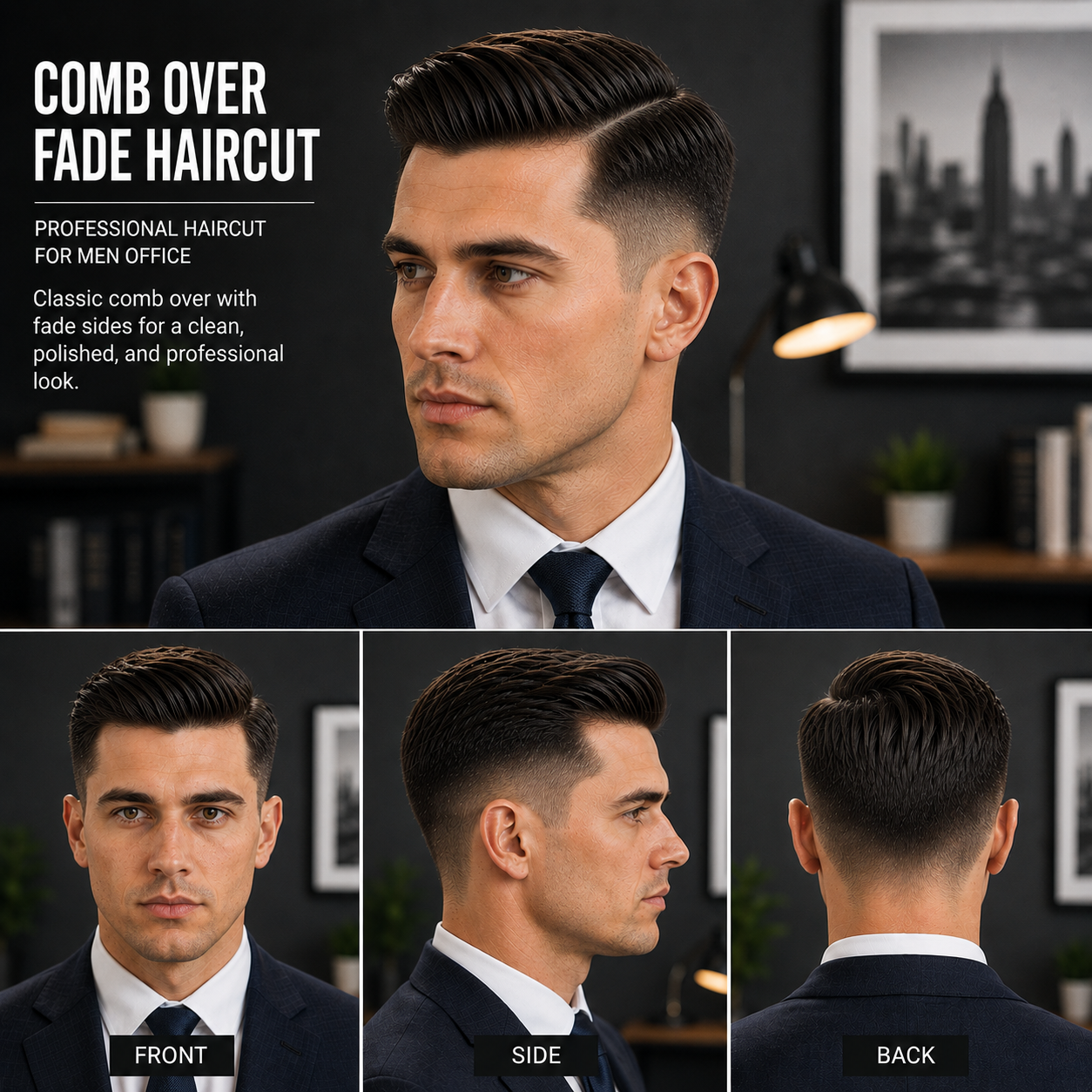
    11. Comb Over Fade

    Comb over fade haircut for men in office

    Not to be confused with the desperate comb-over that tries to cover a bald spot, the modern comb over fade is a deliberately styled cut where longer hair on top is swept to one side over a faded undercut. It’s one of the most versatile professional styles available right now, working in everything from banking to tech startups.

    The fade can be skin-level, low, mid, or high depending on how bold you want to go. For the most universally appropriate office look, a mid fade keeps things contemporary without pushing into fashion-forward territory. Style the top with a medium-hold clay or pomade, combing it over and slightly forward for the most flattering shape.

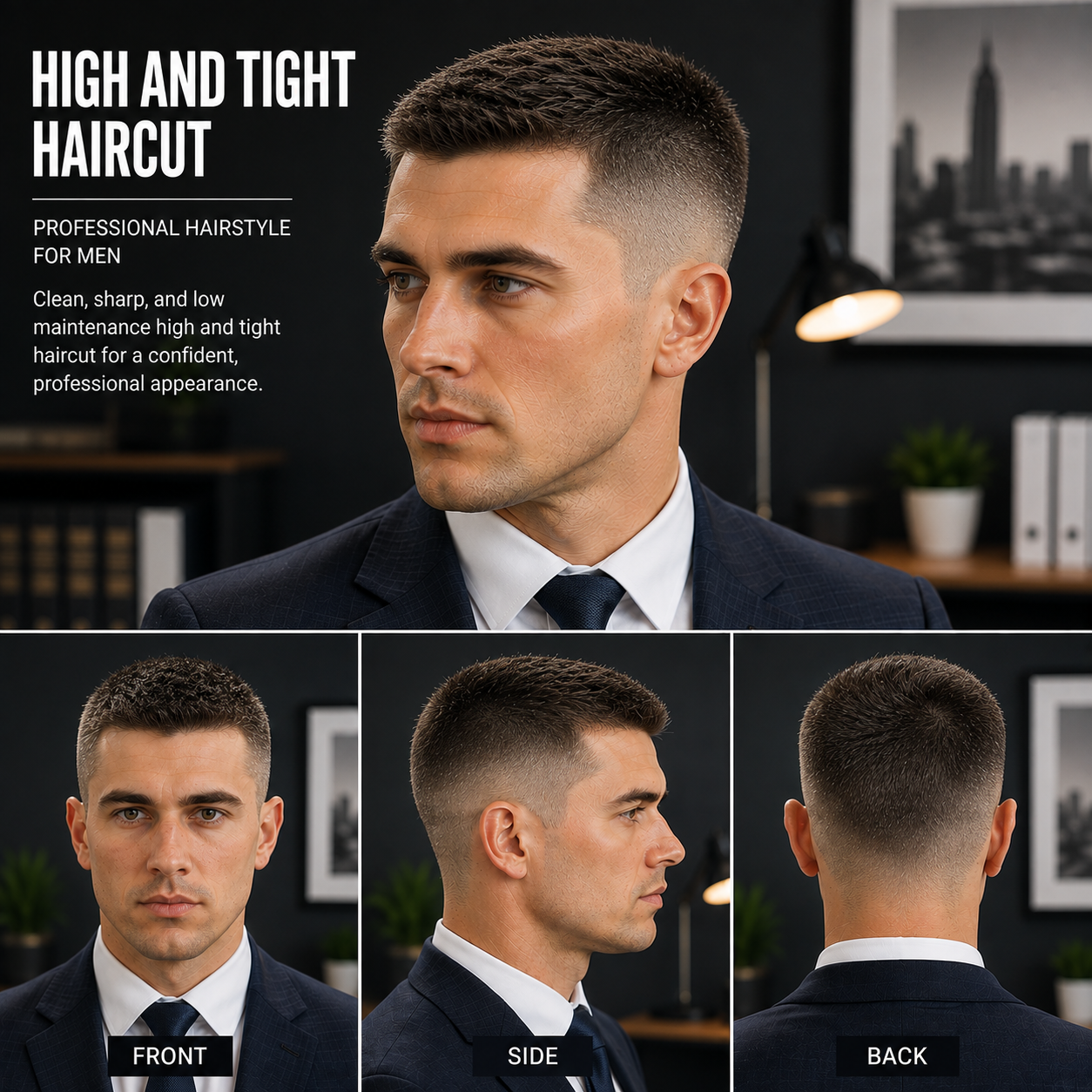
    12. High and Tight

    High and tight haircut for professional men

    The high and tight is the military cut that crossed over into civilian professional life and never went back. The sides are shaved or cut very close, with the transition point sitting high on the head, and the top is left slightly longer. It’s precise, disciplined, and communicates a certain no-nonsense quality that plays well in many professional environments.

    It suits oval, square, and diamond face shapes particularly well. Men with round faces can still wear it, but the high transition point can emphasize the width of the face. If that’s a concern, dropping the fade slightly and adding a touch more length on top creates a more balanced silhouette. Minimal styling needed, a quick brush-through is typically all it takes.

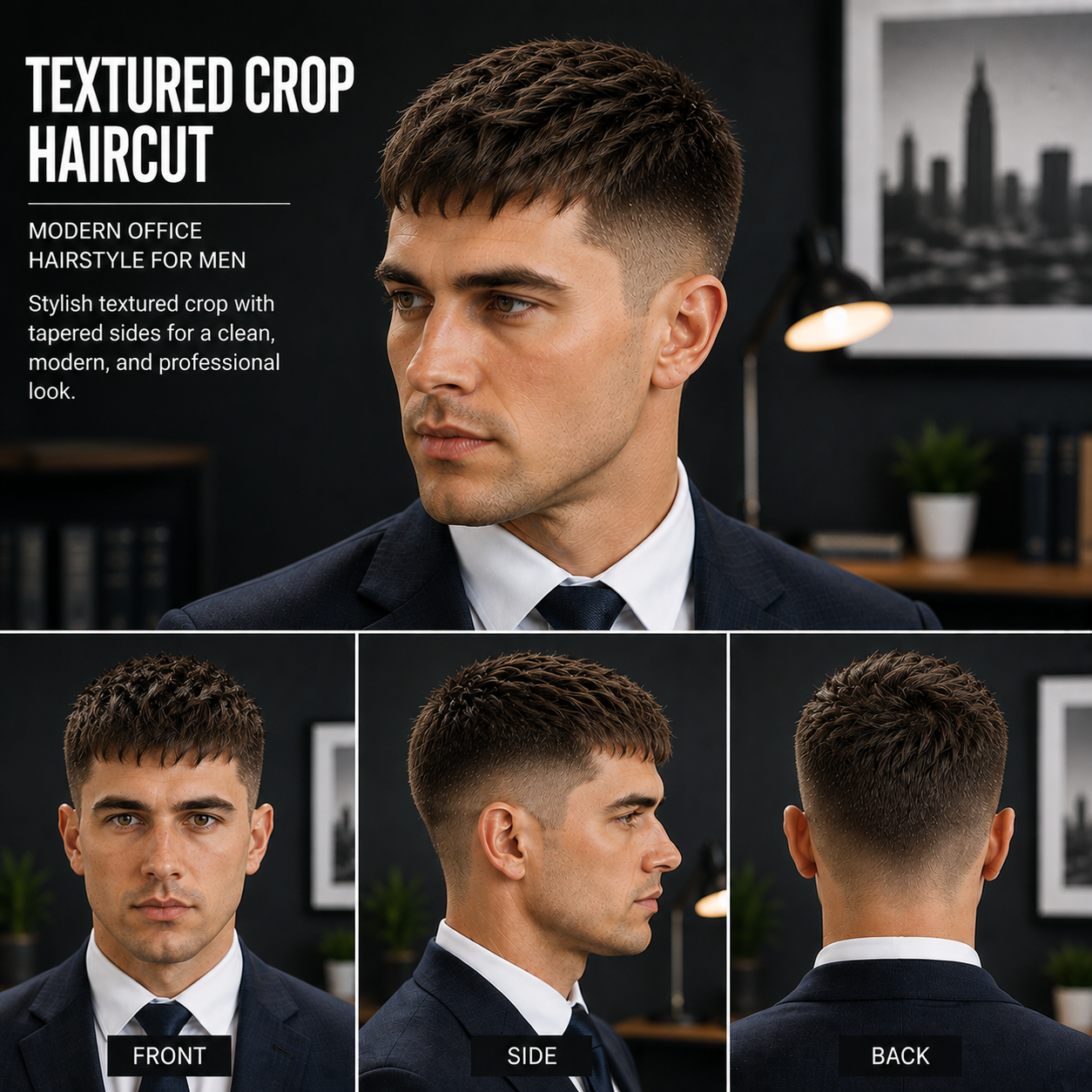
    13. Textured Crop

    Textured crop haircut for modern office

    The textured crop is everywhere right now, and for good reason. It features short sides with a textured, slightly disheveled top that still looks deliberate and styled. It’s the professional choice for men who find traditional office cuts too conservative but want something that’s clearly intentional rather than unkempt.

    It works brilliantly on thick or coarse hair. For finer hair, ask your barber to cut in some texture and avoid going too short on top, as the lack of weight can make fine hair look sparse. Style with a matte clay or sea salt spray for a natural, touchable finish. This cut tends to grow out more gracefully than fades, often lasting 6 to 8 weeks between cuts.

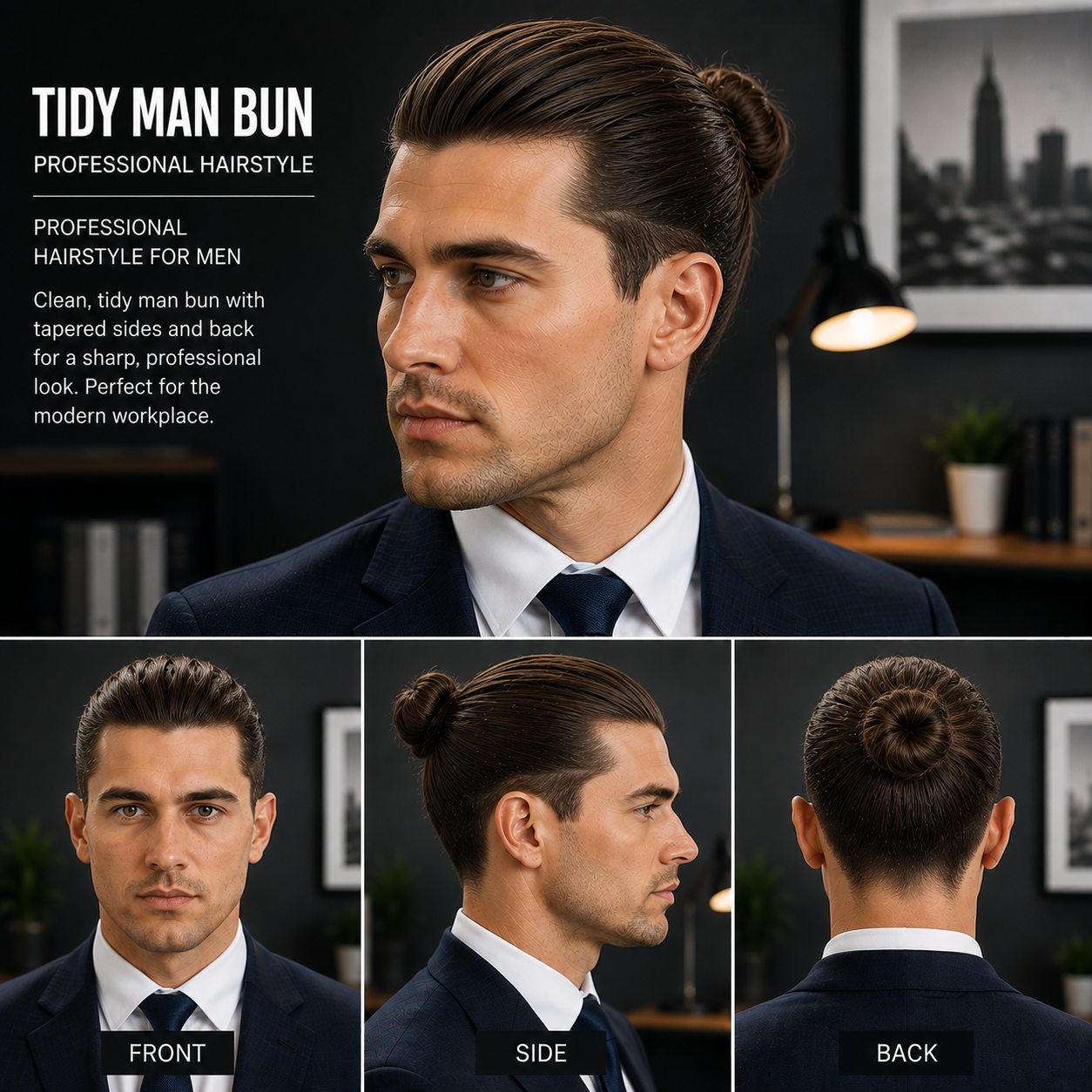
    14. Tidy Man Bun

    Tidy man bun professional hairstyle

    Long hair and professional life are not mutually exclusive. A well-executed man bun, worn at the crown or slightly lower at the back of the head, can look genuinely polished in the right environment. The key word is tidy. Flyaways, loose strands, and an off-center bun undermine the entire look.

    This is the professional long-hair option for creative industries, tech, academia, and any workplace that prizes individuality. For the cleanest look, blow dry your hair straight before tying it back. Use a small amount of smoothing serum to tame the surface, and secure with a hair tie that matches your hair color. The sides should be relatively neat, so either pair the bun with an undercut or keep the sides combed back.

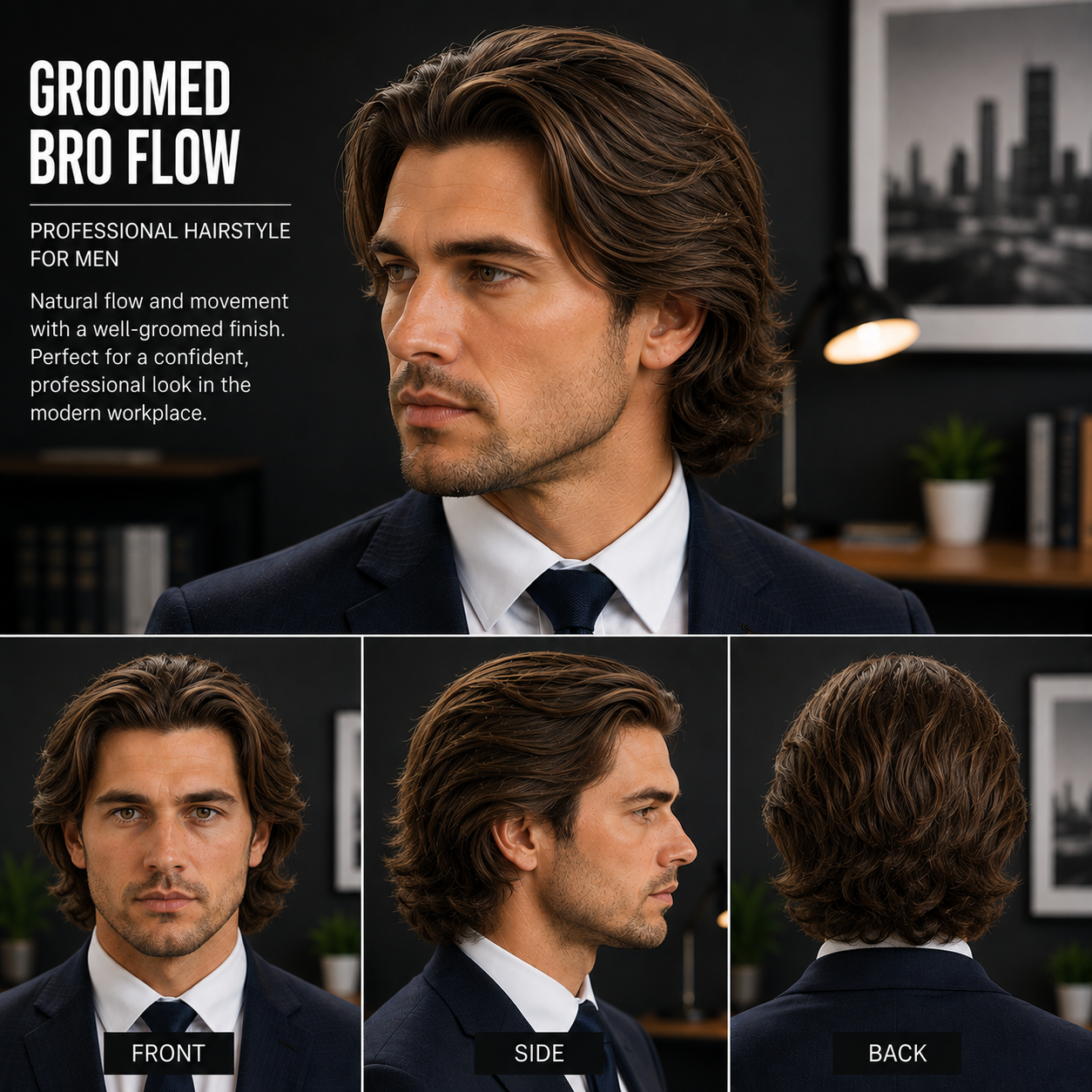
    15. Groomed Bro Flow

    Groomed bro flow long hairstyle professional

    Longer hair that flows past the ears and frames the face can read as professional when it’s well-maintained and intentionally styled. The “bro flow” label doesn’t do justice to how sharp this look can be when it’s given proper attention. Think clean ends (no split ends), controlled waves or curls, and a shape that suits your face.

    Regular trims every 6 to 8 weeks are essential for keeping the ends healthy and the shape intact. For daily styling, a light leave-in conditioner or hair oil keeps the texture looking healthy and intentional rather than overgrown. This style works especially well in creative, academic, or outdoor-focused professional environments. Pair it with clean, well-fitting clothing and a confident posture and it reads as a deliberate aesthetic choice, not a haircut you forgot to get.

    How to Choose the Right Professional Haircut

    Face shape is the starting point, but it’s not the whole story. Here’s how to actually make the decision:

    Your workplace culture matters. A skin fade is perfectly appropriate at a design agency or tech company. At a traditional law firm or financial institution, a classic taper or executive side part will serve you better. Know your audience.

    Your hair type is non-negotiable. No amount of product will make fine hair hold a pompadour reliably. Work with what you have rather than fighting it. A good barber will tell you honestly what your hair can and can’t do.

    Maintenance is part of the commitment. Fades look sharp for about 2 to 3 weeks before they start growing out noticeably. Longer styles with more natural texture are more forgiving. Factor your schedule and budget into the decision.

    Bring photos to your barber. Words like “short on the sides” mean different things to different people. A reference photo eliminates guesswork and gets you the cut you actually want.

    Final Word

    The best professional haircut is the one you maintain consistently. A perfectly executed crew cut that gets regular trims will always beat a trendy style that’s been left to grow out. Find the cut that suits your hair, your face, and your workplace, invest in a good barber, and show up consistently. That’s the whole formula.

  • 15 Best Grey Beard Styles for Men: The Complete Silver Fox Guide (2026)

    15 Best Grey Beard Styles for Men: The Complete Silver Fox Guide (2026)

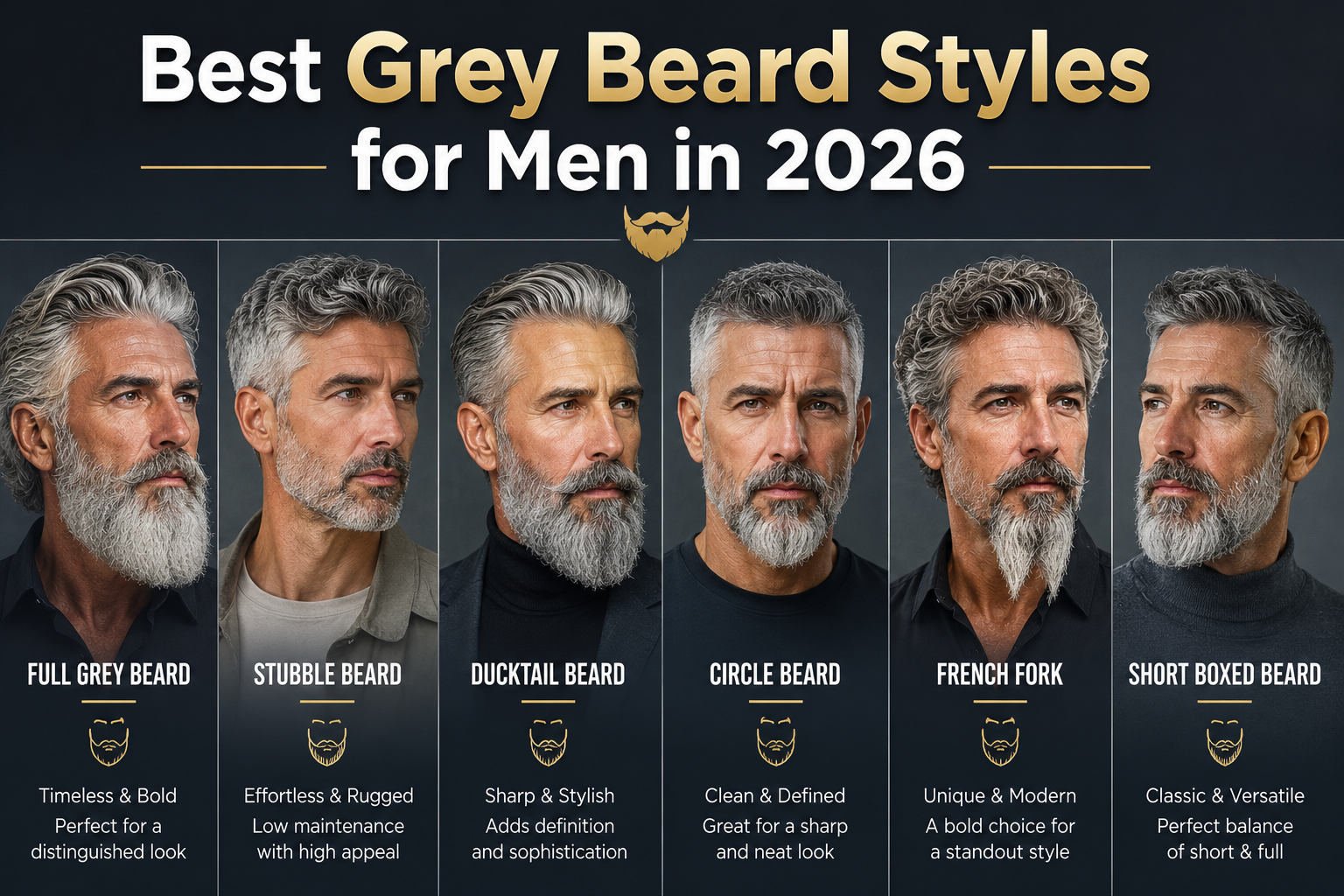
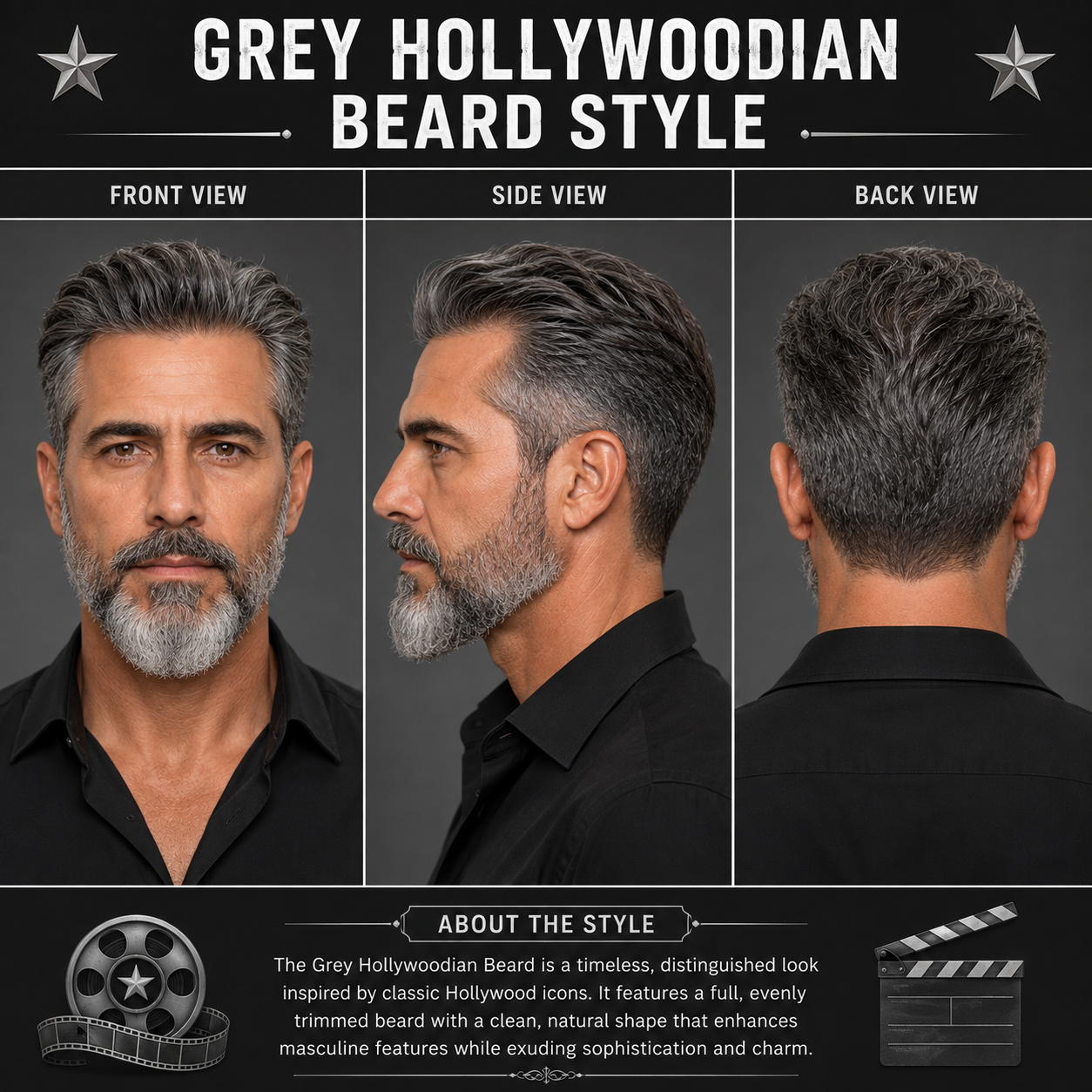
    Grey beard styles have become one of the most sought-after looks in men’s grooming. What was once hidden with dye is now worn with confidence, and for good reason. A well-maintained grey beard signals maturity, distinction, and self-assurance. The key is knowing which grey beard style suits your face shape and hair texture, and committing to the grooming routine that keeps it looking sharp rather than neglected. These 15 grey beard styles cover the full range of silver looks for the modern man.

    Why Grey Beards Look Better Than Ever

    Grey beard hair behaves differently from pigmented beard hair. It tends to be coarser, drier, and more prone to wiry growth, which means it requires more moisture and conditioning to look its best. It also catches light differently, giving a distinguished texture that pigmented hair can’t replicate. The men who wear grey beards best are the ones who lean into the texture rather than fighting it, and invest in a consistent grooming routine that keeps the grey looking silver and bright rather than yellowed or dull.

    Quick Reference: Grey Beard Grooming Basics

    IssueCauseSolution
    Yellow tingeProduct buildup, minerals in waterPurple/violet beard shampoo weekly
    Wiry, coarse textureLoss of melanin changes hair structureDaily beard oil and beard butter
    Dry, brittle beardSebum production slows with ageBeard conditioner after every wash
    Uneven grey/dark mixNatural greying patternEmbrace it, or shape around it
    Dull, flat colorProduct buildup dulling the silverClarifying shampoo once per month

    15 Best Grey Beard Styles for Men

    1. The Full Grey Beard

    Full grey beard silver fox style for men

    The full grey beard, covering cheeks, jaw, chin, and mustache at a medium-to-long length, is the quintessential silver fox look. When the grey is uniform and the beard is well-shaped with clean neckline and cheek edges, this style projects genuine authority. Best for oval and oblong face shapes. Use a boar bristle brush daily to give the grey beard a consistent, polished direction. Apply beard oil morning and night for the deep moisture grey hair needs more than pigmented hair.

    2. The Silver Stubble

    Silver stubble grey beard style for men

    Silver stubble at 3 to 5mm is one of the most low-maintenance and universally flattering grey beard styles. The silvery-grey color at stubble length creates a sophisticated, contemporary look that suits most face shapes without demanding much time. Maintain it with a quality trimmer on a fixed guard setting every 2 to 3 days. Silver stubble doesn’t need beard oil at this length, but a light moisturizer on the skin underneath keeps it from looking dry and prevents itching at the base.

    3. The Salt-and-Pepper Beard

    Salt and pepper beard style for men

    The salt-and-pepper beard, a mix of dark and grey hairs throughout the beard, is one of the most attractive transitional grey beard styles. The contrast between dark and grey hairs creates natural visual interest and depth that fully grey or fully pigmented beards don’t have. Best when kept at a medium length of 1 to 3cm where the contrast is most visible. Avoid beard dye since the natural salt-and-pepper pattern is more attractive than an artificially uniform color. Best for oval, square, and round face shapes.

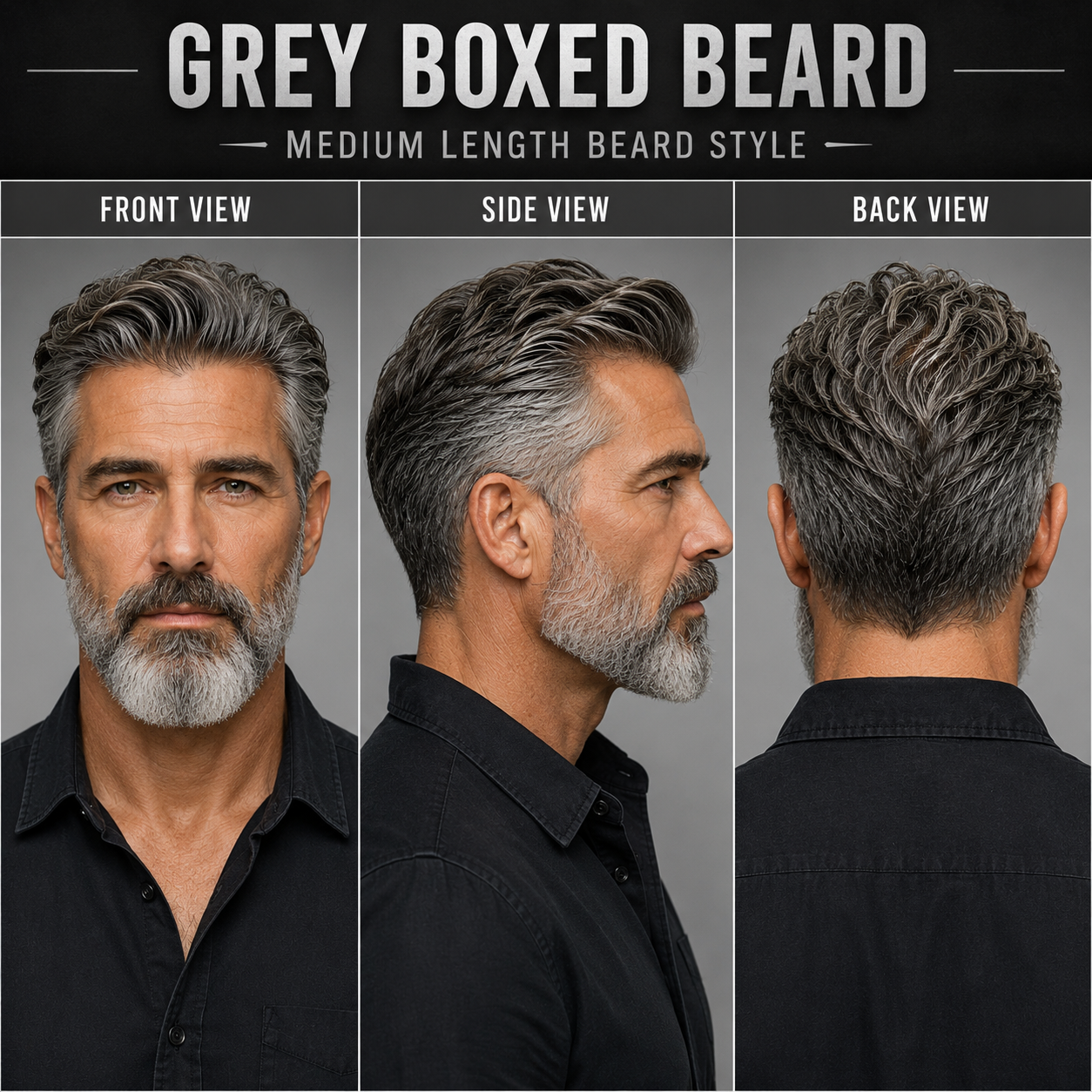
    4. The Short Grey Beard

    Short grey beard style for men

    A well-shaped short grey beard at 1 to 2cm length with clean lines is clean, professional, and distinctive. At this length the grey color is vivid and the texture is controlled, making it the ideal grey beard style for professional environments where a longer beard would be out of place. Keep the neckline and cheek line defined with a trimmer every 5 to 7 days. Apply a light beard oil 2 to 3 times per week at this length to prevent the skin underneath from drying out.

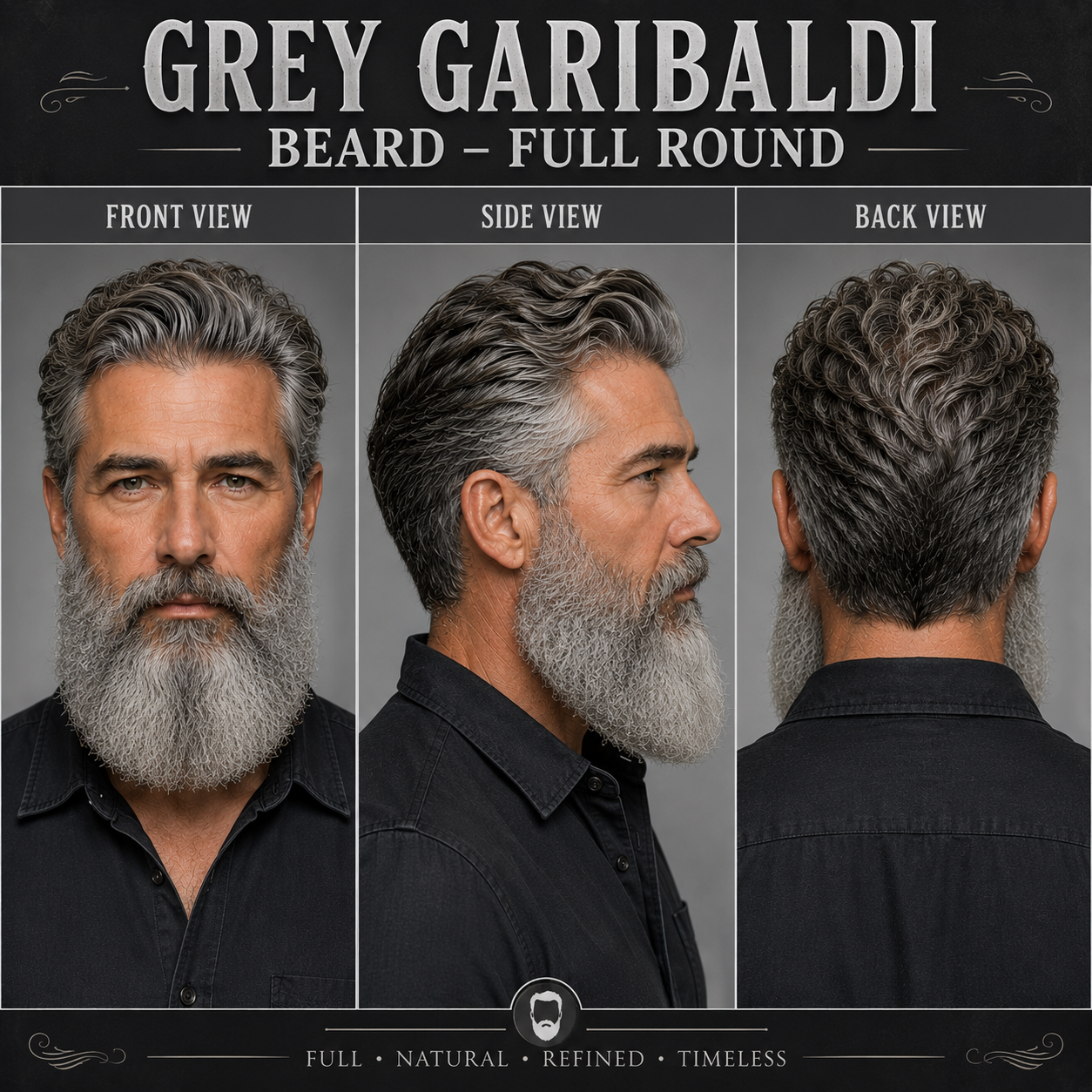
    5. The Grey Garibaldi

    Grey Garibaldi beard style for men

    The Garibaldi, a wide full beard rounded at the bottom, becomes especially distinctive in grey. The wide rounded shape suits oblong and long face shapes, and the grey color gives it a distinguished, almost statesmanlike quality that the same style in dark hair simply doesn’t have. Grow to 4 to 8cm, then shape the bottom to a rounded silhouette. Apply beard oil and balm daily. The Garibaldi in grey is one of the most commanding grey beard styles for men with longer face shapes and confident personal style.

    6. The Grey Ducktail

    Grey ducktail beard style for men

    The ducktail, where the chin beard is shaped to a central point, is a sophisticated grey beard style that suits round and square face shapes by adding chin length. The grey color makes the precise shaping of the ducktail look intentional and artistic rather than fussy. Keep the sides rounded and the chin section shaped to a soft point using beard scissors and a comb. Apply beard balm to maintain the shape throughout the day. The grey ducktail benefits from professional shaping every four to six weeks to keep the point well-defined.

    7. The Silver Fox Stubble

    Silver fox stubble grey beard style for men

    Heavy stubble at 5 to 10mm in silver-grey is what most people mean when they talk about the silver fox look. This is the beard style most associated with distinguished, attractive older men, and it earns that reputation consistently. The key is consistent maintenance: use a trimmer with a fixed guard to keep it at exactly the same length, and keep the neckline sharp. Apply a light beard oil every 2 to 3 days. The silver fox stubble suits almost all face shapes and is one of the easiest grey beard styles to maintain week after week.

    8. The Grey Goatee

    Grey goatee beard style for men

    A grey goatee, chin beard and mustache only with clean-shaven cheeks, is a sleek and defined grey beard style that suits round and diamond face shapes by adding chin emphasis. The clean-shaven cheeks contrast sharply with the silver chin beard, making the grey color more vivid and intentional. Keep the goatee at 1 to 3cm for a clean look, or grow it longer for a more distinguished appearance. Keep the cheeks clean-shaven daily to maintain the sharp contrast that makes this style work visually.

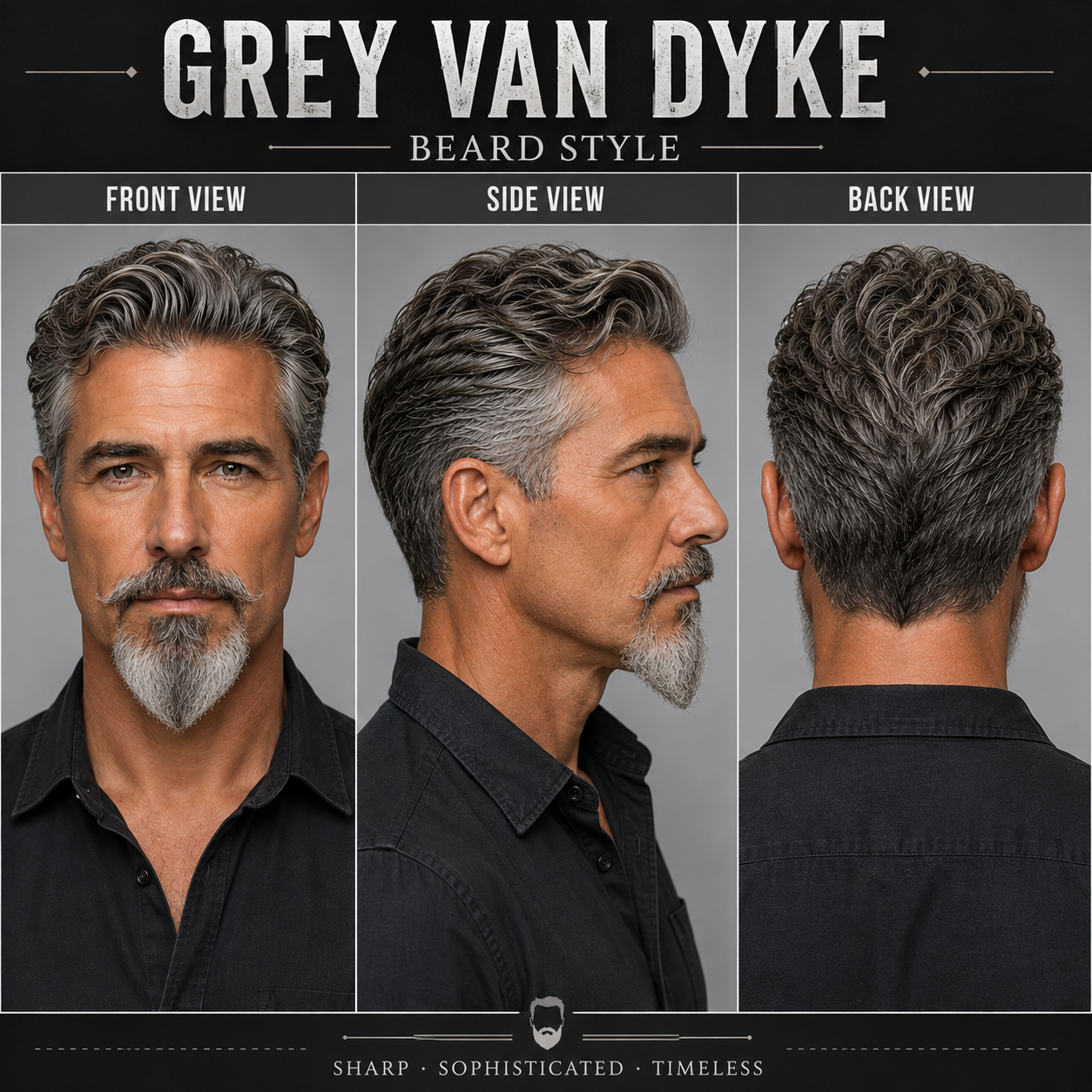
    9. The Grey Van Dyke

    Grey Van Dyke beard style for men

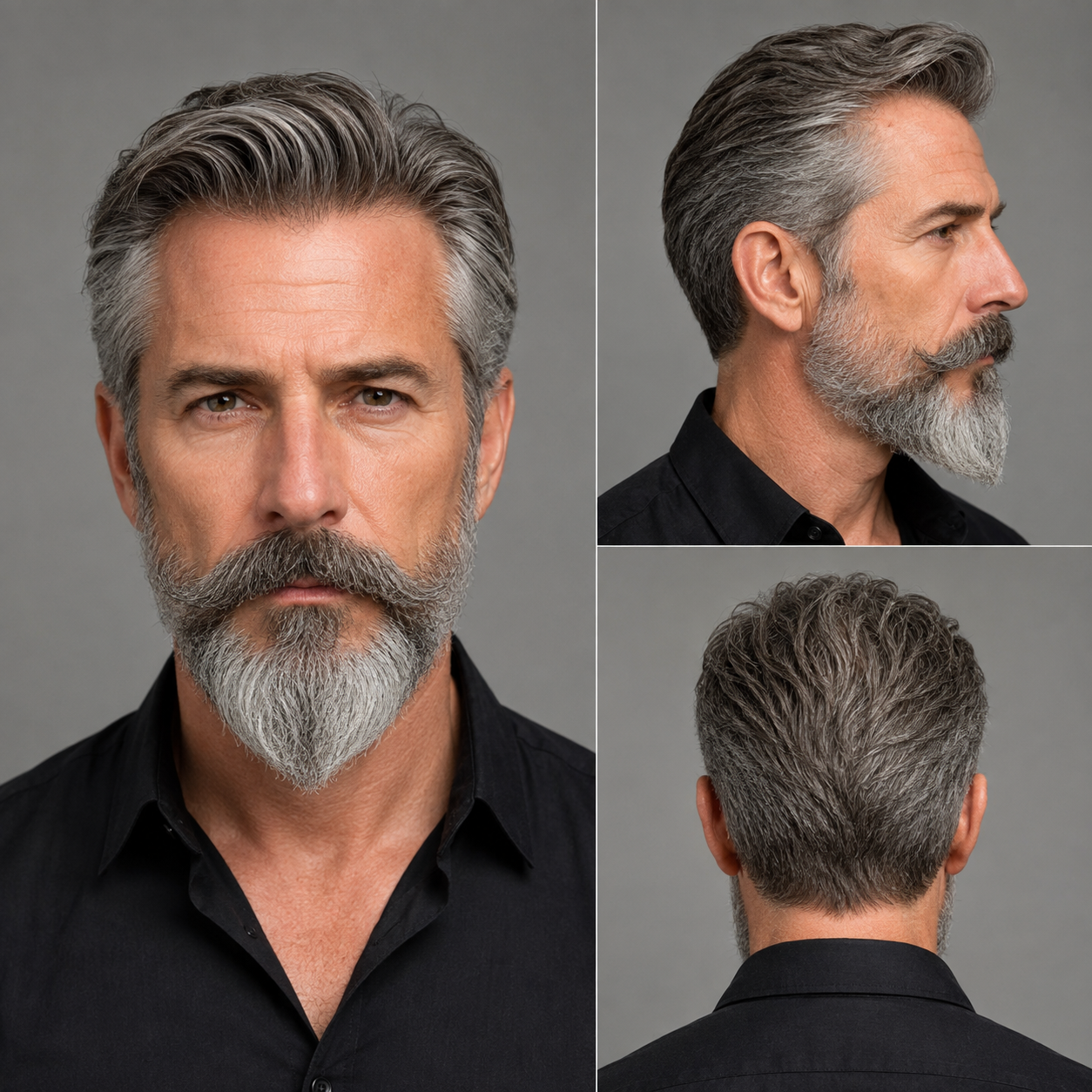
    The Van Dyke, a pointed chin beard disconnected from a styled mustache with clean-shaven cheeks, is an artistic and distinctive grey beard style. In grey, the Van Dyke takes on an almost theatrical quality that works particularly well for men with strong personal style. Best for oval and oblong face shapes. The chin beard can be kept short and precise or grown to 3 to 5cm for a more dramatic look. The mustache is kept separately styled, either simply trimmed or shaped with a light wax. Both sections should be fully grey for the best visual effect.

    10. The Grey Verdi

    Grey Verdi beard style for men

    The Verdi, a rounded full beard with a specifically styled, prominent mustache, becomes an artistic statement in grey. The grey color makes the carefully styled mustache look intentional and distinguished rather than theatrical. Best for oval and oblong face shapes. Keep the beard at 3 to 6cm rounded and style the mustache with a light mustache wax that can tame the coarser grey hair without making it look stiff. This is the most sophisticated grey beard style for men who genuinely enjoy the daily grooming ritual and find it meditative rather than burdensome.

    11. The Faded Grey Beard

    Faded grey beard style for men

    A faded beard, where the stubble on the cheeks gradually transitions to a longer length at the chin, works exceptionally well in grey because the fade creates contrast between the different lengths and the grey color adds visual depth to the gradient. The fade is best achieved by a skilled barber using clipper guards in graduated lengths on the same visit as your haircut. Best for oval and round face shapes. Touch up the fade at home every 1 to 2 weeks between barbershop visits to keep the transitions clean.

    12. The Long Grey Beard

    Long grey beard style for men

    A long grey beard at 5cm and above, worn fully and naturally, is a bold and committed look. At this length the grey is unmistakable and the texture becomes part of the aesthetic in its own right. This requires the most consistent care of any grey beard style: daily beard oil (10 to 15 drops), daily combing and brushing, and regular washing with a brightening beard shampoo. Best for oblong and oval face shapes. Monthly deep conditioning is essential at this length to prevent the grey hair from becoming brittle and prone to breakage at the ends.

    13. The Grey Chinstrap

    Grey chinstrap beard style for men

    A grey chinstrap, where the beard follows the jawline and chin only in a precise line, is a sharp and defined grey beard style. The precision of the chinstrap is amplified by the grey color, making the lines look intentional and architectural against the clean-shaven areas. Best for square and oval face shapes that have a defined jawline worth highlighting. The inside edges require daily precision maintenance with a trimmer. Keep the chinstrap width consistent, 1 to 2cm, which is the most flattering for most jawlines.

    14. The Natural Grey

    Natural grey beard style for men

    Some men let their grey beard grow completely naturally with no trimming of the shape, only split end removal and care. The result is a uniquely personal beard that reflects natural growth patterns, and the grey color makes the natural growth look intentional and distinguished rather than unkempt. This requires the most consistent care routine: daily beard oil, regular washing with a brightening shampoo, and deep conditioning monthly. Best for men with dense, even growth and oblong or oval face shapes who embrace a rugged, authentic aesthetic.

    15. The Patchy Grey

    Patchy grey beard style for men

    Patchy grey, where grey appears in patches rather than uniformly throughout the beard, is a natural stage of greying that many men try to hide. Instead of fighting it, there are grey beard styles that work with it. A short beard at 5 to 10mm minimizes the appearance of patches while still showing the silver where it appears. A goatee or Van Dyke works well if the grey is concentrated at the chin. The key is working with your natural grey pattern rather than against it, since the asymmetric distribution actually creates visual interest when the beard is well-maintained.

    Grey Beard Styles by Face Shape

    Face ShapeBest Grey Beard StylesAvoid
    RoundGrey goatee, grey Van Dyke, faded grey beard, grey ducktailFull wide grey beard (adds width)
    SquareSalt-and-pepper, full grey beard, grey chinstrap, grey ducktailHeavy wide styles at the cheeks
    OvalAlmost any style, especially silver fox stubble, grey Verdi, grey Van DykeNone, versatile face shape suits most looks
    Oblong/LongFull grey beard, grey Garibaldi, natural grey, long grey beardGrey goatee (adds more length)
    DiamondGrey goatee, short grey beard, salt-and-pepperWide styles that add cheek width

    Grey Beard Grooming: The Complete Routine

    Products Grey Beards Need

    Grey beard hair requires specific products that go beyond what works for pigmented beard hair. A purple or violet beard shampoo neutralizes yellow tones in grey hair and should be used 1 to 2 times per week. Daily beard oil is essential since grey hair is drier and coarser. Apply more than you would for pigmented hair. Beard butter or balm provides deep moisture and light shaping applied after the beard oil. Beard conditioner after every wash restores moisture to the coarser grey hair structure. A clarifying shampoo used once per month removes product buildup that dulls grey color over time.

    Daily Grey Beard Routine

    Apply 5 to 10 drops of beard oil to your palm and work it through the beard from root to tip. Comb through with a wide-tooth beard comb to detangle and distribute oil evenly through every layer. Apply a small amount of beard butter or balm for additional moisture and light shaping. Brush with a boar bristle brush to shape and train the growth direction. This takes under ten minutes once it becomes habit and makes a significant difference in how the grey looks through the day.

    Weekly Grey Beard Routine

    Wash the beard 2 to 3 times per week: once with purple shampoo and once with regular beard shampoo. Apply beard conditioner after every wash and leave it on for 2 to 3 minutes before rinsing. Trim stray hairs that go beyond the beard’s shape with scissors rather than a trimmer to avoid taking too much length. Touch up the neckline and cheek line edges with a trimmer every 5 to 7 days. Consistency in the weekly routine is what keeps a grey beard looking silver and polished rather than dull and unmanaged.

    Frequently Asked Questions About Grey Beard Styles

    How do I keep my grey beard from looking yellow?

    Yellow tones in grey beards are caused by product buildup, minerals in hard water, and environmental pollutants. The best solution is a purple or violet-toned beard shampoo used 1 to 2 times per week. The purple pigment neutralizes yellow tones the same way it does in silver hair. A monthly clarifying shampoo removes deep product buildup. If you smoke or spend time in heavily polluted environments, washing more frequently helps significantly. Avoid heavy oil-based products that coat the hair shaft and trap yellowing residue over time.

    Should I dye my grey beard?

    Most grooming professionals recommend against dyeing a grey beard for two reasons. The results rarely look natural since grey beard hair has a different texture and porosity than pigmented hair, so dye takes unevenly. And the grey itself has become a highly attractive look that projects confidence and distinction when worn well. If you do choose to dye, use a semi-permanent color that fades gradually rather than a permanent dye that grows out with a harsh visible line. Touch-up sticks can cover isolated grey patches for special occasions without committing to a full dye routine.

    Why is my grey beard so coarse and wiry?

    Grey hair lacks melanin, which changes the structure of the hair shaft itself, making it coarser, drier, and more prone to wiry growth. This is entirely normal and affects almost all grey beard hair. The solution is consistent moisture: daily beard oil (use more than you think you need), beard butter or balm for additional moisture, and a conditioner after every wash. With consistent moisture applied daily, grey beard hair becomes significantly softer and more manageable within 2 to 4 weeks of starting the routine.

    What is the most attractive grey beard style?

    The silver fox stubble at 5 to 10mm in heavy silver-grey is consistently rated one of the most attractive grey beard styles across surveys and style publications. It balances distinction with low maintenance, which is why it’s become the benchmark look for the silver fox aesthetic. For longer styles, the full grey beard at medium length (2 to 4cm) with clean edges is the most universally flattering. The most important factor isn’t the specific style: it’s consistent maintenance. A simple grey beard that’s always trimmed, clean, and moisturized will always look better than an elaborate style that isn’t maintained day to day.

    How do I make my grey beard grow faster?

    Beard growth rate is primarily genetic and cannot be dramatically increased. However, you can optimize your existing growth rate by ensuring adequate protein in your diet (beard hair is made of keratin, a protein), managing stress (high cortisol slows hair growth), getting adequate sleep, and keeping the beard well-moisturized to prevent breakage at the ends. Biotin supplements are popular for beard growth but have limited evidence of effectiveness. The more practical strategy is consistency: growing the beard without trimming while keeping it conditioned produces faster apparent results than constantly trimming it back and resetting your progress.

    Final Thoughts

    Grey beard styles have never been more attractive or more accepted. The men who wear grey beards best are the ones who maintain them consistently, keeping the edges defined, the grey bright and silver rather than yellowed, and the texture soft rather than wiry through daily moisture. Pick the style that suits your face shape, commit to the grooming routine, and wear your grey with the confidence it deserves. Silver is a statement. Make sure yours is intentional.

    Related Articles:

  • 20 Best Long Beard Styles for Men: Shape, Growth and Care Guide (2026)

    20 Best Long Beard Styles for Men: Shape, Growth and Care Guide (2026)

    Long beard styles are the ultimate expression of commitment in men’s grooming. It takes months to grow a truly long beard, and it takes consistent care to keep it looking sharp. The payoff is a powerful, masculine look that no short beard can match. Whether you’re aiming for a distinguished Garibaldi or a full lumberjack beard, these 20 long beard styles cover every aesthetic with the specific shaping and care techniques that make each one look its best.

    What Counts as a Long Beard?

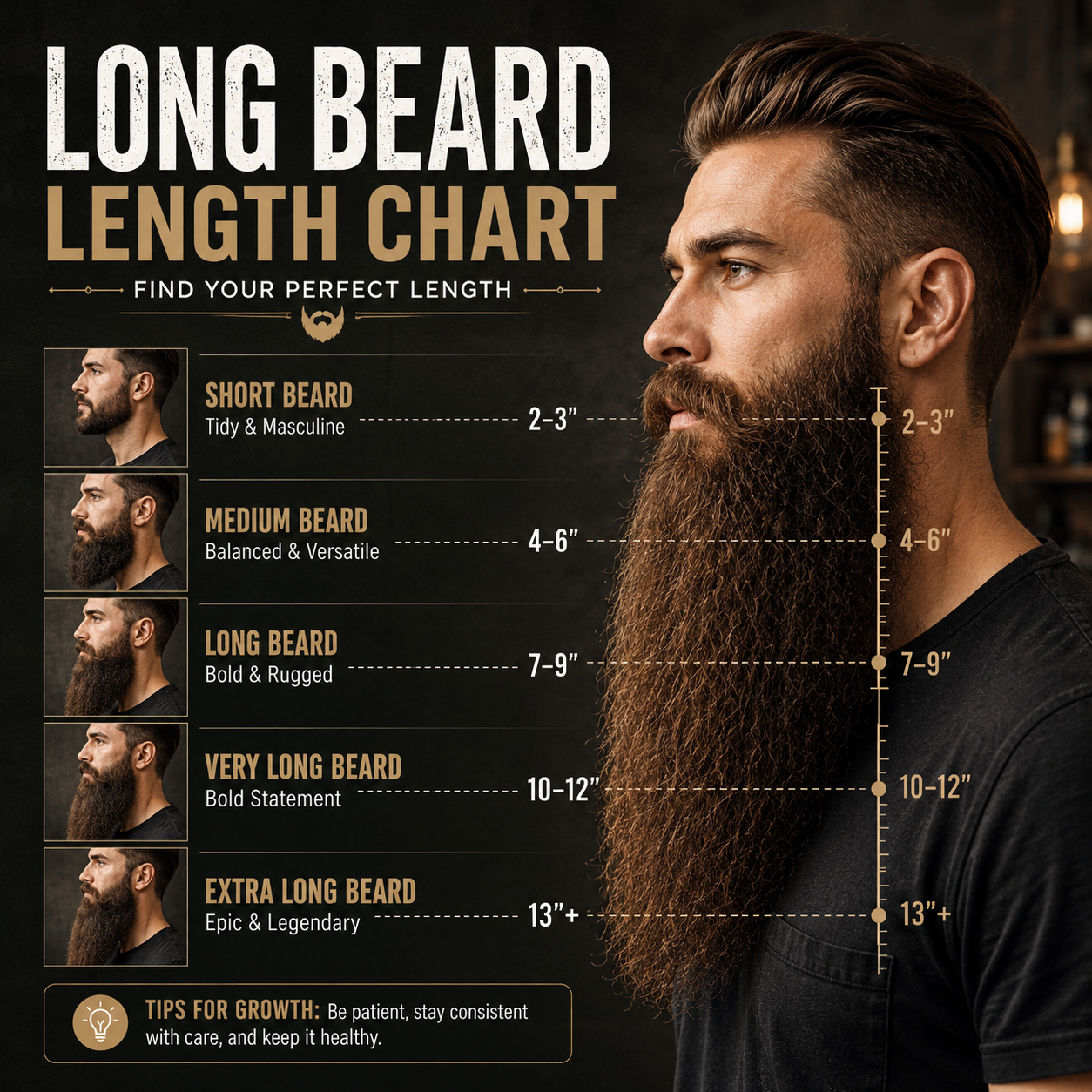
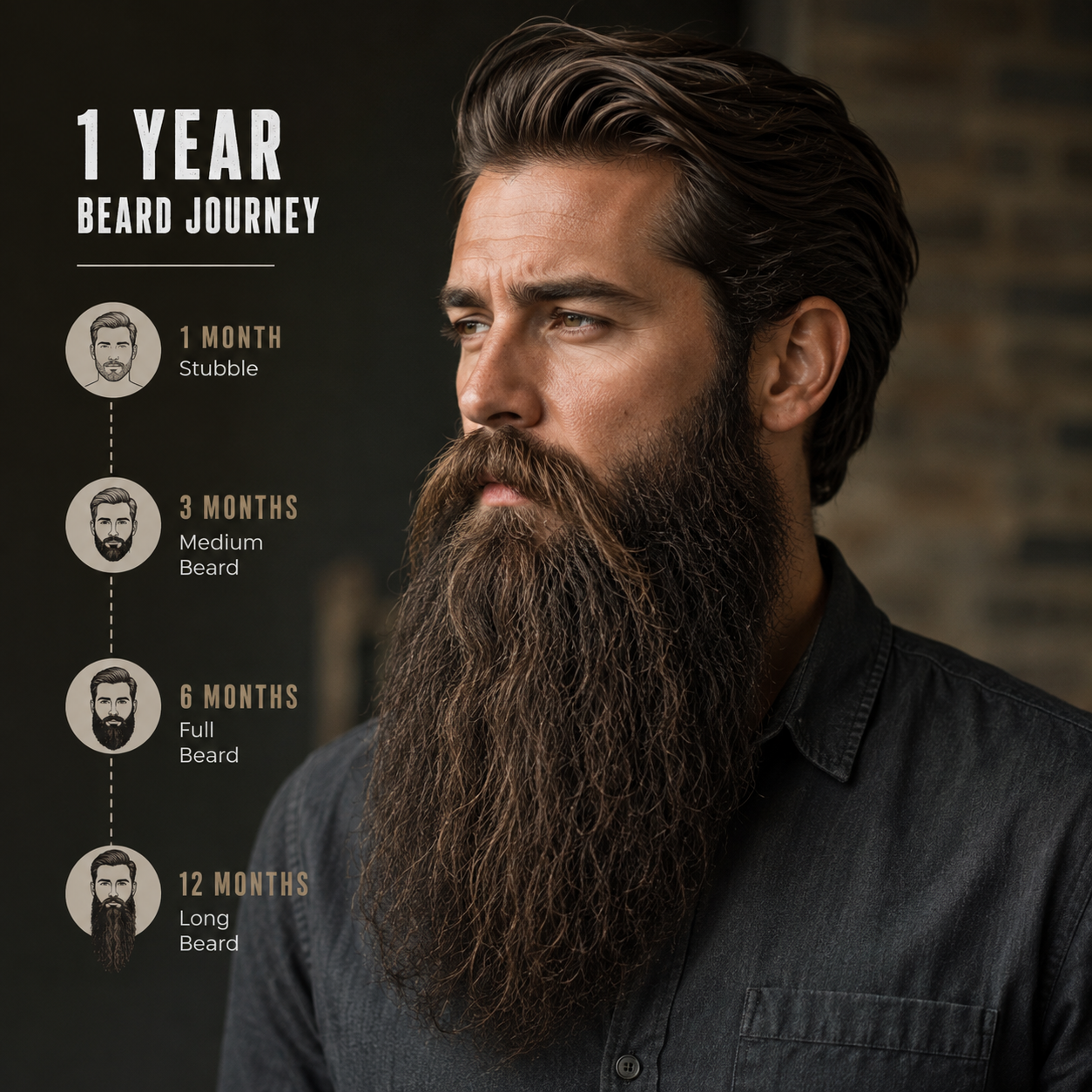
    A long beard is typically defined as 4 or more inches (roughly 10cm) in length from the base of the chin. At this length, most men are looking at 4 to 12 months of dedicated growth. The styles below range from medium-long (Garibaldi, ducktail) at 4 to 6 inches to full lumberjack territory at 8 to 12+ inches. Each style requires different shaping techniques and maintenance routines.

    Long beard length growth chart for men

    Quick Guide: Long Beard Growth Timeline

    MonthAverage LengthWhat to Expect
    1 to 20.5 to 1 inchItch phase, use beard oil to relieve it
    2 to 31 to 2 inchesPatchy areas fill in; shape starts emerging
    3 to 42 to 3 inchesShort beard territory; start defining your style
    4 to 63 to 4 inchesShort long beard; Garibaldi and ducktail achievable
    6 to 94 to 6 inchesFull medium beard; most long styles achievable
    9 to 126 to 8 inchesFull long beard; lumberjack and yeard territory

    20 Best Long Beard Styles for Men

    1. The Garibaldi Beard

    Garibaldi long beard style for men

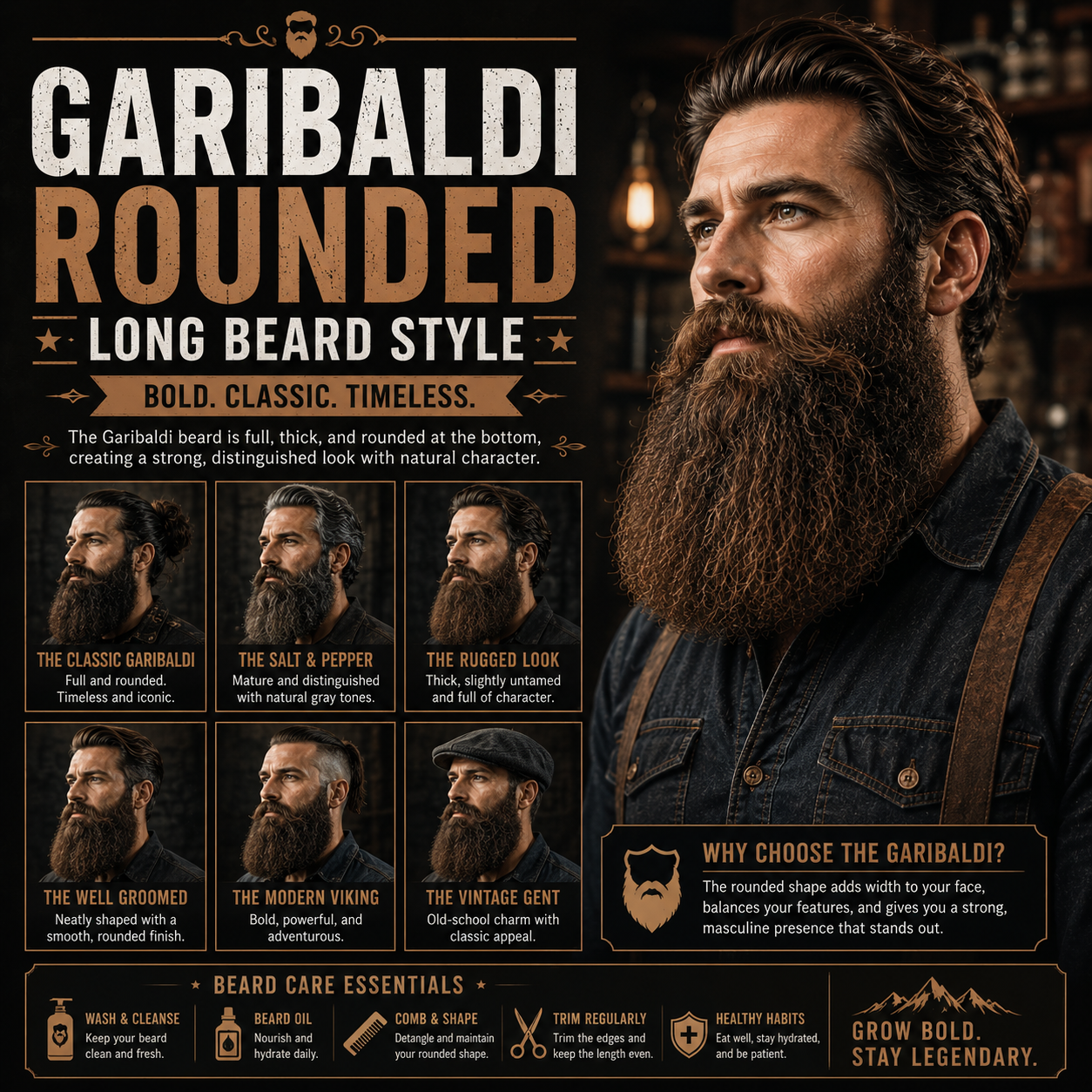
    The Garibaldi is a wide, full beard with a rounded bottom. It grows wide at the cheeks and softly rounded at the chin, creating a natural, slightly untamed silhouette. It’s one of the most naturally masculine long beard styles and doesn’t require the precision maintenance of more shaped styles. Best for oblong and long face shapes. Let the beard grow to 4 to 8cm, then trim the bottom to a rounded shape while leaving the sides natural. Apply beard oil and balm daily to keep the texture soft and the shape defined.

    2. The Full Long Beard

    Full long beard style for men

    The full long beard covers all areas of the face at a uniform long length of 5cm and above. It’s the foundation of most long beard styles and the starting point before you decide on a more specific shape. The key to a great full long beard is regular washing, daily oiling, and monthly trimming to remove split ends. Best for oval and oblong face shapes. Use a boar bristle brush daily to train the direction of growth and distribute beard oil evenly through every layer of the beard.

    3. The Yeard

    Yeard year-long beard style for men

    A yeard is a full beard grown for one full year with minimal trimming, only split end removal. The result is 6 to 8 inches of natural, full beard growth shaped entirely by your own genetics and growth pattern. It requires patience (the first three months are the hardest) and consistent care: beard oil daily, regular washing, and deep conditioning monthly. This is a commitment, not a shortcut. Best for oval and oblong face shapes with reasonably even growth distribution across the cheeks and chin.

    4. The Lumberjack Beard

    Lumberjack long beard style for men

    The lumberjack beard is a long, full, wide beard worn with rugged confidence. It’s kept at 10cm and above and allowed to grow thick and natural with minimal shaping. Regular washing with beard shampoo, deep conditioning twice per week, and daily beard oil application are essential at this length. Use a boar bristle brush to train the growth direction and distribute oils from root to tip. Best for oval and oblong face shapes that can carry significant width and length without being overwhelmed by the volume.

    5. The Ducktail Beard

    Ducktail long beard style for men

    The ducktail is a medium-long beard style where the chin hair is shaped to a central point. The sides are rounded and the chin tapers into a slight downward point, creating an elegant, distinctive silhouette that suits a wide range of personal styles. Best for round and square face shapes that benefit from added chin length. Use beard scissors and a comb to shape the point carefully. Apply beard balm to maintain the shape throughout the day without looking heavy or over-styled.

    6. The Old Dutch Beard

    Old Dutch long beard style for men

    The Old Dutch is a wide, full long beard kept broad at the cheeks and rounded at the bottom, with a clean upper lip (no mustache). It creates a distinctive, historical look that sits somewhere between a full beard and a shaped statement style. Best for square and round face shapes that benefit from the added width at the jaw. The clean upper lip requires daily shaving or precise trimming to stay sharp. The beard itself needs daily oil and regular shaping every two to three weeks.

    7. The Viking Beard

    Viking long beard style for men

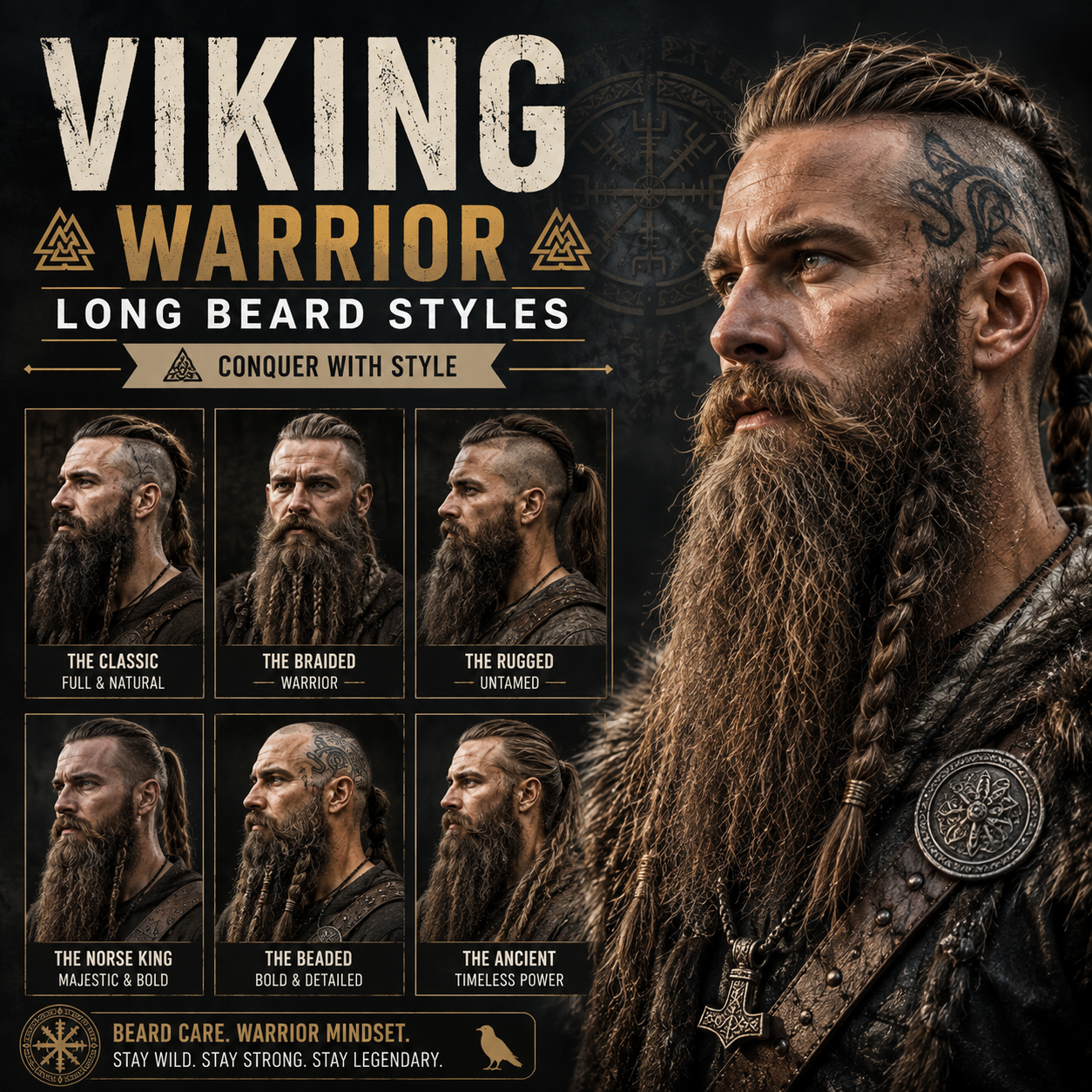
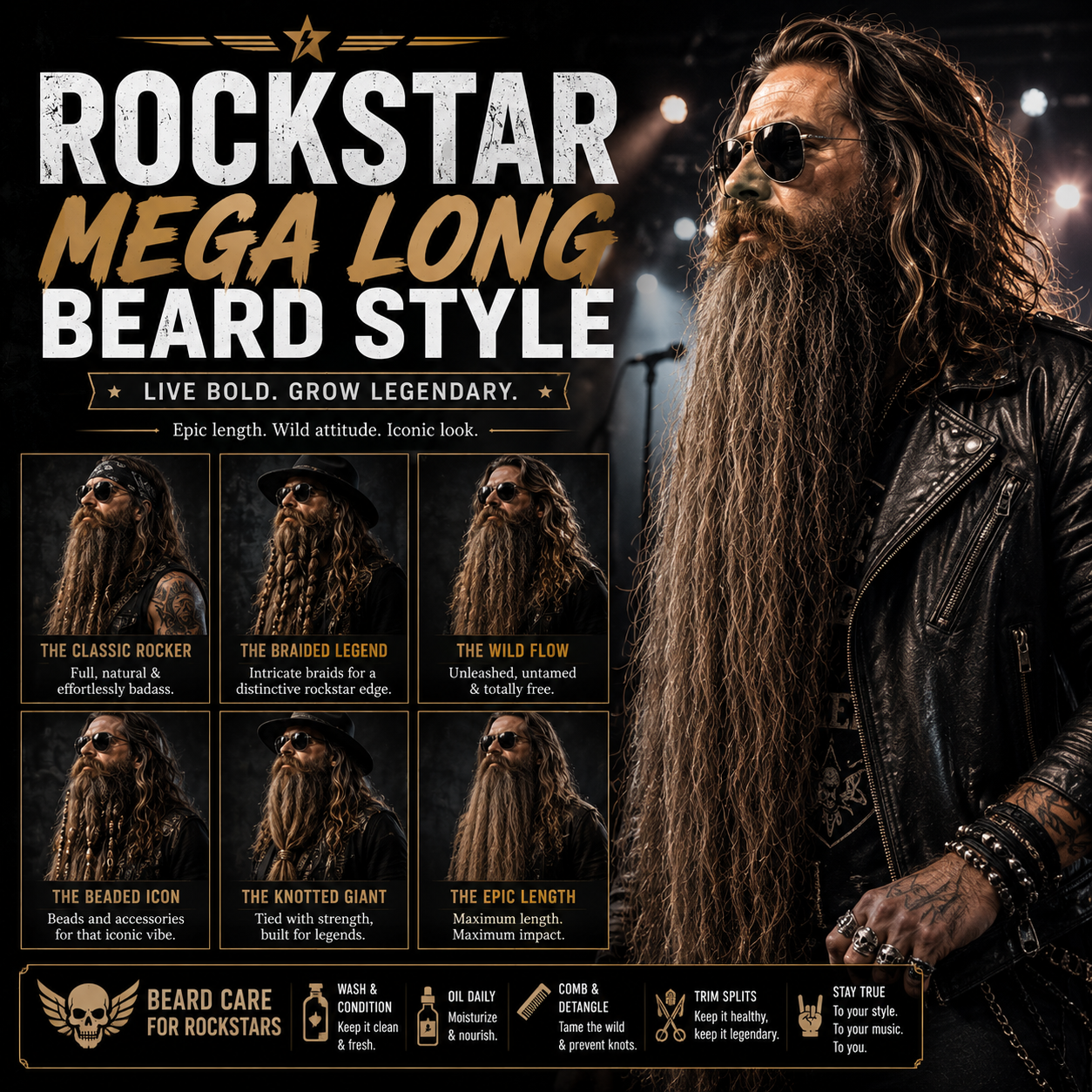
    The Viking beard is long, natural, and sometimes braided, evoking the Norse aesthetic that’s become genuinely popular through TV and pop culture over the past decade. The beard can be worn flowing or braided into 1 to 3 braids at the chin for a more distinctive look. Best for oblong and oval face shapes. Use a beard butter and wide-tooth comb to detangle daily. Keep the neckline clean and braid the chin section with small elastics for the authentic Viking aesthetic without the unkempt look.

    8. The Braided Beard

    Braided long beard style for men

    A single or multi-braid beard, where sections of the chin beard are braided, is a bold, creative long beard style that works best on men with longer, coarser beard hair. Single chin braids are the most wearable starting point. Keep the braid tight with small elastics and apply beard butter to keep the braided sections soft and manageable through the day. Rework the braid every morning since beard braids loosen overnight and become sloppy-looking by mid-day without attention.

    9. The Verdi Beard

    Verdi long beard style for men

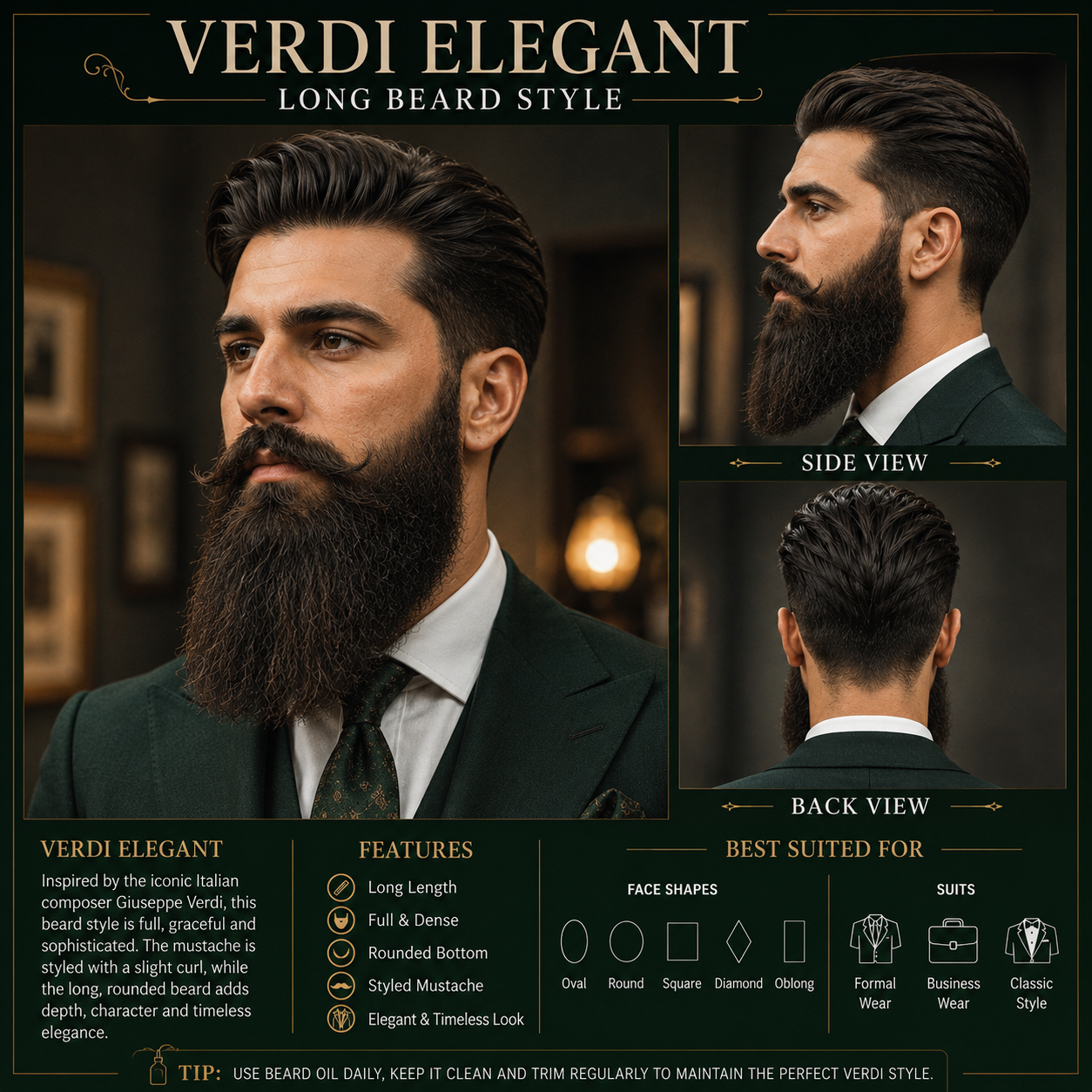
    The Verdi is a rounded, medium-length full beard with a styled, prominent mustache that curls upward at the ends. Named after the Italian composer, it projects sophistication and artistry and is widely recognized as the most distinguished long beard style on this list. The mustache requires dedicated daily styling with mustache wax. Best for oval and oblong face shapes. Keep the beard at 4 to 8cm and shaped to a rounded bottom. This style requires the most daily grooming time of any on this list but consistently produces the most elegant result.

    10. The Bandholz Beard

    Bandholz long beard style for men

    Created and popularized by Eric Bandholz (founder of Beardbrand), the Bandholz is a long, full, natural beard worn without heavy styling intervention, just regular care. It’s essentially the most famous version of the yeard and helped launch the modern men’s beard grooming industry in the 2010s. Daily beard oil, regular washing, and a boar bristle brush are the key maintenance tools. Best for oblong and oval face shapes with the patience to push through the awkward growth phase at months two through four.

    11. The Long Goatee

    Long goatee beard style for men

    A goatee grown long, to 4 to 8cm at the chin, with clean-shaven cheeks. The long goatee isolates length and volume at the chin only, creating a distinctive style that suits men with patchy cheek growth perfectly since you’re focusing only on the chin where growth is typically strongest. Best for round and diamond face shapes that need additional chin length. Keep the cheeks clean-shaven with a razor or electric shaver. The long goatee can be left natural or shaped to a slight point for a more deliberate look.

    12. The Long Van Dyke

    Long Van Dyke beard style for men

    A Van Dyke grown long, where the chin beard extends 4 to 8cm while the mustache is separately styled and the cheeks remain clean. The long Van Dyke creates a dramatic, artistic statement that suits men who want something genuinely distinctive without committing to a full long beard. Best for oblong and oval face shapes. The disconnected chin beard can be shaped straight, to a point, or braided. The mustache is kept at a standard length and styled separately with wax to maintain the characteristic gap between the two.

    13. The Long Stubble with Beard

    Long stubble with beard style for men

    A progression style: short stubble on the cheeks transitioning to a longer beard at the chin. It’s less precise than a deliberately faded beard, creating a natural-looking gradient that suits men who prefer a relaxed, organic aesthetic over a highly structured look. Best for men who want a low-maintenance approach to longer beard length. Keep the cheek stubble at 2 to 3mm and the chin beard at 3 to 5cm. Trim the cheeks with a #1 or #2 guard every few days to maintain the contrast.

    14. The Long French Fork

    Long French Fork beard style for men

    The French Fork is a distinctive long beard style where the chin beard is parted down the center into two prongs. Best for men with a naturally divided chin beard growth pattern where the two sections develop independently anyway. The two prongs can be left natural or shaped with beard wax for more definition and separation. Best for oblong and oval face shapes. Regular combing keeps the part defined between grooming sessions. A light application of beard wax helps the prongs hold their shape through the day.

    15. The Hipster Beard

    Hipster long beard style for men

    The hipster beard is a medium-to-long, well-kept, slightly styled full beard. It’s full but groomed, kept at 3 to 6cm, slightly shaped with clean lines, and styled with a light beard balm to give it dimension without looking product-heavy. It pairs well with a styled mustache. Best for oval and round face shapes. The hipster beard signals that you care about your beard without looking overly polished, hitting the practical middle ground between rugged and refined that works in most lifestyle contexts.

    16. The Long Chinstrap

    Long chinstrap beard style for men

    A chinstrap grown out to medium-long length. As the line of hair along the jaw and chin grows longer, the resulting look becomes more prominent and dramatically defined. This creates a striking, angular silhouette when maintained carefully. Best for men with a strong jaw and oval or oblong face shapes. The inside edge requires daily precision maintenance to keep the chinstrap clearly defined rather than merging into unstructured stubble growth.

    17. The Long Mustache with Short Beard

    Long mustache with short beard style for men

    A heavy, long mustache (handlebar or Dali-style) paired with a shorter chin beard creates an unexpected, creative combination where the mustache is unquestionably the focal point. Use mustache wax for handlebar styling and reshape it every morning. Best for oval and square face shapes. This combination works best when the chin beard provides an anchoring element for the dramatic mustache above, keeping the overall look grounded rather than costume-like. It takes daily wax and re-curling to wear well.

    18. The Anchor with Long Chin

    Anchor with long chin beard style for men

    An anchor beard (mustache connected to chin beard by a thin strip along the jawline) with the chin section grown out long. The long chin section can be shaped to a point for a distinctive, sharply defined aesthetic. Best for oblong and oval face shapes. The thin jaw-line strip requires daily precision maintenance to stay defined while the chin section grows freely and can be lightly shaped or waxed as it lengthens.

    19. The Long Natural

    Long natural beard style for men

    Some men let their beard grow completely naturally with no shaping or trimming, just regular washing and oiling. The result is a unique beard that reflects your natural growth pattern rather than a predetermined style. This works best for men with dense, even growth across all areas of the face. The commitment is entirely in the care routine: daily beard oil, regular washing, and monthly deep conditioning. Best for men who embrace a rugged, authentic aesthetic and find heavy grooming routines impractical to sustain.

    20. The Long Beard with Styled Mustache

    Long beard with styled mustache for men

    A long full beard paired with a specifically styled mustache, whether that’s a handlebar, chevron, or simply combed sides, creates a distinguished, carefully considered look that elevates the natural long beard into something with clear intention behind it. Use mustache wax for shaped styles and reshape it every morning before the wax fully hardens. The combination of a long beard and a styled mustache is the most sophisticated long beard look on this list and works best when both elements are maintained consistently.

    Long Beard Styles by Face Shape

    Face ShapeBest Long Beard StylesAvoid
    RoundDucktail, long goatee, long Van DykeGaribaldi, lumberjack (adds too much width)
    SquareFull long beard, Garibaldi, VikingOld Dutch (adds width to already-wide jaw)
    OvalAlmost any style, especially full long beard, Verdi, BandholzNone, versatile face shape suits most looks
    Oblong/LongGaribaldi, lumberjack, braided, Old DutchDucktail, long goatee (adds more length)

    Long Beard Care: The Complete Routine

    Daily Routine

    Apply 5 to 10 drops of beard oil to your palm and work it through the beard from root to tip. Comb through with a wide-tooth beard comb to detangle and distribute the oil evenly. Use a boar bristle brush to shape and train the growth direction. Apply beard balm to the ends for extra moisture and shape retention through the day.

    Weekly Routine

    Wash the beard 2 to 3 times per week with dedicated beard shampoo, not regular hair shampoo which is too harsh for facial hair. Apply beard conditioner or a deep conditioning mask after every wash. Trim stray hairs that stick out beyond the beard’s natural shape. Check and touch up the neckline and cheek line edges every five to seven days.

    Monthly Routine

    Trim split ends with beard scissors once per month. This is not a full trim, just split end removal that takes as little length as possible. Deep condition with a beard butter or conditioning mask left on for 10 to 15 minutes. Assess whether the shape needs professional barbering or adjusting. A visit to a barber every 6 to 8 weeks helps maintain a clean neckline and overall shape without compromising length.

    Frequently Asked Questions About Long Beard Styles

    How long does it take to grow a long beard?

    It takes approximately 6 to 12 months to grow a truly long beard of 4 or more inches. Average beard growth is about half an inch per month. The first 2 to 3 months are the most challenging due to itch and uneven growth, and most men who stop growing a beard do so in this phase. Pushing through produces dramatically better results. By month 4 to 6, most men have enough length to begin shaping a long beard style. Using beard oil during the early growth phase reduces the itch significantly and is the main reason men successfully push through.

    How do I maintain a long beard at home?

    Long beard maintenance requires a consistent daily routine: apply beard oil every day (more for longer beards, up to 10 to 15 drops), comb through with a wide-tooth comb, and brush with a boar bristle brush to shape and distribute oils. Wash 2 to 3 times per week with beard shampoo. Trim split ends monthly. Keep the neckline and cheek line defined with a trimmer or razor every 1 to 2 weeks. Consistency matters more than perfection: a beard that’s cared for daily looks significantly better than one that’s groomed intensively once per week.

    What products do I need for a long beard?

    For a long beard you’ll need beard oil for daily moisture, beard balm for shaping and additional moisture, beard shampoo for washing 2 to 3 times per week, beard conditioner or butter for deep moisture after washing, a wide-tooth beard comb for detangling, a boar bristle brush for distributing oil and shaping, beard scissors for split end trimming, and a quality trimmer for edge maintenance. For styled mustaches, add mustache wax. That covers everything you need for most long beard styles with no extra products required.

    How do I keep a long beard from looking messy?

    Consistency is the key to a well-groomed long beard. Daily application of beard oil and balm combined with daily combing and brushing trains the beard hairs to grow in a consistent direction over time. Regular washing prevents product buildup that makes beards look dull and unkempt. Keep the neckline and cheek line defined: these edges are what separate a groomed long beard from a neglected one. The neckline in particular does most of the work in making a long beard look intentional rather than simply unshaved.

    Should I trim my long beard?

    Yes. Even if you’re growing your beard as long as possible, you should trim it. Monthly removal of split ends prevents split ends from traveling up the hair shaft and causing breakage, which is the main thing that slows long beard growth. It also maintains the shape of the beard so it looks intentional rather than randomly overgrown. The key is to trim split ends only, taking as little length as possible, rather than a full trim that sets your growth back significantly each month.

    Final Thoughts

    Long beard styles require patience, consistency, and the right products, but the result is one of the most distinctive and powerful looks in men’s grooming. Pick the long beard style that fits your face shape, commit to the growth phase, and invest in a solid daily care routine. The men who wear long beards best are the ones who maintain them consistently, not perfectly, but consistently. Start with the full beard, master the daily routine, and let time and care do the rest.

    Related Articles:

  • 15 Best Beard Styles for Black Men: Grooming Guide for Coarse and Curly Hair (2026)

    15 Best Beard Styles for Black Men: Grooming Guide for Coarse and Curly Hair (2026)

    Beard styles for Black men require specific guidance because Black beard hair is fundamentally different from other hair types. Coarse, tightly coiled beard hair is prone to ingrown hairs (pseudofolliculitis barbae), dryness, and requires moisture-intensive grooming products that work with the curl pattern rather than against it. The 15 styles below are chosen specifically because they look exceptional on Black men and can be maintained with the right technique. Each includes grooming tips specific to coarse and curly beard hair.

    What Makes Black Men’s Beard Hair Different

    Black beard hair grows in a tightly coiled pattern. The curled follicle means hairs often curve back toward the skin as they grow, increasing the risk of ingrown hairs, especially after close shaving. This is why many grooming tips that work for straight hair types (like frequent razor shaving) can cause problems for Black men’s beard hair. The right approach prioritizes moisture, the right tools, and growth-supporting grooming practices.

    15 Best Beard Styles for Black Men

    1. Full Beard with Fade

    Full beard with fade style for Black men

    A full beard paired with a skin fade haircut is one of the most striking beard styles for Black men. The contrast between the clean fade and the full, defined beard creates a powerful, modern look. Keep the beard at a medium length (2 to 5cm), define the cheek line, and maintain a clean neckline. The fade connects the haircut to the beard seamlessly. Use beard oil daily to keep the coarse hair soft and moisturized.

    2. Short Boxed Beard

    Short boxed beard style for Black men

    The short boxed beard is defined by squared, structured lines along the cheeks and jaw. For Black men, the natural coil of beard hair gives the boxed beard excellent shape retention since the hair holds the structure well. Keep it at 1 to 2cm and use a beard trimmer with a foil or rotary razor for the edge lines. Best for oval, round, and diamond face shapes. Apply a light beard balm to set the shape after trimming.

    3. The Goatee

    Goatee beard style for Black men

    The goatee isolates hair to the chin and mustache, keeping the cheeks clean-shaven. For Black men with patchy cheek growth, the goatee is an excellent choice that looks deliberate rather than sparse. Keep it at 1 to 3cm for a sharp, structured look. Use a foil razor rather than a cartridge razor to minimize irritation and ingrown hairs on the cheek area. Best for round and oval face shapes.

    4. The Corporate Beard (Business Beard)

    Corporate beard style for Black men

    The corporate beard, a neatly trimmed full beard at 5 to 10mm, is one of the most professional and versatile beard styles for Black men. It’s full enough to be distinguished but short enough for any workplace. Regular trimming every 4 to 5 days keeps it looking intentional. Use a quality beard trimmer and define the neckline and cheek line precisely. Beard oil is essential daily to prevent dryness and itch at this short length.

    5. Designer Stubble

    Designer stubble beard style for Black men

    Designer stubble at 1 to 3mm is one of the best low-maintenance beard styles for Black men because the coarse texture actually makes stubble look thicker and more defined than it does on finer hair types. Use a stubble trimmer every 3 to 4 days. The key is keeping the neckline clean: use a foil electric razor rather than a manual blade to reduce irritation. Best for all face shapes.

    6. The Faded Beard (Blended Beard)

    Faded beard style for Black men

    The faded beard connects the beard to the haircut by gradually blending the beard length from very short at the sideburns to fuller at the chin and jaw. This is one of the most sophisticated beard styles for Black men: the blend creates a seamless, barbershop-fresh look from crown to chin. This requires a skilled barber to execute well. Best for men who get regular haircuts every 2 to 3 weeks.

    7. The Shaped Natural Beard

    Shaped natural beard style for Black men

    A natural beard allowed to grow with minimal trimming but shaped at the edges. This style embraces the natural coil and curl of Black beard hair while maintaining clean lines on the neckline and cheek line. Use a beard pick or wide-tooth comb to lift and shape the beard. Apply beard oil and butter daily for moisture. The natural beard grows in a shape that reflects the unique growth pattern of each individual, making every shaped natural beard genuinely one of a kind.

    8. The Chinstrap

    Chinstrap beard style for Black men

    A thin line of beard along the jaw and chin with clean-shaven cheeks. For Black men, the chinstrap requires extra care to avoid ingrown hairs along the edge. Use a foil electric razor for the clean areas and trim the chin strip with a precision trimmer. Best for men with a strong jaw and oval or oblong face shapes. Keep the strip very thin, under 1cm, for maximum definition.

    9. The Anchor Beard

    Anchor beard style for Black men

    The anchor beard combines a pointed chin beard with a disconnected mustache and clean-shaven cheeks, shaped to resemble an anchor. For Black men, the natural thickness of the beard hair makes the anchor’s focal elements look bold and defined against the clean-shaven areas. Best for square and oval face shapes. The disconnected mustache and pointed chin beard require daily precision maintenance to keep the shape sharp.

    10. The Full Grown Long Beard

    A longer, fully grown beard at 5cm and above is a significant commitment but one of the most powerful beard styles for Black men. Black beard hair at longer lengths creates a wide, full beard with incredible natural volume that is simply not achievable with most other hair textures. Regular deep conditioning and daily beard oil are essential. Use a wide-tooth comb or beard pick to detangle and shape. Best for oval and oblong face shapes that can carry significant volume and width.

    11. The Beardstache

    A heavy, prominent mustache with very light stubble on the chin and cheeks. For Black men, the natural thickness of the mustache makes the beardstache look exceptionally bold and intentional. Keep the face stubble at 1 to 2mm and let the mustache grow thick and full. Best for oval and square face shapes. This is one of the most distinctive beard styles for Black men who want maximum facial hair impact with minimal length commitment.

    12. The Van Dyke

    Van Dyke beard style for Black men

    The Van Dyke, a disconnected goatee and mustache with clean cheeks, is a sophisticated choice that works beautifully for Black men. The natural curl of the chin beard creates interesting texture in the Van Dyke shape. Keep the chin beard at 2 to 4cm and shape it to a slight point. The mustache is kept separately styled. Best for oblong and oval face shapes that benefit from chin emphasis.

    13. The Ducktail Beard

    The ducktail is a medium-length beard shaped to a central point at the chin. For Black men, the natural thickness and volume of the beard makes the ducktail look particularly full and dramatic. Use a beard comb and scissors to shape the point. Apply a beard butter to keep the coarser hair soft while maintaining the shape. Best for round and square face shapes that benefit from added chin length and visual narrowing at the jaw.

    14. The Low Fade with Short Beard

    A low fade haircut (starting just above the ear) combined with a short, defined beard creates a clean, modern look that works in any setting from the office to a night out. The short beard length of 1 to 2cm keeps the focus on the sharp lines rather than the volume. This is one of the most accessible and stylish beard styles for Black men who want a barbershop-fresh look for everyday life. Requires a haircut and beard trim every 2 to 3 weeks.

    15. The Mustache with Clean Chin

    A thick, full mustache with a completely clean-shaven chin is a bold choice that’s making a comeback in men’s grooming. For Black men, the natural coarseness of the hair makes the mustache look prominent and defined without additional styling. Keep the face completely clean-shaven below the nose: use a foil electric razor to minimize irritation. The mustache can be kept natural or combed to the sides for a classic chevron look.

    Beard Styles for Black Men by Face Shape

    Face ShapeBest StylesWhy It Works
    RoundGoatee, ducktail, short boxed, chinstrapAdds vertical definition to the chin
    SquareFull beard, anchor, ducktailSoftens sharp jaw angles
    OvalAlmost any style, especially full beard, faded beard, beardstacheVersatile face shape suits most looks
    Oblong/LongShort full beard, Van Dyke, corporate beardAdds visual width without length
    DiamondShort boxed beard, full beard, anchor beardAdds width at chin and cheeks

    Grooming Tips Specific to Black Men’s Beard Hair

    Prevent Ingrown Hairs

    Ingrown hairs (pseudofolliculitis barbae) are the most common grooming challenge for Black men. Prevention: use a foil electric razor instead of a manual blade for edge cleaning; never shave against the grain; exfoliate the beard area 2 to 3 times per week with a gentle facial scrub; and keep the beard moisturized to allow hairs to emerge cleanly from the follicle. Salicylic acid-based aftershave applied to shaved areas also significantly reduces bumps over time.

    Moisturize Daily

    Black beard hair is naturally drier than other hair types due to the coiled structure making it harder for scalp oils to travel down the hair shaft. Apply beard oil every day, not just after washing. Look for oils with jojoba, argan, or castor oil as primary ingredients. For longer beards, use a beard butter or cream in addition to oil for deeper moisture that penetrates the coarser hair shaft.

    Use the Right Tools

    A quality trimmer with multiple guard settings is essential for coarse beard hair since cheap trimmers pull and snag the coiled hair rather than cutting cleanly. Use a wide-tooth comb or beard pick to detangle rather than a fine-tooth comb. For clean edge lines, a foil electric razor is preferable to a cartridge razor for reducing irritation and ingrown hairs on Black skin.

    Wash with Beard Shampoo

    Wash the beard 2 to 3 times per week with a dedicated beard wash, not regular face soap or head shampoo which strip too much moisture from the already-dry coiled hair. After washing, apply beard oil while the beard is still slightly damp for maximum absorption. Follow with beard butter or balm for sealing in moisture throughout the day.

    Frequently Asked Questions About Beard Styles for Black Men

    What is the best beard style for Black men?

    The full beard with fade is widely considered the best beard style for Black men: it maximizes the natural volume and texture of Black beard hair while creating a clean, modern look. For lower maintenance, designer stubble or the corporate beard are excellent alternatives. The best style ultimately depends on your face shape, growth pattern, and lifestyle.

    How do Black men prevent beard ingrown hairs?

    To prevent ingrown hairs: use a foil electric razor instead of a manual blade for edge work; never shave against the grain; exfoliate the beard area 2 to 3 times per week; keep the beard consistently moisturized; and consider growing the beard slightly longer (above 1 to 2mm) to prevent hairs from curling back into the skin. Salicylic acid-based aftershave or toner applied after shaving also helps prevent bumps significantly.

    What products do Black men need for beard grooming?

    Essential products for Black men’s beard grooming: a quality beard trimmer with multiple guard settings, beard oil for daily moisture, beard butter or cream for deeper moisture and coarse hair management, a wide-tooth comb or beard pick, a foil electric razor for edge work, and a dedicated beard wash. For longer beards, add beard balm for shaping and a boar bristle brush for training growth direction.

    Can Black men grow a full beard?

    Yes. Black men can and do grow full, impressive beards. Genetics determines growth pattern and density, and many Black men have exceptionally dense, full beard growth. The key factors for maximizing beard growth are: consistent moisturizing since dry hair breaks more easily, avoiding over-shaving or harsh razors that damage follicles, maintaining a healthy diet rich in biotin, protein, and zinc, and patience through the initial patchy growth phase before the beard fills in.

    How often should Black men trim their beard?

    For short beard styles like stubble and the corporate beard, trim every 3 to 5 days to maintain the length and shape. For medium beards at 2 to 4cm, trim every 1 to 2 weeks. For longer beards, monthly trimming of split ends is usually sufficient. Edge lines on the cheek and neckline need touching up more frequently: every 5 to 7 days for most styles to keep them looking sharp between full trims.

    Final Thoughts

    Beard styles for Black men are at their best when the grooming routine respects the unique properties of coarse, coiled beard hair. Moisture is everything: daily beard oil is non-negotiable. The right tools (foil razor, quality trimmer, wide-tooth comb) make the difference between sharp, defined styles and rough, irritated results. Whether you’re wearing designer stubble, a sculpted goatee, or a full grown beard, the styles above look exceptional on Black men when maintained with the right technique and consistent routine.

    Related Articles:

  • 20 Best Beard Styles for Men: The Complete Face Shape and Grooming Guide (2026)

    20 Best Beard Styles for Men: The Complete Face Shape and Grooming Guide (2026)

    Beard styles for men range from minimal designer stubble to dramatic long beards, and finding the right one for your face shape, growth pattern, and lifestyle makes all the difference. This guide covers 20 of the best beard styles with the specific grooming techniques and product recommendations that make each one look its best. Whether you’re growing your first beard or refining an established one, everything you need is right here.

    How to Choose the Right Beard Style

    Three factors determine which beard style actually works for you: your face shape (what the beard needs to do geometrically), your growth pattern (how full your beard is and where it’s patchy), and your lifestyle (how much grooming time you’re realistically willing to commit). Most men pick a style they like the look of without considering these three factors, then end up frustrated when it doesn’t suit them. The 20 styles below are matched to face shape and growth requirements in every entry, so you’re not guessing.

    Face shape beard style chart for men

    20 Best Beard Styles for Men
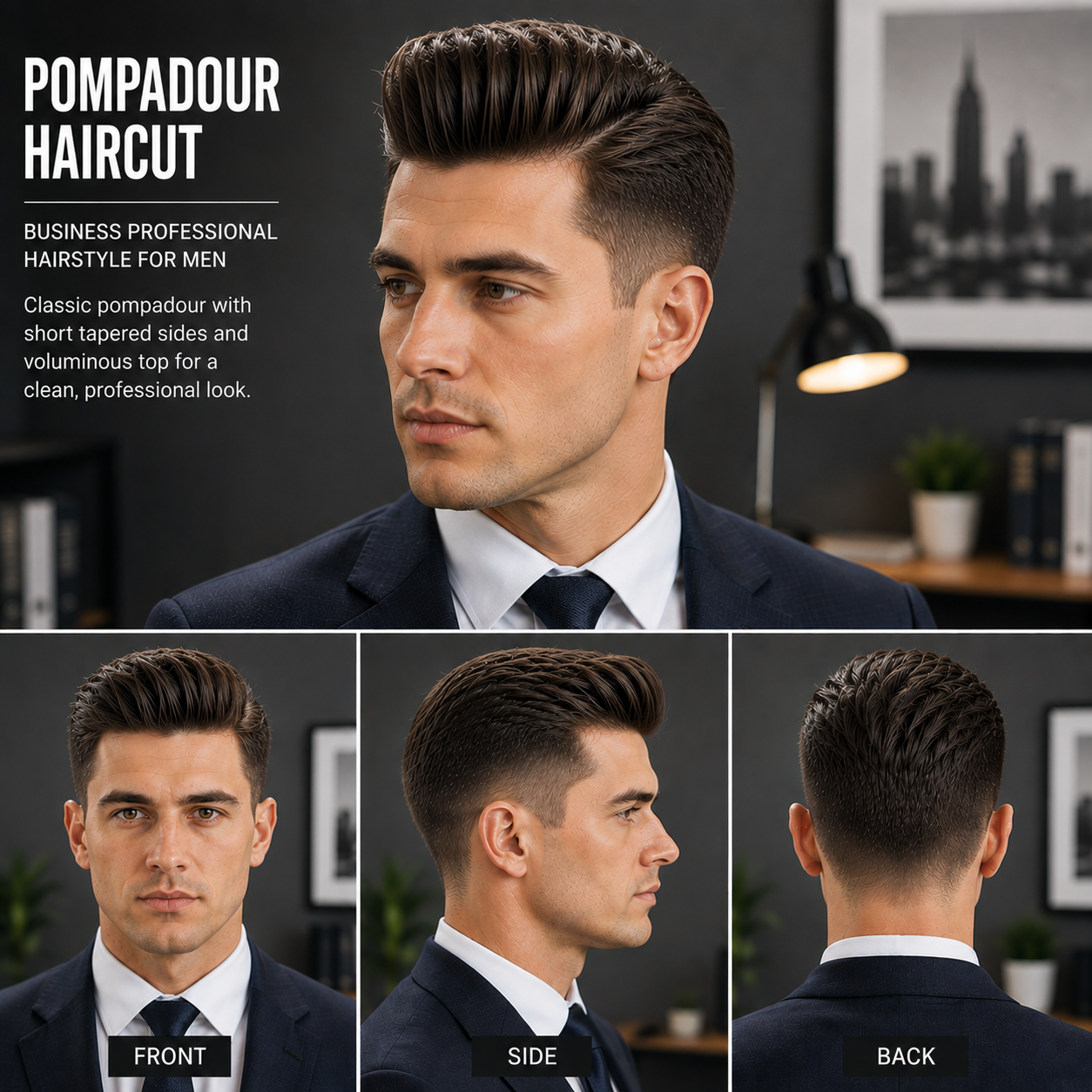
    1. Full Beard

    Full beard style for men

    The full beard is the gold standard of men’s facial hair, covering the cheeks, chin, jaw, and mustache at a uniform or blended length. When maintained well, it’s the most masculine and versatile style on this list. The key to a great full beard isn’t just length, it’s consistent shaping. Trim every one to two weeks, keep the neckline clean (set it about 1.5 fingers above the Adam’s apple), and define the cheek line at a natural curve from the sideburns to the mustache corner. Use beard oil every day on a slightly damp beard for softness and skin health. Best for oval, oblong, and square face shapes.

    2. Designer Stubble

    Designer stubble beard style for men

    Designer stubble at 1 to 3mm is consistently the most popular beard style worldwide, and it’s not hard to understand why. It’s low maintenance, suits almost every face shape, and projects effortless masculine style without the commitment of a full beard. The difference between good stubble and great stubble is edge definition. Use a stubble trimmer on a low guard setting every two to three days, then clean the neckline and cheek line with a razor. No other products are needed beyond the trimmer. If you’re unsure where to start, start here.

    3. The Short Boxed Beard

    Short boxed beard style for men

    The short boxed beard is a tightly trimmed full beard with clearly squared-off cheek and jaw lines. It reads as polished and professional in any setting, which makes it one of the most practical beard styles for men with office jobs or client-facing careers. Keep it at 1 to 2cm, set a straight cheek line, and maintain a clean neckline. Trim weekly with a #3 to #5 guard. David Beckham’s signature look for years, and still one of the cleanest you can wear. Best for round, oval, and diamond face shapes that benefit from added structure.

    4. The Goatee

    Goatee beard style for men

    The goatee concentrates hair on the chin and upper lip while leaving the cheeks clean-shaven. It’s one of the most versatile styles on this list because it works for a wide range of face shapes and growth patterns, and is especially effective for men with patchy cheek growth. Focus the hair where it grows best and shave the rest. Keep it at 1 to 3cm and maintain razor-sharp edges around the chin patch and mustache. Best for round and oval face shapes, where the chin focus adds definition and length.

    5. The Balbo Beard

    Balbo beard style for men

    The Balbo separates the mustache from the chin beard with no sideburns and clean cheeks, creating a disconnected chin beard paired with a floating mustache. Robert Downey Jr. wore this style throughout the Iron Man era and made it one of the most recognizable beard styles for men globally. The disconnection needs daily maintenance to stay sharp. If the gap between mustache and chin starts to close, the style loses its definition quickly. Best for square and oval face shapes. Precision trimmer work around the cheeks is essential.

    6. The Van Dyke

    Van Dyke beard style for men

    The Van Dyke is a goatee and mustache combination where the two are disconnected, with clean cheeks on either side. The mustache is styled separately and the chin beard is precisely shaped, often coming to a subtle point. It’s sophisticated, slightly theatrical, and genuinely timeless. Best for oblong and oval face shapes where the chin focus works naturally. Requires daily shaving to keep the gap between the mustache and chin clean. A precision trimmer handles the chin shape while a razor handles the cheek area.

    7. The Garibaldi

    Garibaldi beard style for men

    The Garibaldi is a wide, full beard with a rounded bottom rather than a pointed or squared chin. It grows wide at the cheeks and softens at the chin into a natural arc. This is one of the best beard styles for men who prefer a more relaxed, rugged aesthetic without the rigid structure of a corporate or boxed look. Let the beard grow to medium length (4 to 8cm), then trim the bottom to a rounded shape while leaving the sides natural. Use beard oil and a boar bristle brush to keep it looking full without being wild. Best for oblong and long face shapes where the width adds visual balance.

    8. The Corporate Beard

    Corporate beard style for men

    The corporate beard is a neatly trimmed full beard at 5 to 10mm, professional enough for the boardroom while still being a full, defined beard. It’s the practical choice for men who want to maintain a beard in a professional environment without it reading as rough or unkempt. Set clean cheek and necklines, trim weekly with a #3 to #5 guard, and apply a small amount of beard balm to keep everything neat through long workdays. Best for all face shapes. If you work in a conservative setting, this is the right beard style for you.

    9. The Ducktail Beard

    Ducktail beard style for men

    The ducktail is a medium-length beard where the chin hair is shaped to a central point, like a duck’s tail. The sides round naturally while the chin tapers into a slight downward point. It’s one of the most distinctive beard shapes because the pointed chin visually elongates round and square faces. Use a beard comb and scissors to shape the point carefully, then apply beard balm to hold the shape through the day. Best for round and square face shapes that need added chin length.

    10. The Chinstrap Beard

    Chinstrap beard style for men

    The chinstrap is a thin line of beard that runs along the jaw and chin with clean-shaven cheeks. It defines the jawline sharply and dramatically, drawing the eye straight to the jaw’s shape. This is a high-maintenance style because the inside edge needs to be cleaned with a razor daily to stay sharp. Keep it very thin (under 1cm wide) for maximum effect. Best for men with a strong jaw and an oval or oblong face shape. If your jaw is naturally soft or undefined, skip this one and choose a style that adds structure instead.

    11. The Beardstache

    Beardstache beard style for men

    The beardstache pairs a heavy, prominent mustache with light stubble on the chin and cheeks. The mustache is the focal point; the stubble below is intentionally short to frame and contrast with it. It’s one of the most distinctively styled beard looks for men who want something beyond a standard beard. Keep the stubble very short at 1 to 2mm and grow the mustache to full thickness. A chevron or handlebar mustache works well here. Best for oval and square face shapes with strong mustache growth.

    12. The Anchor Beard

    Anchor beard style for men

    The anchor beard combines a pointed chin beard with a mustache connected by a thin strip along the jawline, creating a shape that resembles a ship’s anchor. It’s distinctive, precise, and genuinely masculine. This is a style that rewards men who enjoy the grooming process, since the precision edges need daily trimmer and razor work to stay defined. Use a precision trimmer for the shape and a razor for the clean cheek areas. Best for oblong and oval face shapes where the chin point works naturally.

    13. The Faded Beard

    Faded beard style for men

    A faded beard connects the beard seamlessly to a fade haircut, with the barber blending the beard into the skin fade so the whole look reads as one cohesive style from head to jaw. The beard then transitions from the fade to full length at the chin. It’s one of the most polished beard styles for men who get regular haircuts and want maximum grooming cohesion. This one is barber territory, not a DIY style. Plan your beard visits around your haircut schedule and ask your barber specifically for a beard fade to match the haircut fade.

    14. The Mustache Only

    Mustache only style for men

    Going mustache-only is experiencing a genuine revival, partly driven by Movember culture and partly because a well-grown mustache is simply a bold, confident statement. The three standout options are the chevron (thick and downward-turning), the handlebar (waxed curled ends), and the walrus (heavy and drooping over the lip). The face must be clean-shaven below, which means daily razor maintenance. Handlebar styling requires mustache wax. Best for oval and oblong face shapes where the mustache becomes a natural focal point without adding width to a wide face.

    15. The Yeard

    Yeard year-long beard style for men

    A yeard is a full beard grown for one complete year with minimal trimming. The result is a long, full, natural beard that makes a serious statement. The commitment is real: the first three months are the hardest, with itching, uneven growth, and the urge to trim everything. Push through it. After six months, the beard settles into its natural shape. Apply beard oil every day, wash it two to three times a week, and trim split ends occasionally to keep it healthy. For long-term health, a boar bristle brush trained through the beard helps distribute oils evenly. Best for oval and oblong face shapes that can carry significant length without looking overwhelming.

    16. Stubble with a Shaped Cheek Line

    Stubble with shaped cheek line beard style

    Basic stubble transformed by one detail: a precisely defined cheek line. Setting the cheek line a few millimeters above the natural beard growth creates a clean, intentional edge that makes simple stubble look groomed and deliberate rather than just unshaved. It’s the easiest upgrade you can make to your current grooming routine. Use a razor or precision trimmer to set the line from the corner of the sideburn to the mustache corner, shave above it, and leave the stubble below. Best for all face shapes. Five minutes of extra maintenance makes a significant visible difference.

    17. The Natural Beard

    Natural beard style for men

    The natural beard follows the beard’s own growth pattern with minimal intervention. The neckline stays clean but the cheek line and overall shape are left to grow as they want. This works particularly well for men who have good natural beard density and prefer a rugged, unhurried aesthetic. The neckline is still worth maintaining because a clean neckline is what separates an intentional natural beard from something that just looks neglected. Beard oil and regular washing are essential to keep a natural beard healthy, soft, and comfortable to wear.

    18. The Short Stubble Fade

    Short stubble fade beard style for men

    A stubble fade blends beard length gradually, shorter near the ears and sideburns and gradually longer toward the chin. This sculpted, modern effect connects the haircut to the beard seamlessly and gives the whole face a cohesive, finished appearance. Use multiple guard settings on your trimmer: a #1 at the sideburns, blending up through #2, then #3 to #4 at the chin. Take your time transitioning between guards to avoid visible lines. Best for men with fade haircuts who want a fully integrated grooming look from scalp to chin.

    19. The Circle Beard

    Circle beard style for men

    The circle beard connects the mustache and goatee in a rounded shape around the mouth, creating a clean, symmetrical look that’s cleaner than a standard goatee and easier to maintain than many other structured styles. It’s the best beard style for men who want something defined and shaped but don’t have full cheek coverage to work with. Keep the circle tight and trim every three to four days to hold the round shape. Use a precision trimmer to follow the curve and a razor for the cheek and neck areas. Best for round and oval face shapes.

    20. The Lumberjack Beard

    Lumberjack beard style for men

    The lumberjack beard is a long, thick, full beard worn at 10cm and beyond, grown wide and full with rugged confidence. At this length, the beard becomes a lifestyle commitment. Regular washing is essential, two to three times weekly with a dedicated beard wash, not just hair shampoo which strips natural oils. Apply beard oil every day after washing, and use a deep conditioning beard butter weekly to keep the hair from becoming dry and brittle. A boar bristle brush trains the direction of growth and distributes natural oils from root to tip. Best for oblong and oval face shapes that can carry significant width and length without the face appearing overwhelmed.

    Beard Styles by Face Shape: Quick Reference

    Face ShapeBest Beard StylesGoal
    RoundGoatee, ducktail, short boxed, anchorAdd chin length and definition
    SquareFull beard, Balbo, circle beard, Van DykeSoften sharp jaw angles
    OvalAlmost any style, especially full beard, corporate, beardstacheVersatile, most styles work well
    Oblong/LongShort full beard, chinstrap, circle beard, GaribaldiAdd width, reduce apparent length
    DiamondShort boxed beard, full beard, BalboAdd width at chin and cheeks

    Grooming Fundamentals That Apply to Every Beard Style

    Barber beard lineup trim tools

    These fundamentals apply whether you’re wearing 3mm stubble or a 15cm full beard.

    Neckline placement: Set your neckline about 1.5 fingers above the Adam’s apple and follow the natural curve from ear to ear. Never shave it higher than the chin. A neckline that’s too high makes the beard look like it’s floating on your face rather than framing it.

    Cheek line setting: Follow the natural upper edge of your beard growth. Shave above that line to clean up stray hairs, but don’t take it lower than where the natural density starts, or you lose coverage and the beard looks smaller than it is.

    Daily beard oil: Apply to a clean, slightly damp beard, not a soaking wet one. Work it in from root to tip. Beard oil conditions both the hair and the skin underneath, which is what prevents the itch and flaking that make men give up on beards in the first growth phase.

    Regular trimming: Even if you’re growing your beard longer, trim split ends regularly. Split ends travel up the hair shaft and make the beard look thinner and unhealthy from a distance. A small amount of trimming at the right time saves significant length in the long run.

    Product by length: Beard oil for short and medium beards (up to about 5cm). Beard balm for medium beards that need light shaping. Beard butter for longer beards that need conditioning without stiffness. Mustache wax only where you need a specific shape to hold.

    Beard oil and balm care routine

    Frequently Asked Questions

    What is the most attractive beard style for men?

    Research consistently shows that heavy stubble at around 10 days of growth is rated as the most attractive by both men and women. Beyond stubble, the full beard and short boxed beard consistently rank highest in attractiveness studies. That said, the most attractive beard style is ultimately the one you wear confidently and maintain consistently. A well-groomed shorter beard beats a neglected longer one every single time.

    How do I know which beard style suits my face shape?

    Identify your face shape by measuring the widths of your forehead, cheekbones, and jaw, plus the overall length of your face. Round faces benefit from styles that add chin length (goatee, ducktail). Square faces benefit from styles that soften the jaw (full beard, circle beard). Oval faces suit almost any style. Oblong faces benefit from styles that add width (short full beard, Garibaldi). The table in this guide maps every face shape to the most flattering styles available.

    What is the best beard style for a patchy beard?

    For patchy beards, the best options are designer stubble (patchiness is barely visible at 1 to 3mm), the goatee (isolates hair to the chin where growth is usually fullest), and the circle beard. If you have full chin growth but patchy cheeks, any style that keeps the cheeks clean-shaven will work well for you. At very short lengths, most patchy beards look like intentional stubble rather than failed growth, which is a much better outcome than trying to grow out sparse coverage.

    How long does it take to grow different beard styles?

    Designer stubble grows in 2 to 5 days. A short boxed beard or goatee takes 2 to 4 weeks. A corporate or medium full beard takes 4 to 8 weeks. A long beard (Garibaldi, lumberjack) takes 3 to 6 months or longer. The first 2 to 4 weeks are always the most difficult because of itching and uneven growth. Most men who abandon a beard do so during this phase. Pushing through it reveals the real potential of your growth.

    What beard products do I actually need?

    At minimum, you need a quality trimmer with multiple guard settings and a good beard oil. Beard oil is non-negotiable for skin health and beard softness regardless of length. For structured styles, add a precision trimmer or straight razor for clean lines. For medium-to-long beards, add beard balm for shaping and a boar bristle brush for training the growth direction. Beard wax is optional and only really needed for mustache styling or specific shape work on longer beards.

    Final Thoughts

    The best beard styles for men are the ones that suit your face shape, work with your natural growth pattern, and fit your grooming commitment level honestly. Start by identifying your face shape and growth pattern, pick a style from this guide that checks both boxes, and commit to it for at least 4 to 6 weeks before judging the result. Invest in a quality trimmer and beard oil, establish a simple daily routine, and visit your barber every few weeks for edge work. The effort is worth it, and the right beard makes a noticeable difference in how you present yourself.

    Related Articles:

  • 20 Best Short Beard Styles for Men: Looks That Work for Every Face Shape (2026)

    20 Best Short Beard Styles for Men: Looks That Work for Every Face Shape (2026)

    Short beard styles are the most practical and versatile option in men’s grooming. They require less maintenance than full beards, look professional in almost any setting, and can be shaped to suit any face shape. Whether you’re rocking clean designer stubble or a precisely shaped short boxed beard, the styles below are the best of what works in 2026, with real grooming tips and face shape guidance for each one.

    Why Short Beards Are Worth the Effort

    Short beards hit the sweet spot between clean-shaven and full beard. They add definition to the jawline, balance face shape, and project maturity without the commitment of a long beard. They’re also significantly easier to maintain. Most short beard styles need a trim every three to five days and about ten minutes of weekly shaping to stay looking sharp. If you’ve been putting off growing a beard because of time, a short style is the right starting point.

    Face shape chart for short beard styles

    20 Best Short Beard Styles for Men

    1. Designer Stubble

    Designer stubble beard style for men
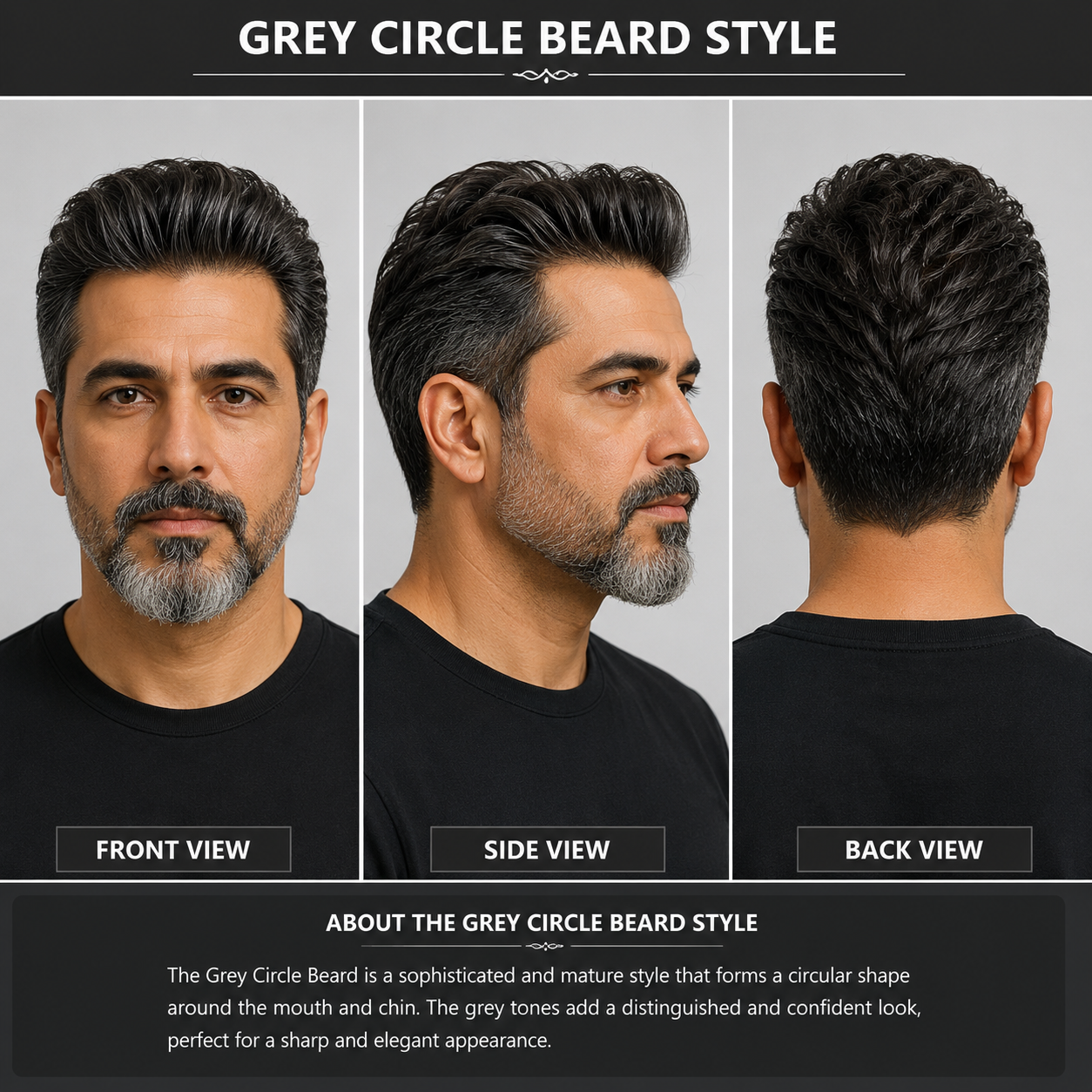
    Designer stubble at 1 to 3mm is consistently the most popular short beard style worldwide, and it’s not hard to understand why. Close enough to look groomed, long enough to add jaw definition, and low enough maintenance to fit into almost anyone’s schedule. Keep it even with a stubble trimmer on a low guard setting every two to three days. The key is consistent, even length across the whole face plus clean lines against the neck and cheeks. No product needed beyond a good trimmer. If you’re unsure where to start with short beards, start here.
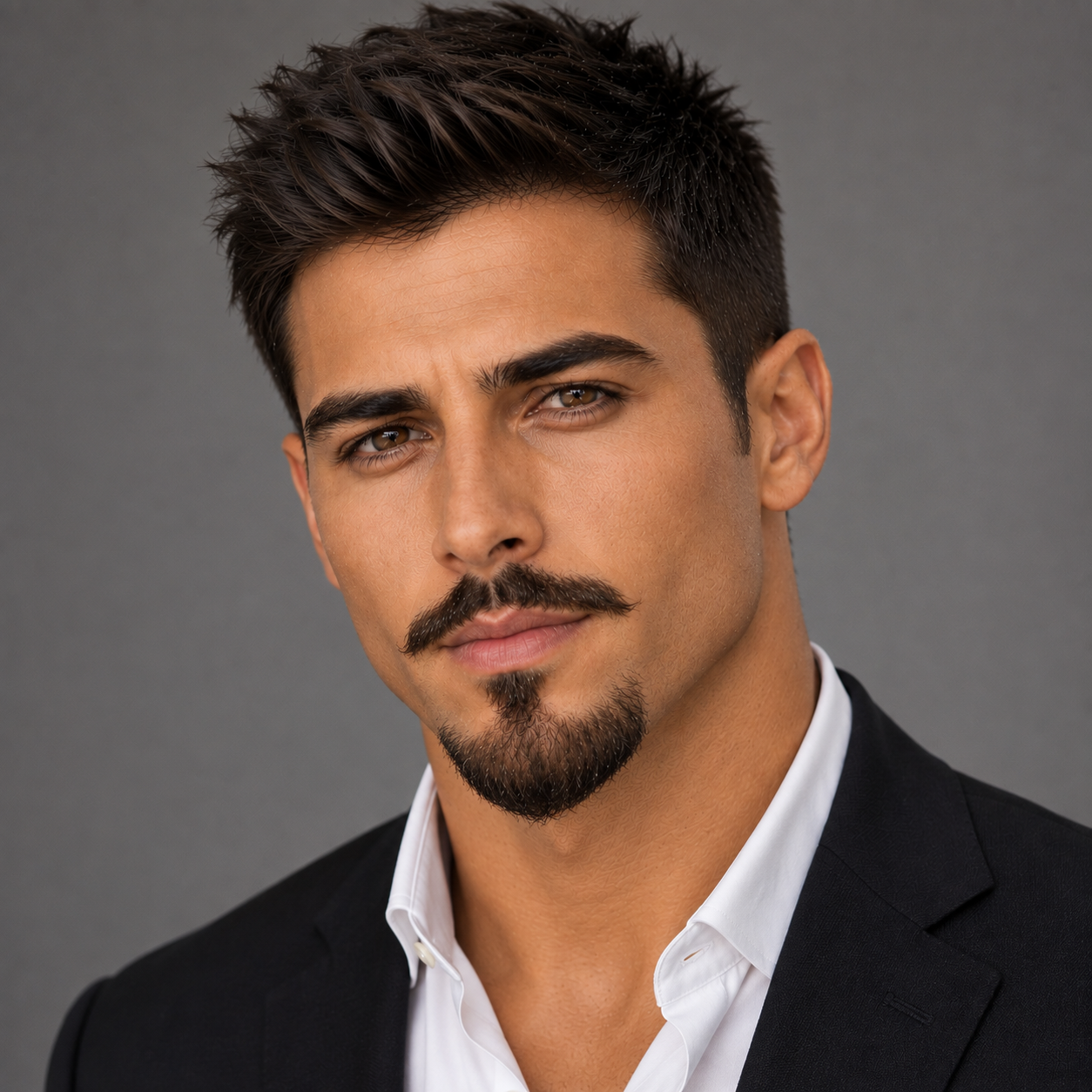
    2. Short Boxed Beard

    Short boxed beard style for men

    The short boxed beard is one of the most structured short beard styles you can wear. It’s kept short (under an inch) and shaped into clean, squared lines along the cheeks and jaw. The cheek line is set high and straight, and the neckline is sharp and well-defined. It reads as polished and intentional in any setting, from a job interview to a weekend out. Best for oval, round, and diamond face shapes that benefit from added jaw definition. Use a #3 to #4 guard with a straight-edge razor for the lines.

    3. The Short Full Beard

    Short full beard style for men

    A short full beard covers all areas of the face, the cheeks, chin, and upper lip, at a uniform short length of typically 1 to 2cm. It’s fuller than stubble but shorter than a standard full beard, hitting a practical middle ground that works in professional and casual settings alike. This style works particularly well for men with patchy growth because the uniformly short length minimizes the visibility of gaps. Use a #4 to #6 guard all over and maintain a clean neckline. One of the most wearable short beard styles for everyday life.

    4. The Goatee

    Classic goatee beard style for men

    The goatee isolates hair to the chin and mustache area while keeping the cheeks clean-shaven. It creates a sharp focal point on the lower face and is one of the best options for men with patchy cheek growth, because you’re focusing the beard where growth is usually strongest. Keep it trimmed to 1 to 2cm and maintain razor-sharp edges around the chin patch and mustache corners for maximum definition. Best for round, oval, and diamond face shapes where the chin focus adds vertical length.

    5. The Van Dyke

    Van Dyke beard style for men

    The Van Dyke is a goatee and mustache combination where the two are disconnected, with clean cheeks on either side. The mustache is styled separately, often with a slight point or curl at the ends, while the chin beard is precisely shaped. It’s sophisticated, slightly theatrical, and genuinely timeless. Best for oblong and oval face shapes where the chin focus works naturally. The disconnection between mustache and chin beard requires precise daily maintenance with a razor to stay sharp.

    6. The Circle Beard

    Circle beard style for men

    The circle beard connects the mustache and goatee in a rounded shape around the mouth. Unlike the Van Dyke, there’s no gap between the two. The result is cleaner and more symmetrical than a standard goatee and easier to maintain than many structured styles. Best for round and oval face shapes. Keep the circle tight and trim it every three to four days. Use a small precision trimmer to maintain the rounded curve along the edges. A solid short beard style for men who want something defined without spending a lot of time on it.

    7. The Short Stubble Fade

    Faded short beard with skin fade

    A stubble fade blends beard length gradually, shorter near the ears and sideburns and gradually longer toward the chin. This creates a sculpted, modern effect that connects seamlessly to a fade haircut. Use multiple guard settings on your trimmer: a #1 at the sideburns, blending up through #2, then #3 to #4 at the chin. Take your time between guard transitions to avoid visible lines. Best for men who get regular haircuts with a fade and want a fully integrated grooming look from scalp to chin.

    8. The Chinstrap

    Chinstrap beard style for men

    The chinstrap is a thin line of beard that runs along the jaw and chin with clean-shaven cheeks. It defines the jawline sharply and dramatically, drawing the eye straight to the jaw’s shape. This is a high-maintenance style because the inside edge needs cleaning with a razor every day to stay sharp. Keep it very thin (under 1cm wide) for maximum effect. Best for men with a strong jaw and an oval or oblong face shape. If your jawline is naturally soft or undefined, choose a style that adds structure instead.

    9. The Anchor Beard

    Anchor beard style for men

    The anchor beard combines a pointed chin beard with a mustache connected by a thin strip along the jawline, creating an anchor shape. It’s one of the most distinctive short beard styles you can wear. This one rewards men who enjoy the grooming process, since the precision edges need daily trimmer and razor work to stay defined. Use a precision trimmer for the shape and a razor for the clean cheek areas. Best for oblong and oval face shapes where the pointed chin works naturally with the face’s proportions.

    Get Grooming Tips & Style Inspiration Join thousands of men leveling up their look.