Blog

  • Men’s Hairstyles Guide: Every Hairstyle for Men Explained, The Complete 2026 Reference

    Men’s Hairstyles Guide: Every Hairstyle for Men Explained, The Complete 2026 Reference

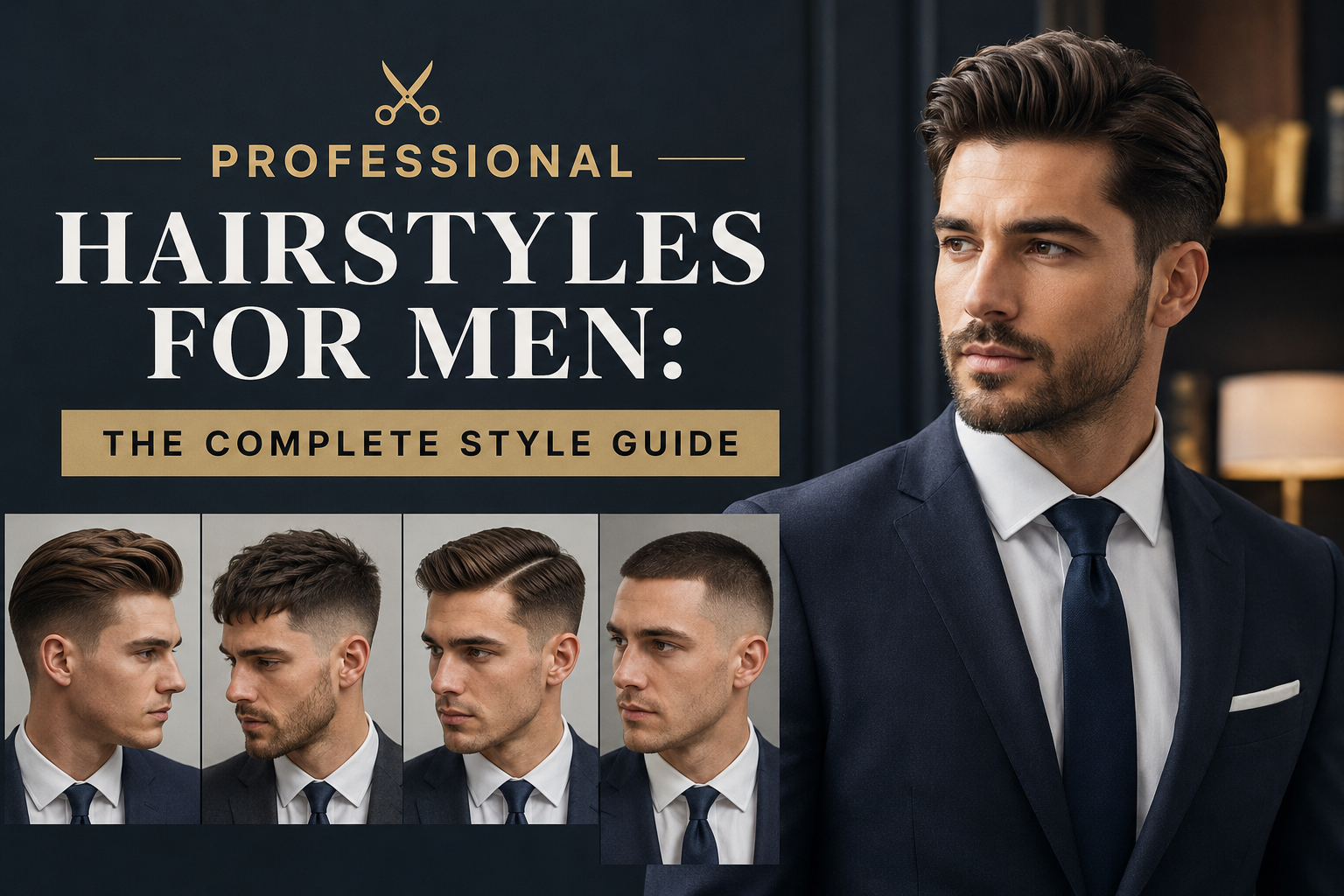
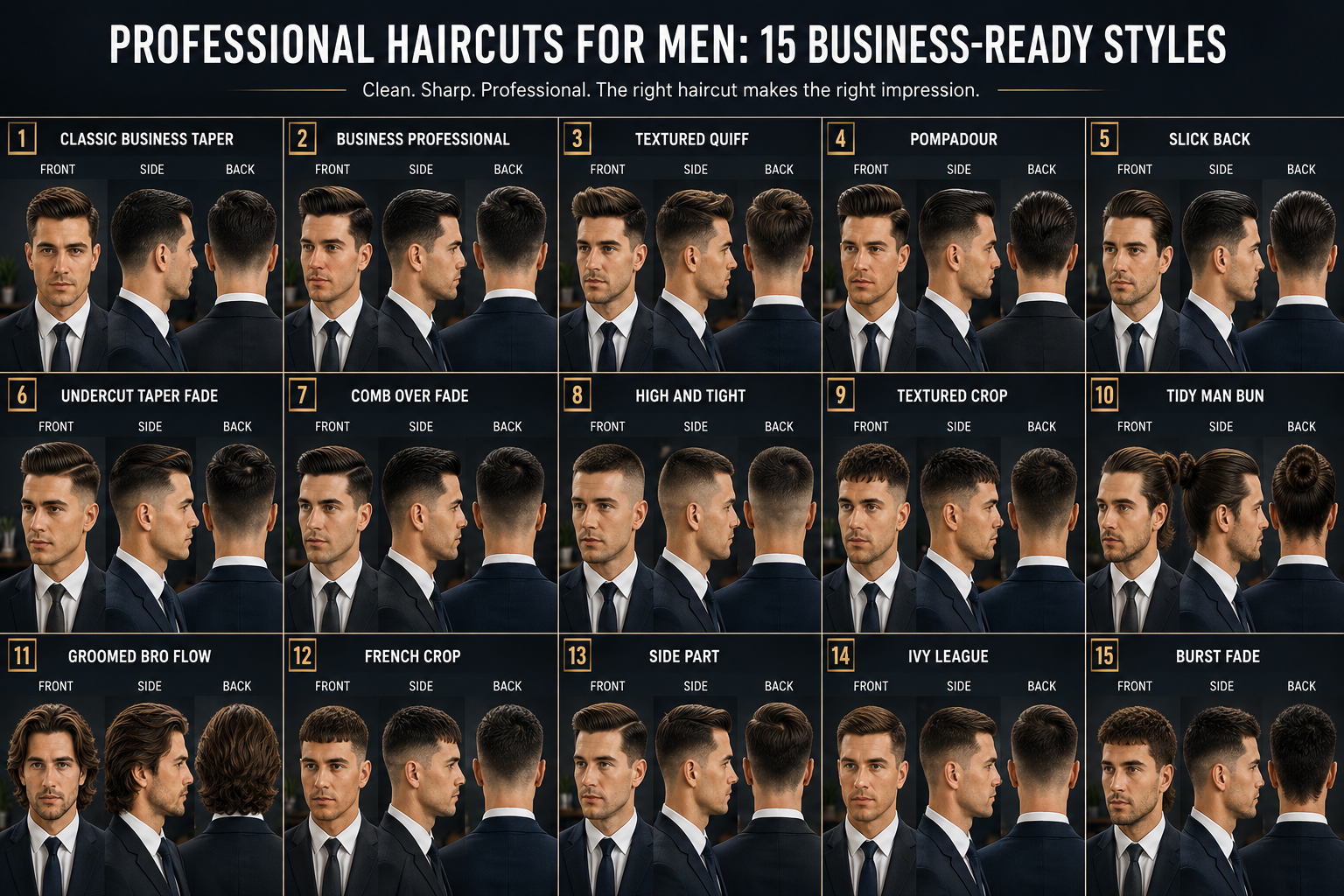
    Professional hairstyles for men guide showing every men's hairstyle type

    This is the complete men’s hairstyles guide for 2026: every hairstyle category explained, from the shortest buzz to the longest flowing styles, with face shape guidance, product recommendations, and daily styling advice for every option. While a haircut describes how the hair is cut, a hairstyle describes how the hair is worn and finished. This guide covers both what to get at the barbershop and how to style it at home.

    Men’s hairstyles in 2026 span a wider range than at any previous point in grooming history. Short textured crops sit alongside long natural styles, classic side parts coexist with modern curtain bangs, and low-effort natural looks are as valued as high-craft styled results. This guide navigates every option.

    Men’s Hairstyles by Length: Quick Reference

    Style CategoryLength RangeDaily Styling TimeBest ForKey Products
    Buzz / very shortUnder 1 inch0 minutesLow maintenance, any lifestyleNone required
    Short textured1 to 2 inches2 to 5 minutesModern, casual, professionalMatte clay or paste
    Short classic1 to 3 inches5 to 10 minutesProfessional, formalPomade, cream
    Medium casual3 to 5 inches5 to 10 minutesVersatile, lifestyle flexibilityCream, light clay
    Medium styled3 to 6 inches10 to 15 minutesPompadour, quiff, slick backPomade, strong clay
    Long natural5+ inches5 to 10 minutesNatural, bohemian, artisticLeave-in conditioner, oil
    Long styled5+ inches10 to 20 minutesMan bun, braid, flowOil, leave-in conditioner

    Short Men’s Hairstyles

    1. Buzz Cut

    The buzz cut is applied with a single clipper guard length all over. No styling required, no products needed. The length is determined by the guard number: number one (one-eighth inch) for a near-shave shadow; number four (half inch) for a fuller buzz. The buzz cut suits oval, square, and diamond face shapes and works with all hair types. Daily maintenance is zero. The style exists as it grows. Fresh cuts every two to three weeks keep the length consistent. The buzz cut is the definitive no-effort, all-performance men’s hairstyle. See our men’s haircuts guide for buzz cut guard number comparisons.

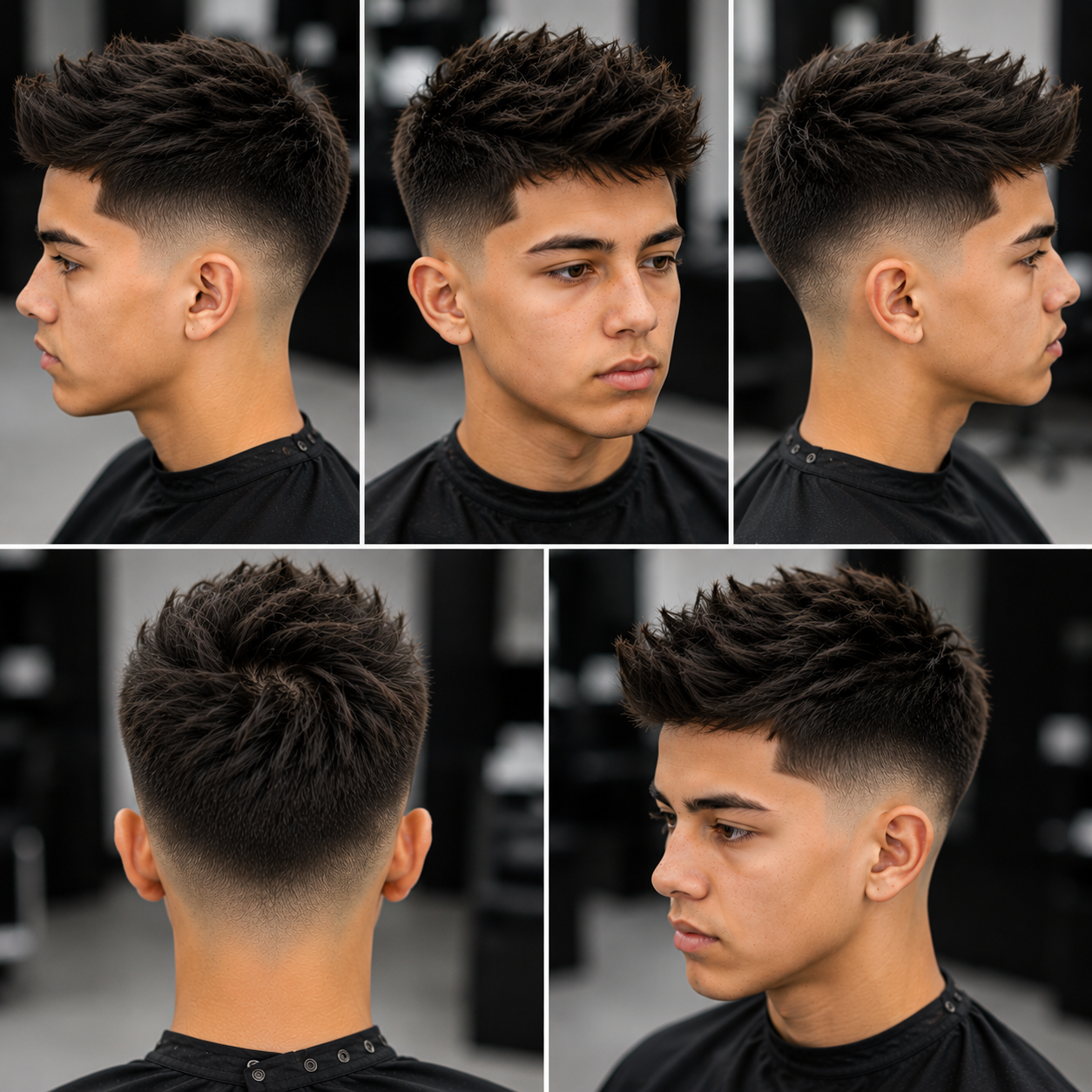
    2. Textured Crop with Fade

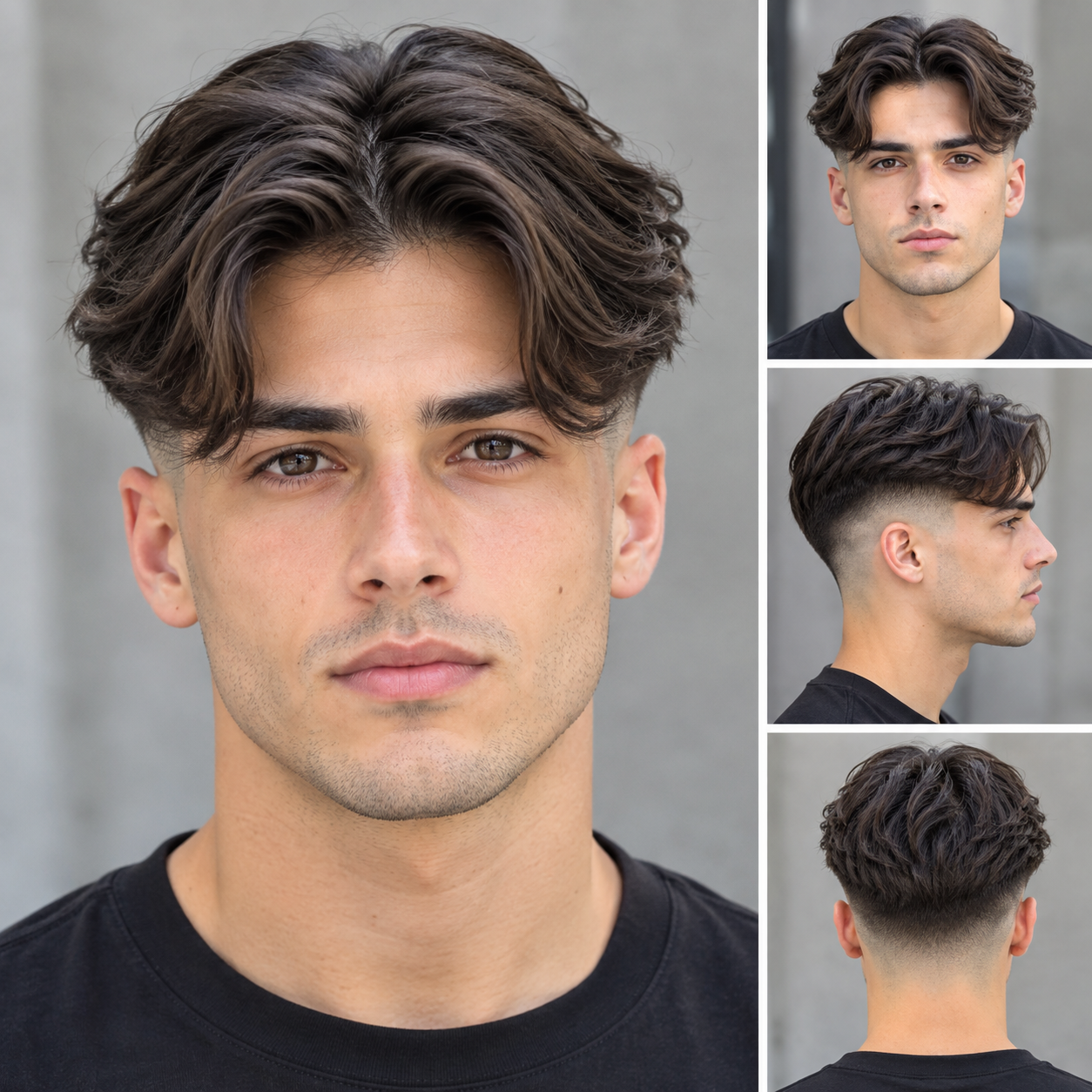
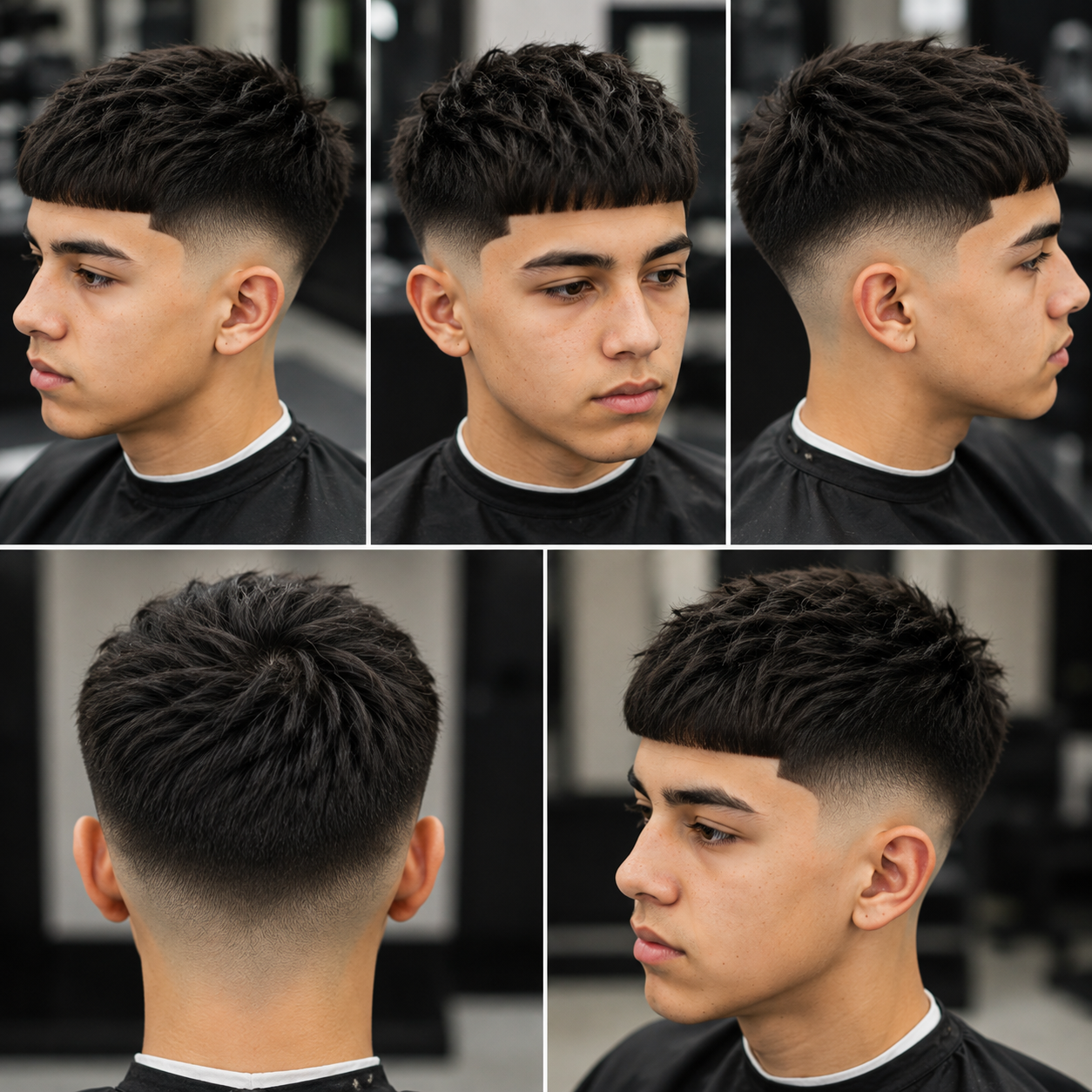
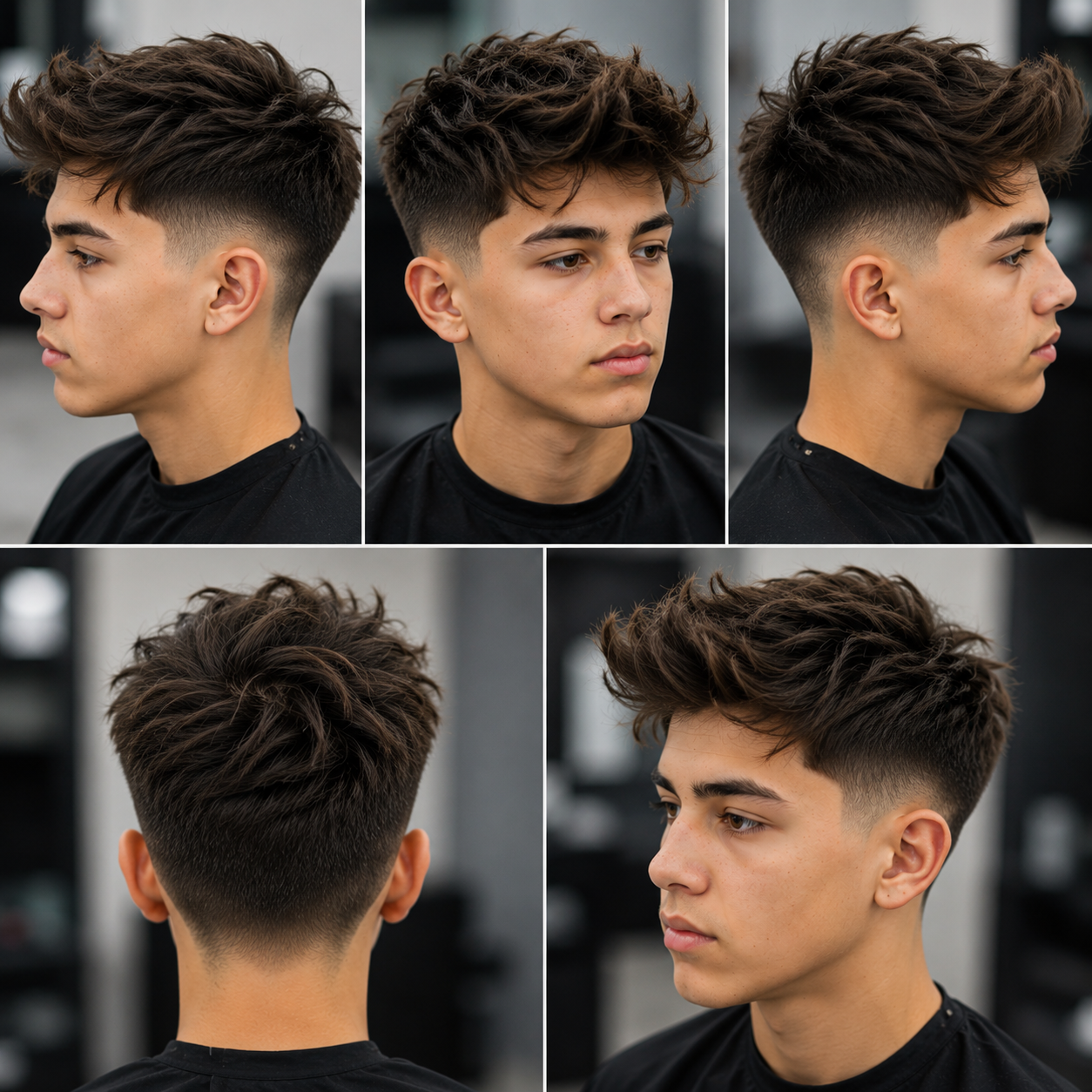
    The textured crop with mid or high skin fade is the dominant men’s hairstyle of the mid-2020s: a short, choppy top section styled with matte clay or paste, combined with clean faded sides. The textured crop’s top section typically sits between one and two and a half inches, with the texture created by scissor work and finished with a small amount of product. Daily styling: apply a pea-sized amount of matte clay to slightly damp hair, work through with fingers, and shape naturally. No heat tools required. Suits all face shapes. Fresh cuts every three weeks maintain the fade and fringe line. See our professional hairstyles guide for workplace-appropriate textured crop variations.

    3. French Crop

    The French crop features a horizontal fringe that falls forward onto the forehead, blunt-cut or textured, with close-cut or faded sides and back. Daily styling is minimal: the fringe sits naturally with no product required; matte paste can enhance texture if preferred. The French crop suits oval, square, and diamond face shapes and works particularly well for men with high foreheads. It is one of the lowest-maintenance non-buzz hairstyles for men. The fringe requires no daily effort to look intentional. Fresh cuts every three weeks keep the fringe line sharp. For Asian hair specifically, see our Asian hairstyles guide for French crop variations suited to straight, dense hair.

    4. Crew Cut

    The crew cut keeps one to two inches on top tapering into shorter sides. It is the most universally appropriate professional men’s hairstyle. Daily styling is minimal: a light cream or pomade combed through the top gives it a finished appearance in under five minutes. No heat required. All face shapes carry the crew cut. It suits straight, wavy, and coarse hair types equally. The crew cut works in every professional environment from creative agencies to corporate finance. It is the safest hairstyle choice available to men. See our professional haircuts guide for crew cut styling by industry.

    5. Classic Side Part

    The classic side part combs the top hair to one side from a defined parting line, creating a clean, polished appearance. It requires straight or lightly wavy hair and three to five minutes of daily styling with a comb and medium-hold product. The classic side part is the most formally appropriate longer short haircut available. It suits every conservative professional environment and formal occasion. All face shapes carry it. The modern side part uses lighter products (matte cream or light clay) for a less structured, more relaxed finish compared to the high-shine pomade of the traditional version. See our professional haircuts for men guide for side part product and styling advice by workplace.

    6. Ivy League

    A longer crew cut, two to three inches on top, that provides enough length to part and style while maintaining the clean, tailored proportions of the crew cut. The Ivy League is the ideal haircut for men transitioning between very short professional cuts and longer styled looks. Daily styling: a small amount of pomade or cream combed through the top gives a polished, finished appearance. It suits all face shapes and all professional environments. The Ivy League is the choice of men who want styling versatility. The top can be worn combed, natural, or slightly textured depending on the occasion, without committing to a fully long style.

    Medium Men’s Hairstyles

    7. Quiff

    The quiff lifts and sweeps the front section of the hair upward and backward: shorter and more textured than the pompadour, with a natural rather than slick finish. The quiff requires three to four inches of top length and five to ten minutes of daily styling. Daily process: apply medium-hold matte or low-sheen clay to slightly damp hair, blow-dry the front upward with a round brush or fingers, then shape with hands. The quiff suits oval, square, oblong, and heart face shapes. It adds height that benefits most face types. Modern textured quiff versions require only product and hand styling, with no brush or blow dryer needed. See our professional hairstyles guide for office-ready quiff styling.

    8. Pompadour

    The pompadour builds a voluminous, swept-back front section. The larger and more defined the volume, the more formal and dramatic the effect. Modern pompadours range from the low, relaxed version (minimal volume, matte product) to the classic high pompadour (maximum volume, high shine). Daily styling: blow-dry the front section upward and back while the hair is damp, then apply pomade and comb into shape. Ten to fifteen minutes for the full version; five minutes for the low relaxed pompadour. The pompadour suits oval, square, and heart face shapes. See our professional hairstyles for men guide for the work-appropriate pompadour.

    9. Slick Back

    The slick back combs all the top hair straight back from the forehead with no parting line. The classic version uses high-hold, high-shine pomade for a wet, lacquered look. Modern versions use lower-hold, lower-shine products for a natural finish. The slick back requires three to five or more inches of top length and straight or slightly wavy hair. Daily styling: five minutes with a comb and product. The slick back suits oval, oblong, and square face shapes. The slicked-back undercut and slicked-back fade pair the styling approach with modern clipper work on the sides for a contemporary version of the classic look. See our men’s haircuts guide for undercut and fade pairings.

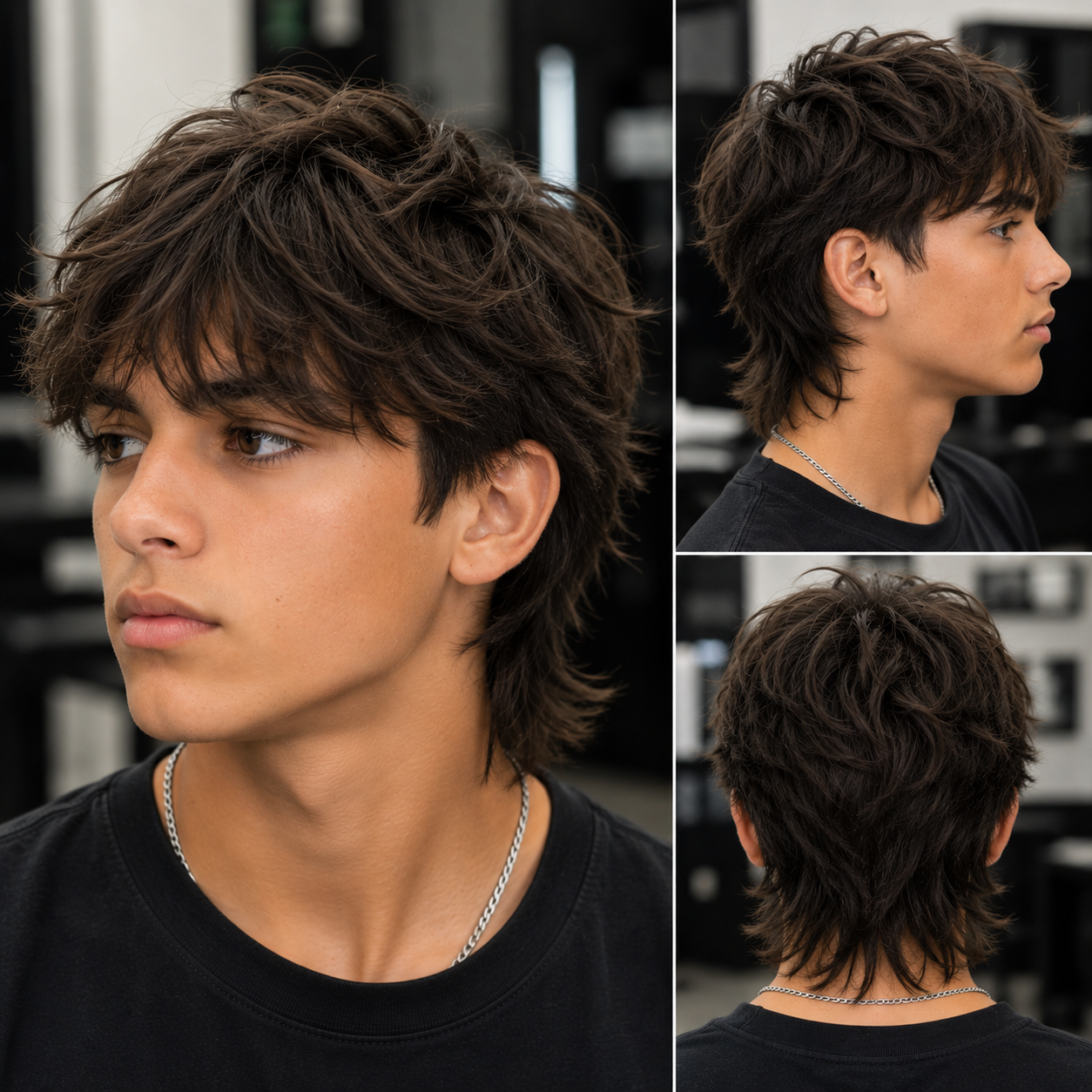
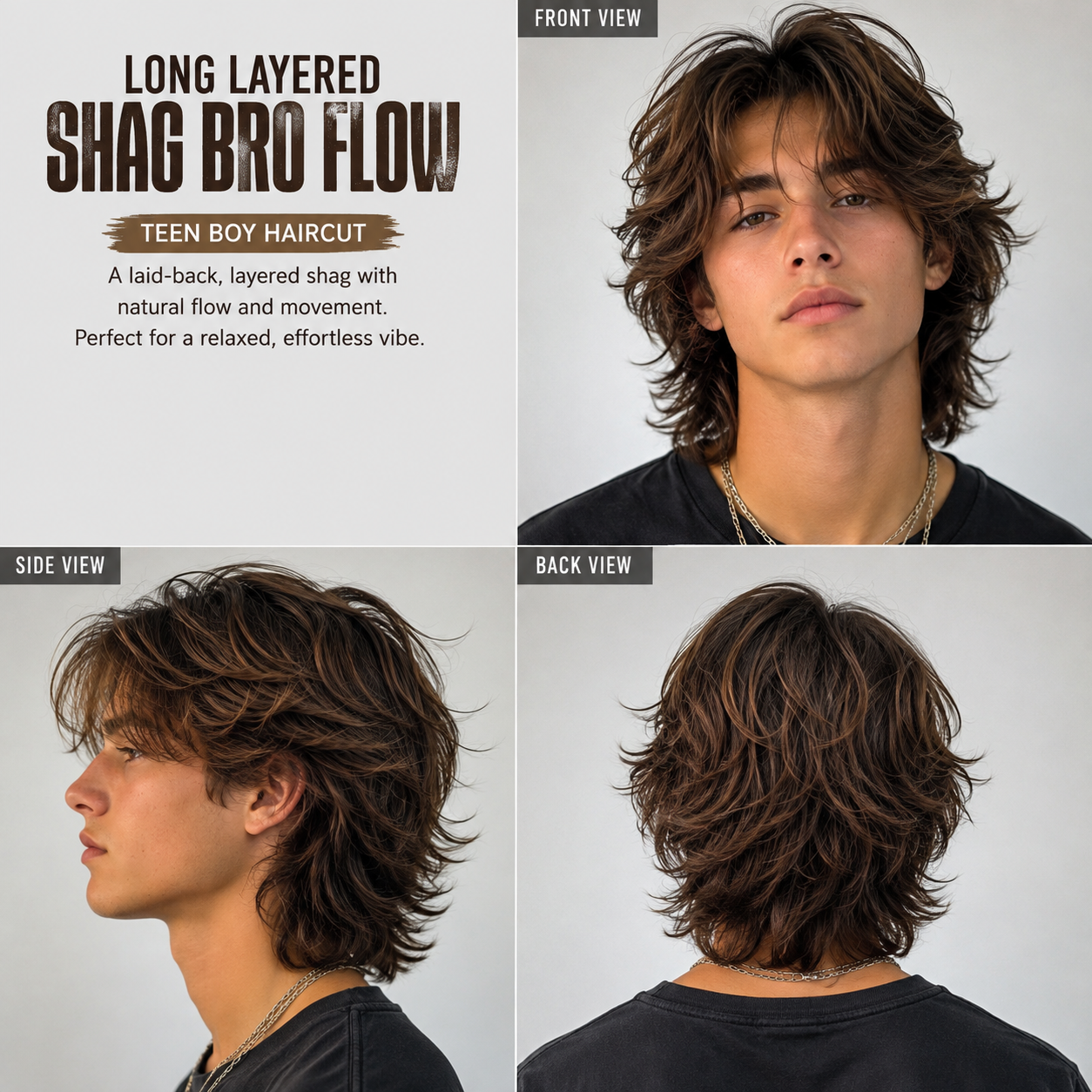
    10. Wolf Cut

    The wolf cut blends 1970s shag-cut aesthetics with modern curtain bang styling. It is shaggy, layered, and textured throughout. The top section is left longer with heavy layering; the sides and back are shorter but also layered for a shaggy, natural finish. The result has a deliberately unfinished, undone appearance that is fully intentional. The wolf cut suits oval, square, and heart face shapes and works particularly well on wavy and curly hair, where the natural texture enhances the layered shag aesthetic. Daily styling: apply a curl cream or light oil to damp hair and allow to air dry. Five minutes of effort for a fully styled look. For the middle-parted wolf cut variation, see our middle part hairstyles guide.

    11. Curtain Bangs and Curtain Hair

    Curtain bangs, where the front section parts in the middle and falls to either side of the forehead, have become one of the most popular men’s hairstyle choices of the 2020s. The curtain bang requires at least three to four inches of front length and falls naturally with minimal styling. Daily styling: apply a small amount of cream or oil to damp hair, part in the middle, and allow to air dry or blow-dry gently outward. The curtain bang suits oval, square, and heart face shapes. It is the most low-effort medium-length look for men who want visible style without significant daily investment. See our complete middle part hairstyles for men guide for curtain bang variations.

    12. Wavy Natural Style

    Men with naturally wavy hair (Type 2A to 2C) have an enormous styling advantage: the wave pattern creates natural texture and movement that many men pay stylists to achieve with straight hair. The wavy natural style lets the natural wave pattern express at medium length, three to six inches, with minimal product enhancement. Daily styling: apply a small amount of leave-in conditioner or curl cream to damp hair, scrunch upward, and air dry or diffuse. The result is naturally textured, full, and attractive without daily effort. All face shapes carry wavy natural styles well. Products to avoid: heavy waxes, strong pomades, and anything that disrupts the natural wave pattern.

    Long Men’s Hairstyles

    13. Man Bun

    The man bun requires eight to twelve inches of length across the top to execute cleanly. The classic man bun gathers all the hair at the crown; the low bun sits at the nape. The undercut man bun, with closely clipped sides and a long top bun, is the most popular combination. Daily styling: five minutes to gather, smooth, and secure. The man bun is one of the most practical long hairstyles for men who are physically active. It keeps the hair completely off the face and neck. Oval and oblong face shapes carry it best. Regular deep conditioning prevents long hair from becoming dry and brittle. See our haircuts guide for the undercut pairing detail.

    14. Long Natural Flow

    “Flow” describes long hair that falls naturally around the face and neck without being pulled back or deliberately styled into a specific shape. It requires twelve or more inches of top length. Flow suits straight and wavy hair types naturally; curly hair develops its own version of flow through the curl pattern. Daily styling: five minutes with leave-in conditioner and light oil. The flow style does not need to look deliberately styled. Oval and oblong face shapes carry flow best. The long hair with curtain part is a specific flow variation that suits square and heart faces by softening the jaw and forehead. See our middle part hairstyles guide for long flow with centre part detail.

    15. Viking and Long Warrior Styles

    Long, braided, or deliberately rugged hairstyles inspired by Norse, Celtic, or historic warrior aesthetics. These include loose long hair with beard combinations, braided styles, undercut top knots, and Viking braid variations. These are expression-first hairstyles, suited to men who actively choose hair as a statement of identity rather than simply grooming compliance. See our warrior cut guide and Viking haircuts guide for the full range of historic-inspired long men’s hairstyles with detailed face shape and execution guidance.

    16. Natural Curly and Afro Styles

    Natural curly and afro styles embrace Type 3 and Type 4 hair in its natural state, without heat straightening or heavy processing. The natural afro allows the hair to grow outward in its natural curl pattern and maintains a rounded shape. The tapered afro combines natural volume on top with a fade or taper at the sides. Defined curl styles use curl-defining creams and gels to enhance individual curl definition. Daily styling: apply curl cream or gel to damp hair, section and scrunch, air dry or diffuse. Oval, diamond, and heart face shapes benefit most from the volume that natural styles create. Protective moisture, including regular deep conditioning and nightly satin bonnet use, is the foundation of healthy natural hair care. See our men’s haircuts guide for natural afro fade and taper pairing.

    17. 80s Inspired Styles

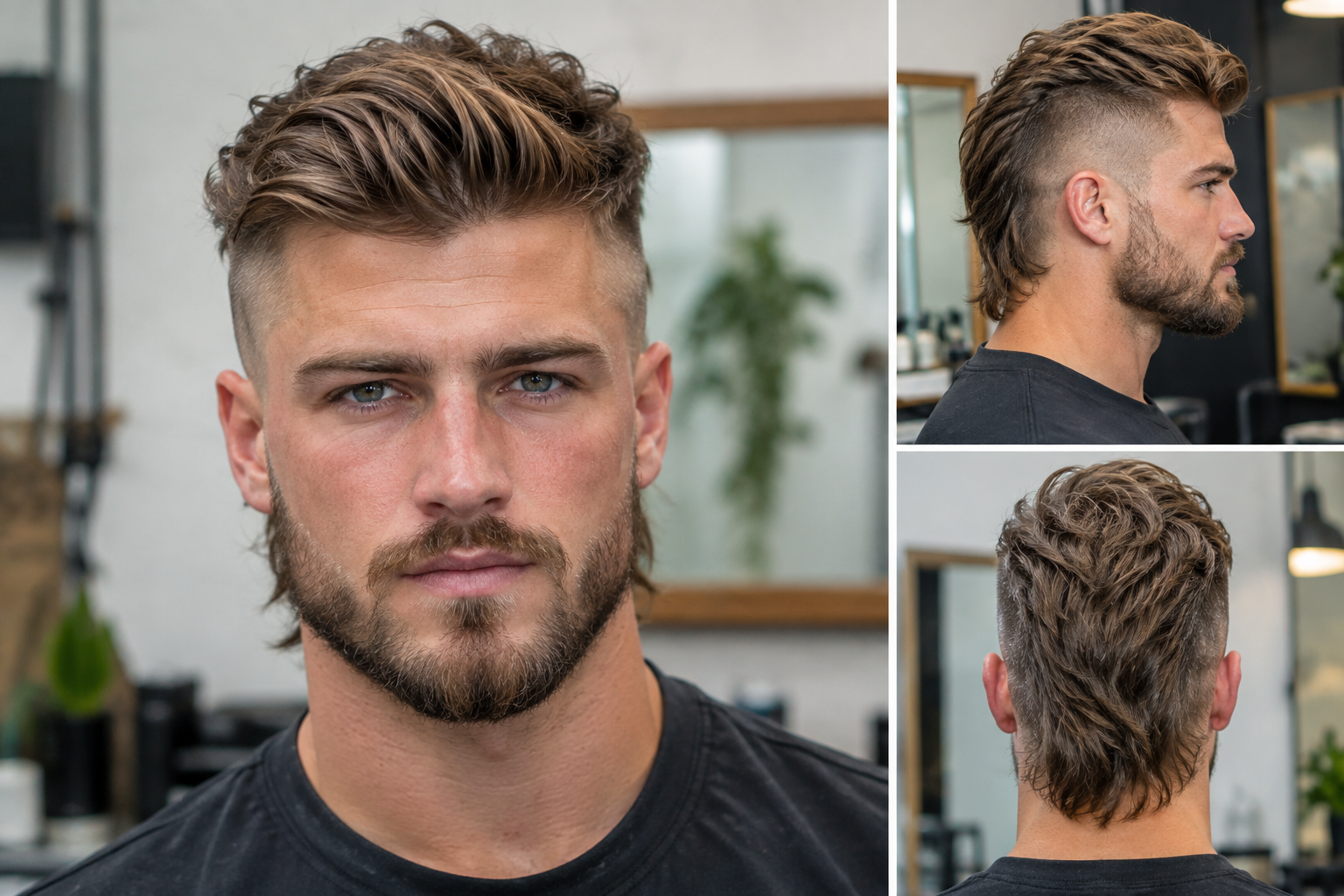
    1980s men’s hairstyle aesthetics have experienced a significant cultural revival. The mullet, the perm, the feathered shag, and the high-volume quiff all carry renewed relevance as self-aware style statements. The modern mullet in particular has evolved from ironic reference to genuine mainstream popularity, particularly in Australia and the UK. The 80s-inspired perm (soft, loose wave rather than tight curl) suits men with naturally straight hair who want texture and volume. See our 80s hairstyles for men guide for the full range of decade-inspired options with modern execution advice.

    18. Asian Men’s Hairstyles

    Men with Asian hair, typically straight, dense, with strong growth direction, have specific style considerations. The hair’s natural strength and density creates excellent volume and structure for certain styles, but resists others. The two-block cut, the textured crop, the perm, the curtain bang, and the slick back all perform exceptionally well with Asian hair characteristics. The two-block cut is specifically popular across East and Southeast Asia. It keeps the top long while clipping the sides and back short with no fade gradient, creating a sharp disconnected contrast. See our complete Asian hairstyles for men guide for the full two-block detail, perm considerations, and style-by-hair-density guidance.

    19. Older Men’s Hairstyles

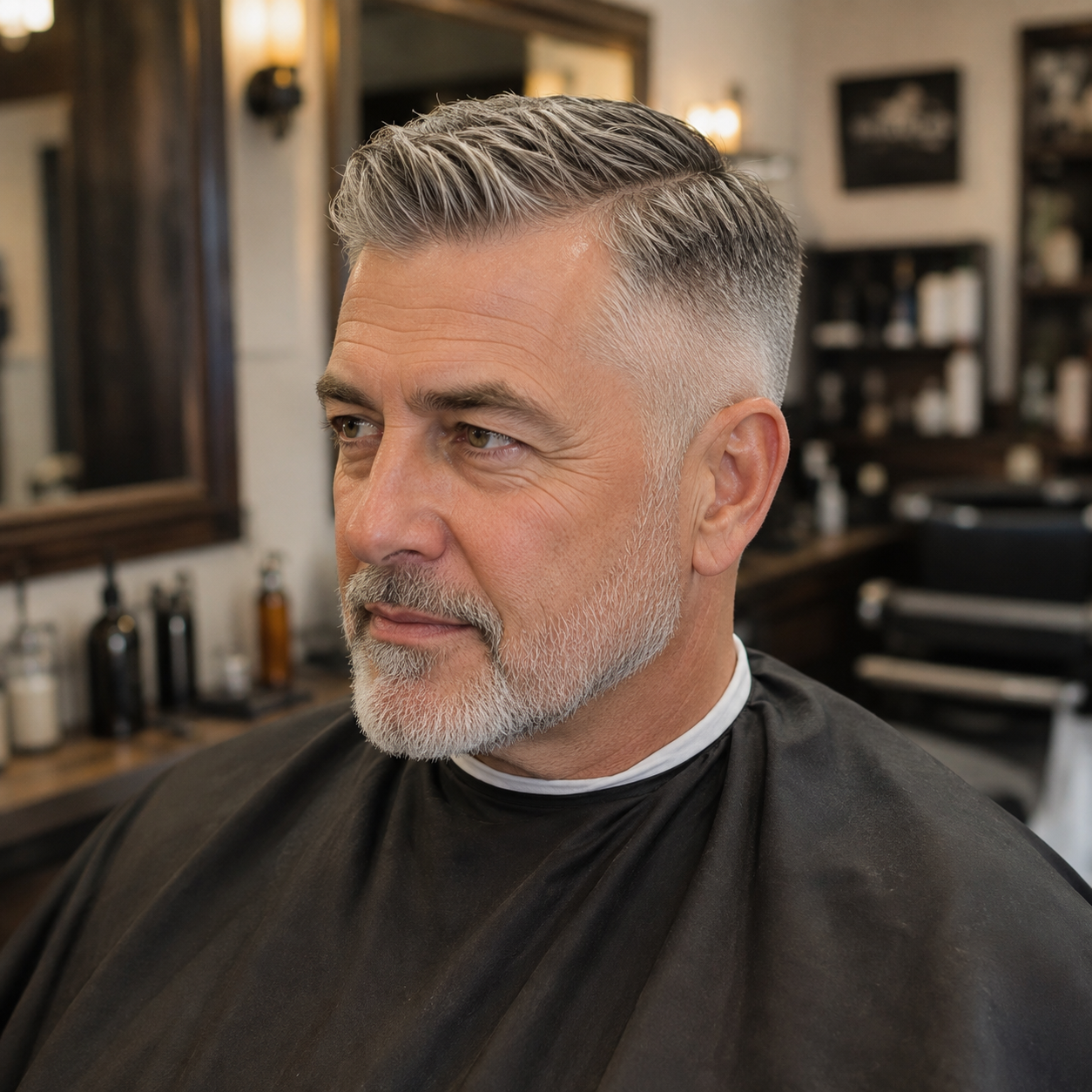
    Hair changes after 50. Density, texture, and grey presence all shift the styling calculus. The best hairstyles for men over 50 work with the hair as it is rather than trying to replicate younger-era styles. Short, clean cuts (crew cut, Ivy League, short side part, textured crop) almost always outperform longer styles on thinning hair. Gray and salt-and-pepper hair texture benefits from regular conditioning and products that add softness. See our detailed haircuts for men over 50 guide and thinning hair haircuts guide for the complete age-appropriate styling resource.

    20. Middle Part Styles

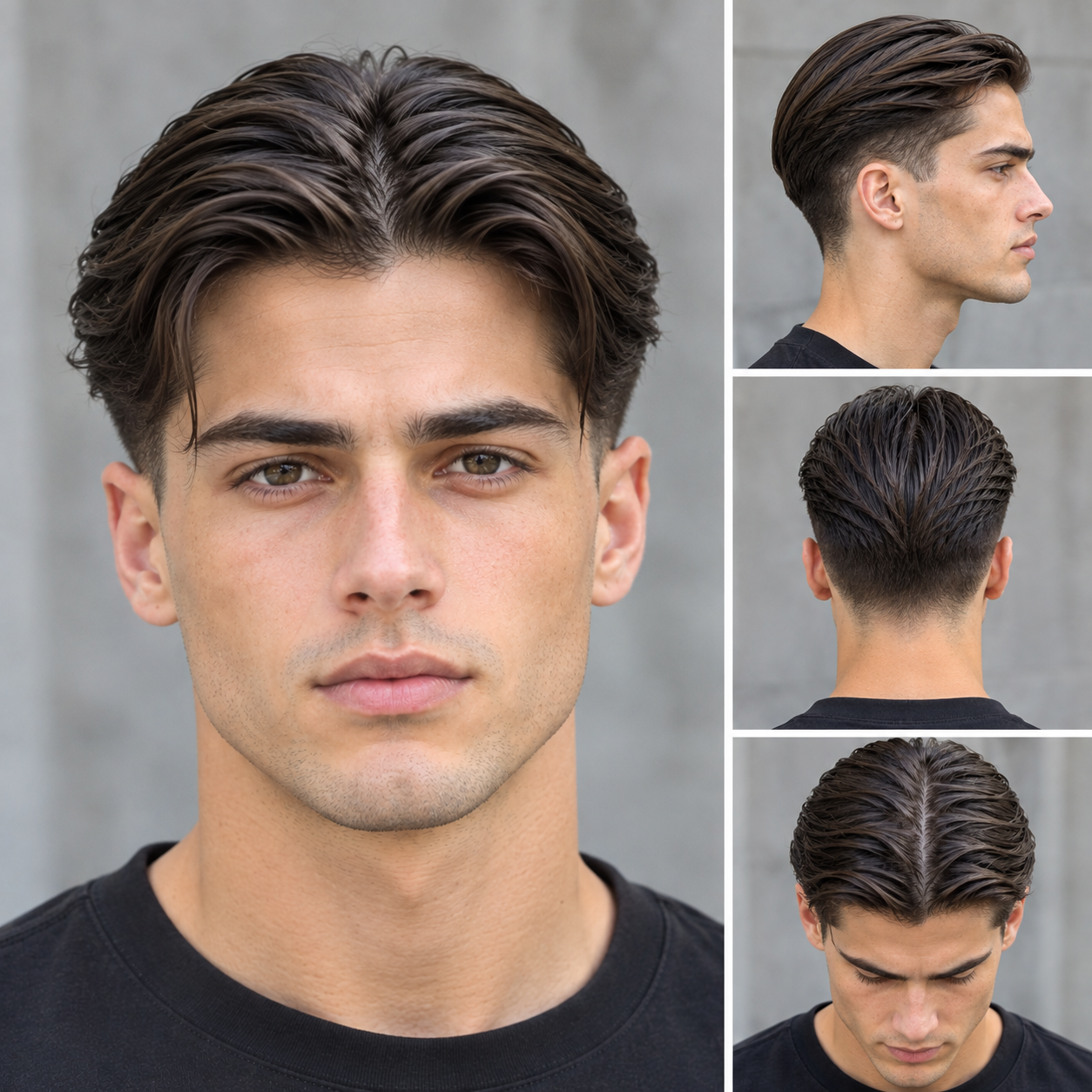
    Middle part hairstyles, where the parting runs centrally through the top of the hair rather than to one side, have become one of the dominant men’s styling trends of the 2020s. This was driven by the popularity of curtain bangs, the wolf cut, and the revival of 1990s aesthetics. The middle part suits oval, square, and heart face shapes best; it typically softens strong jaw lines and frames wider foreheads effectively. See our complete middle part hairstyles for men guide for the full twenty-style breakdown with face shape analysis and styling technique for each variation.

    Men’s Hair Products Guide

    ProductHold LevelFinishBest For
    Matte clayMedium to strongMatte / naturalTextured crop, modern quiff, wolf cut
    Water-based pomadeMedium to strongLow to medium sheenSide part, Ivy League, modern pompadour
    Oil-based pomadeStrongHigh shineClassic side part, slick back, formal styles
    Hair creamLight to mediumNaturalCrew cut, natural styles, wavy hair
    Curl creamLightNaturalCurly hair, wavy styles, natural afro
    Hair pasteMediumLow sheenTextured, casual daily styles
    Leave-in conditionerNoneNaturalLong hair, curly hair, moisture maintenance
    Beard and hair oilNoneNaturalLong hair, afro, moisture and shine

    Frequently Asked Questions

    What men’s hairstyle suits my face shape?

    Oval faces carry any hairstyle. Square faces benefit from texture and volume that softens the strong jaw, with quiffs, pompadours, and textured crops all working well. Round faces benefit from height, so quiffs, high fades, and pompadours elongate effectively. Oblong and rectangle faces benefit from horizontal emphasis: crew cuts, French crops, and Caesar cuts add visual width. Heart faces benefit from styles with volume at the jaw level and should avoid very high, narrow tops. Diamond faces benefit from styles with width at crown and forehead, including natural styles, textured crops, and side parts. Use the face shape information in this guide as a starting point and confirm with your barber, who can assess your specific proportions in person.

    What men’s hairstyle requires the least maintenance?

    The buzz cut requires zero daily maintenance, the lowest possible daily effort of any style. The shaved head is similarly effort-free, adding only scalp moisturiser to the routine. The textured crop and French crop require two to five minutes of daily product application with no heat tools. These are the lowest-maintenance non-buzz options. The natural wavy style and natural curly/afro style require five minutes of damp-hair product application and air drying. The highest-maintenance styles are the pompadour, slick back, and classic side part, which require heat tools, combing, and product application totalling ten to fifteen minutes daily.

    Which men’s hairstyle looks best with a beard?

    The shaved head with full beard is the most commanding hair and beard combination for men. The contrast between bare scalp and full beard creates a deliberately masculine, intentional aesthetic. The textured crop with short beard or stubble is the most popular everyday pairing. The pompadour or slick back with a medium beard creates a full grooming statement that suits formal and social contexts equally. The undercut with any beard length creates strong visual contrast. The key principle: the contrast between haircut and beard should feel deliberate rather than incidental. See our beard and mustache styles guide and beard styles guide for hair-and-beard pairing detail.

    How do I find the right hairstyle for my hair type?

    Straight hair (Type 1) handles virtually any style but needs product to create texture. Wavy hair (Type 2) benefits from styles that embrace natural movement, such as wolf cuts, curtain bangs, natural styles, and textured crops. Curly hair (Type 3) benefits from moisture-first styling and styles that work with curl definition rather than against it. Coily/afro hair (Type 4) benefits from protective moisture care and styles that honour the natural curl pattern. The fundamental rule: work with your natural hair texture rather than against it. Any style you see that requires dramatically different hair from your own will require either chemical processing or significant daily effort. Factor that into your decision. For hair-type-specific style guides, see our complete resources linked throughout this guide.

    This complete guide covers every major men’s hairstyle category. For deeper detail on specific topics, explore our full resource library: men’s haircuts guide, professional hairstyles for men, professional haircuts for men, middle part hairstyles, Asian hairstyles for men, haircuts for men over 50, 80s hairstyles for men, warrior cuts, and beard styles for men.
  • Men’s Haircuts Guide: Every Haircut Type Explained, The Complete 2026 Reference

    Men’s Haircuts Guide: Every Haircut Type Explained, The Complete 2026 Reference

    Professional haircuts for men guide showing different men's haircut types

    This is the complete men’s haircuts guide for 2026: every haircut type explained from the most basic buzz cut to the most versatile fade, with the terminology you need at the barbershop, face shape guidance for every cut, and maintenance requirements for every style covered. Whether you are walking into a barbershop for the first time or trying to understand the difference between a taper and a fade, this guide covers everything.

    Men’s haircuts are defined by their technique, that is, how the hair is cut, rather than just their length. Understanding the technique helps you communicate clearly with your barber and understand why certain cuts suit certain face shapes and hair types better than others.

    Men’s Haircut Types: Quick Reference

    Haircut TypeKey FeatureMaintenance FrequencyBest Face ShapesHair Type
    Buzz cutUniform short length all overEvery 2 to 3 weeksOval, square, diamondAll types
    Crew cutShort back and sides, longer on topEvery 3 to 4 weeksOval, square, oblongAll types
    Taper cutGradual length reduction at sides/backEvery 3 to 4 weeksAll face shapesAll types
    FadeSkin-to-length gradientEvery 2 to 3 weeksOval, square, diamondAll types
    UndercutShaved sides, long topEvery 3 to 4 weeksOval, square, oblongStraight, wavy
    PompadourVoluminous swept-back topEvery 3 to 4 weeksOval, square, heartStraight, wavy
    QuiffTextured swept-up frontEvery 3 to 4 weeksOval, square, heartStraight, wavy
    Side partClean parted top, tapered sidesEvery 3 to 4 weeksAll face shapesStraight, wavy
    French cropShort textured fringe, tight sidesEvery 3 weeksOval, square, diamondAll types
    Textured cropChoppy textured top with fadeEvery 3 weeksOval, square, diamondStraight, wavy

    Every Men’s Haircut Type Explained

    1. Buzz Cut

    The buzz cut is the most fundamental men’s haircut: a single guard length applied uniformly across the entire head using clippers. No blending, no fading, no styling, just one consistent length from front to back and ear to ear. The number of the guard used determines the length: a number one buzz is roughly one-eighth of an inch; a number four is half an inch. The buzz cut suits oval, square, and diamond face shapes best. It requires no styling products and minimal at-home maintenance. Fresh buzz cuts are needed every two to three weeks to maintain their intended length. For detailed variations and style options, see our complete haircuts guide.

    2. Crew Cut

    The crew cut keeps the top of the head slightly longer than the sides and back, typically one to two inches on top, tapering down at the sides without a sharp fade line. The result is a clean, masculine cut that suits almost any face shape and professional context. The crew cut is considered the most universally appropriate men’s haircut: appropriate in every professional environment, easy to maintain, and requiring minimal daily styling. It was the standard military cut of the twentieth century and remains one of the most popular men’s haircuts worldwide. Fresh cuts every three to four weeks keep it looking sharp.

    3. Taper Cut

    A taper cut uses clipper blending to gradually reduce the hair length from longer at the top to shorter at the sides and back, but it stops before reaching the skin. The key distinction between a taper and a fade is that the taper transitions to very short hair above the ear and at the neckline, while the fade transitions to skin. Tapers are more conservative and suitable for all face shapes and professional environments. The taper can be applied to virtually any top style, including pompadour, side part, quiff, or natural, making it the most versatile cutting technique available. See our guide to professional haircuts for men for taper-based work styles.

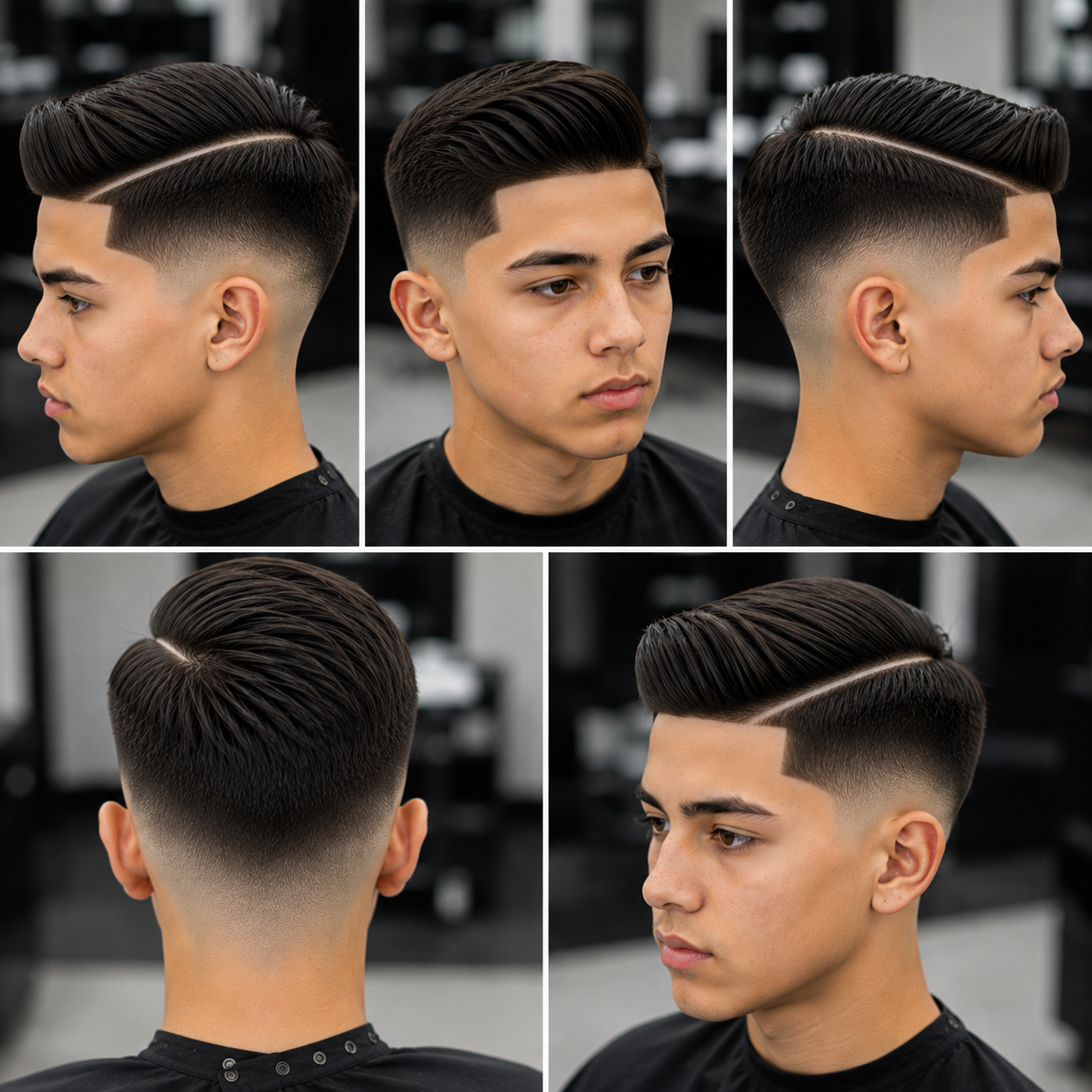
    4. Skin Fade

    The skin fade (also called a bald fade) blends from the natural hair length down to bare skin somewhere on the sides or back. Where the fade starts (high, mid, or low) determines the name and the visual effect. A high skin fade starts immediately above the ear and at the occipital bone, creating maximum contrast. A mid fade starts at the temple. A low fade starts just above the ear. All skin fades require a skilled barber every two to three weeks to maintain the clean gradient. The fade grows out faster and more visibly than any other cut type. The skin fade pairs with any top style.

    5. High Fade

    The high fade is a specific fade position: the transition from full-length hair to skin begins at or above the temples, leaving only the very top section of the head with significant length. The high fade creates the highest contrast of any fade type. The top section is visually isolated from the sides, creating a dramatic, modern aesthetic. It suits oval, square, and diamond face shapes. High fades look best on men with dense, defined top sections, as the contrast draws attention upward and benefits from the top having visual interest. See our men’s hairstyles guide for top styles that pair with high fades.

    6. Low Fade

    The low fade transitions from full length to skin just above the ear, the lowest possible starting point for a fade. The low fade creates the least contrast of any fade type and is therefore the most conservative fade option. It suits all face shapes and all professional environments outside the most restrictive contexts. The low fade blends naturally into the surrounding hair, making it appropriate for men who want the clean look of a fade without the high-contrast, modern aesthetic. It is the professional’s fade, the choice for corporate and business-formal environments where a full skin fade might read as too trendy.

    7. Mid Fade

    The mid fade is the most popular fade position. The transition to skin begins at the mid-temple, creating a balanced contrast between the low fade’s conservatism and the high fade’s drama. The mid fade suits all face shapes and most professional environments. It is the default fade that most barbers apply when a client requests “a fade” without specifying. The mid fade pairs with virtually every top style: textured crop, pompadour, quiff, natural afro, braids, and more. For most men, the mid fade is the best starting point for exploring fade-based haircuts.

    8. Undercut

    The undercut shaves or clips the sides and back of the head to a uniform very short length while keeping the top significantly longer, creating a sharp disconnected line between the two sections rather than a gradual blend. The undercut emphasises the contrast between the long top and the cropped sides without a fade transition. It is a bolder, more contemporary version of the taper concept. The disconnected undercut is even sharper, with a visible line between the clipper section and the top. The undercut suits oval and square face shapes best. Styling products are essential to manage the longer top section. See our hairstyles guide for undercut top style options.

    9. Pompadour

    The pompadour sweeps the top hair back and upward from the forehead, creating a voluminous vertical section at the front that is the focal point of the cut. The classic pompadour uses maximum volume; modern variations include the low pompadour (smaller, more relaxed volume), the fade pompadour (skin fade sides with pompadour top), and the textured pompadour (choppy texture instead of smooth sweep). The pompadour requires medium-to-strong hold products and daily styling investment. It suits oval, square, and heart face shapes. The vertical volume at the front creates the illusion of length in shorter or rounder faces. See our professional hairstyles guide for pompadour work styling.

    10. Quiff

    The quiff is a close relative of the pompadour. The front section is lifted and swept back, but typically with more texture and less volume than a classic pompadour, and with a natural rather than slick finish. The quiff is the most popular modern dressed style for men because it bridges the gap between formal and casual: it looks intentional without looking overly done. It suits oval, square, oblong, and heart face shapes. Medium-hold, matte or low-sheen products work best. The modern textured quiff, with choppy, piece-y texture instead of a smooth combed finish, is the dominant interpretation in 2026.

    11. Side Part

    The side part creates a defined parting line through the top of the hair, typically at the natural part or slightly more pronounced, with the hair combed cleanly to either side. The classic side part is polished and professional. Modern interpretations include the deep side part (a more dramatic, further-from-centre part line) and the hard part (a razor-cut line instead of a combed part). The side part suits all face shapes and all professional environments. It is the most broadly applicable dressed haircut for men. Products range from light-hold creams for natural finishes to firm pomades for classic slick looks. See our guide to professional men’s haircuts for side part styling by workplace.

    12. French Crop

    The French crop features a short, horizontal fringe across the forehead, cut straight and sitting just above the eyebrows, with tight, close-cut sides and back. The result is a clean, structured look with strong horizontal lines. The fringe can be textured (choppy, natural) or blunt (clean-cut straight edge). The French crop suits oval, square, and diamond face shapes. The horizontal fringe works particularly well for men with high foreheads, as it reduces visual forehead length. This is a low-maintenance styled cut. The fringe sits naturally without daily styling effort. Fresh cuts every three weeks maintain the fringe line. See our hairstyles guide for French crop variations.

    13. Textured Crop

    The textured crop is the defining men’s haircut of the 2020s: a short, choppy top with either a skin fade or tight taper on the sides and back, styled with matte products for a natural, piece-y texture. Unlike the French crop’s horizontal fringe, the textured crop uses a more natural, varied top section that falls forward with texture rather than sitting in a clean line. The textured crop suits all face shapes and hair types including wavy and lightly curly hair, which benefits from the texture work. It requires minimal daily styling. A small amount of matte clay or paste applied to slightly damp hair is enough. This is the most popular men’s haircut in the UK, Australia, and much of Europe.

    14. Ivy League Cut

    The Ivy League is a longer version of the crew cut. The top is kept long enough to part and comb, typically two to three inches, while the sides are tapered short. The result sits between the crew cut and the full side part in terms of length and formality. It is named for the American Ivy League universities where it was popular in the 1950s. The Ivy League is the most formally appropriate longer men’s haircut. It suits all conservative professional environments while giving enough length for styling variety. All face shapes carry it. See our professional haircuts guide for Ivy League styling detail.

    15. Caesar Cut

    The Caesar cut features a horizontally cut fringe of one to two inches that falls forward onto the forehead, with the rest of the top kept at the same uniform short length. The sides are tapered or faded. The Caesar is named for Julius Caesar, whose coin portraits show a similar frontal fringe. It is a low-maintenance, low-styling option that suits men who want a defined look without daily effort. The horizontal fringe suits oval and square face shapes best. For men with thinning hair, the Caesar cut’s forward-falling short fringe covers the front hairline effectively.

    16. Slick Back

    The slick back keeps the top long, typically three to five inches, and combs it straight back from the forehead with no parting line, using high-hold, high-shine products for the classic version. The modern slick back uses lower-hold products for a less lacquered finish. The slick back requires medium to long top length and straight or slightly wavy hair. It suits oval, oblong, and square face shapes. The slicked-back undercut and slicked-back fade are common modern pairings, combining the slick top style with modern fade sides. High-shine pomade or water-based gel are the classic product choices. See our men’s hairstyles guide for product recommendations by finish level.

    17. Man Bun

    The man bun requires the longest growth period of any mainstream men’s style, typically eight to twelve inches of length to achieve a full bun without stray sections. The hair is gathered at the back of the crown and secured with an elastic. The undercut man bun combines shaved or closely clipped sides with a long top section gathered into a bun. This is the most popular man bun variation. The full man bun keeps the sides at medium length alongside the long top. The low man bun sits lower on the head, closer to the nape. Oval and oblong face shapes carry the man bun best. Regular moisturising and minimal heat styling keep long hair healthy through the growth process.

    18. Natural and Afro Styles

    Natural and afro styles embrace the hair’s natural curl pattern rather than straightening or heavily processing it. The classic afro allows natural curl growth outward in all directions and shapes it into an even, rounded form. Modern natural styles include the tapered afro (natural on top, fade or taper on sides), the coil-and-defined natural (product-enhanced defined curls), and the twist-out or braid-out (natural curl enhanced by protective styling). Natural styles suit oval, diamond, and heart face shapes best. The volume creates width that balances narrow or angular features. For styling and maintenance of natural hair, see our men’s hairstyles guide.

    19. Mohawk

    The mohawk shaves or closely clips the sides of the head and leaves a strip of hair running from the forehead to the nape along the centre of the head. The classic punk mohawk uses maximum contrast and height. The modern faux hawk softens this: the sides are faded rather than shaved, and the centre strip is styled upward with product rather than standing rigidly. The faux hawk is the more practical and workplace-appropriate version that retains the visual statement of the classic mohawk. Oval and long face shapes carry the central height strip best. See our warrior cut guide for mohawk history and variations.

    20. Shaved Head

    The shaved head, whether zero guard or razor-shaved to bare skin all over, is the most low-maintenance men’s hair option, eliminating styling products and barbershop visits almost entirely. Men with thinning hair or receding hairlines often find the shaved head the most confident and commanding presentation compared to any length of thinning hair. The shaved head suits oval, square, and diamond face shapes most naturally. Regular moisturising of the scalp prevents dryness and flaking. Sun protection for the exposed scalp is essential in warmer weather. The shaved head with a full beard is one of the most popular masculine style combinations. See our beard styles guide for beard options that complement the shaved head.

    Men’s Haircut Face Shape Guide

    Face ShapeBest Haircut TypesWhat to Look For
    OvalAny haircut typeMost versatile: almost nothing is wrong
    SquareTextured crop, quiff, pompadour, side partSoftens strong jaw with texture or volume
    RoundHigh fade, quiff, pompadour, faux hawkAdds height to elongate the face
    Rectangle/OblongCrew cut, French crop, side part, CaesarAvoid height; horizontal cuts balance length
    DiamondTextured crop, natural, mid fade, side partAdds width at forehead or crown
    HeartSide part, quiff, textured crop, mid fadeAvoid very close sides; keep some width at jaw

    Barbershop Terminology: What to Say

    TermWhat It MeansWhen to Use
    FadeGradual blend from length to skinWhen you want skin visible at sides/back
    TaperGradual length reduction without reaching skinConservative cuts, professional environments
    Neckline (blocked)Straight horizontal line at napeWhen you want a clean, square neckline
    Neckline (tapered)Blended, natural-looking necklineWhen you want a softer, more natural finish
    TextureChoppy, piece-y finish, not smoothTextured crop, modern quiff, natural styles
    Guard numberClipper guide length (1 = 1/8 inch, 4 = 1/2 inch)Specifying exact clipper length
    Scissor over combBlending with scissors rather than clipperSofter, more natural-looking blends

    Frequently Asked Questions

    What is the difference between a taper and a fade?

    A taper transitions from longer hair at the top to very short hair at the sides and neckline but stops before reaching bare skin. A fade continues all the way down to skin somewhere on the sides or back. The taper is more conservative and natural-looking; the fade creates higher contrast and a more contemporary aesthetic. Both are created using clippers, but the fade requires more precision and skill to execute cleanly. For professional environments, the taper is usually the safer choice; for modern barbershop styles, the fade is the more common default.

    How often should men get a haircut?

    Short, faded cuts (skin fade, buzz cut, high and tight) need a fresh cut every two to three weeks to maintain their intended appearance. Medium-length cuts (crew cut, taper, side part, textured crop) look best with a fresh cut every three to four weeks. Longer styles (pompadour, man bun, slick back, natural afro) can go four to six weeks between cuts. These are general guidelines. Individual growth rates vary. The right signal is when the cut starts to lose its shape and intended proportions, not a fixed calendar schedule.

    What men’s haircut suits thinning hair?

    For thinning hair, shorter cuts are almost always better. The buzz cut, Caesar cut, shaved head, and textured crop all handle thinning hair well because they eliminate the length contrast between thinning areas and denser areas. The crew cut and French crop also work well. Avoid long tops with hard partings, slicked-back styles, or anything that requires the hair to cover distance. These make thinning most visible. For more detail on cuts specifically optimised for thinning hair, see our thinning hair haircuts guide.

    What is the most popular men’s haircut?

    The textured crop with mid skin fade is the most popular men’s haircut in the UK, Australia, and much of western Europe as of 2026. In the United States, the mid fade with a textured or natural top is the dominant style in barbershops. The crew cut and side part remain the most popular professional haircuts globally. The faded buzz cut is the most popular military and sports-adjacent cut. Popularity varies significantly by geography, age group, and workplace context. The most popular cut for your specific context is always better than the globally most popular cut if it does not suit your face, hair type, or lifestyle.

    For detailed guides on specific haircut categories, see our complete resources: professional haircuts for men, professional hairstyles, haircuts for thinning hair, haircuts for men over 50, and our full men’s hairstyles guide.

  • Beard Styles Guide: Every Beard Style Explained, From Stubble to Full Beard (2026)

    Beard Styles Guide: Every Beard Style Explained, From Stubble to Full Beard (2026)

    Beard styles guide for men showing different beard lengths and types

    This is the complete beard styles guide for men in 2026: every beard style explained from the most basic stubble to the most advanced long beard, with face shape charts, maintenance requirements, and product guidance for every option. Whether you are growing your first beard or looking to change up an established style, this guide has everything you need to make the right decision.

    Beard styles are not one-size-fits-all. The right beard for you depends on your face shape, your growth density, your lifestyle, and your grooming commitment level. This guide addresses all four factors for every style covered.

    The Complete Beard Style Spectrum by Length

    Beard CategoryGrowth TimeMaintenance LevelBest Face Shapes
    Clean shaveNoneDaily razor workAll face shapes
    Stubble (1 to 3 days)1 to 3 daysLow: weekly clipperAll face shapes
    Designer stubble (5 to 10 days)5 to 10 daysLow: bi-weekly clipperAll face shapes
    Short beard (2 to 6 weeks)2 to 6 weeksMedium: weekly trimAll face shapes
    Medium beard (1 to 3 months)1 to 3 monthsMedium: bi-weekly trimOval, oblong, square
    Full beard (3 to 6 months)3 to 6 monthsMedium: monthly trimOval, oblong, square
    Long beard (6 to 12 months)6 to 12 monthsMedium: shape maintenanceOval, oblong
    Yeard+ (12+ months)12+ monthsLow: oil and brush dailyOval, oblong

    Beard Styles by Type: Every Style Explained

    1. Clean Shave

    The clean shave is the starting point and the benchmark against which all beard styles are measured. It requires daily razor work, typically a wet shave with a safety razor or multi-blade cartridge, or regular use of an electric foil shaver. The clean shave suits all face shapes and is the only universally accepted grooming choice across all professional and social environments. For men growing a beard for the first time, the clean shave is the reference point: begin growing from here and assess the beard style options as density and length develop over the following weeks.

    2. Light Stubble (1 to 3 Days)

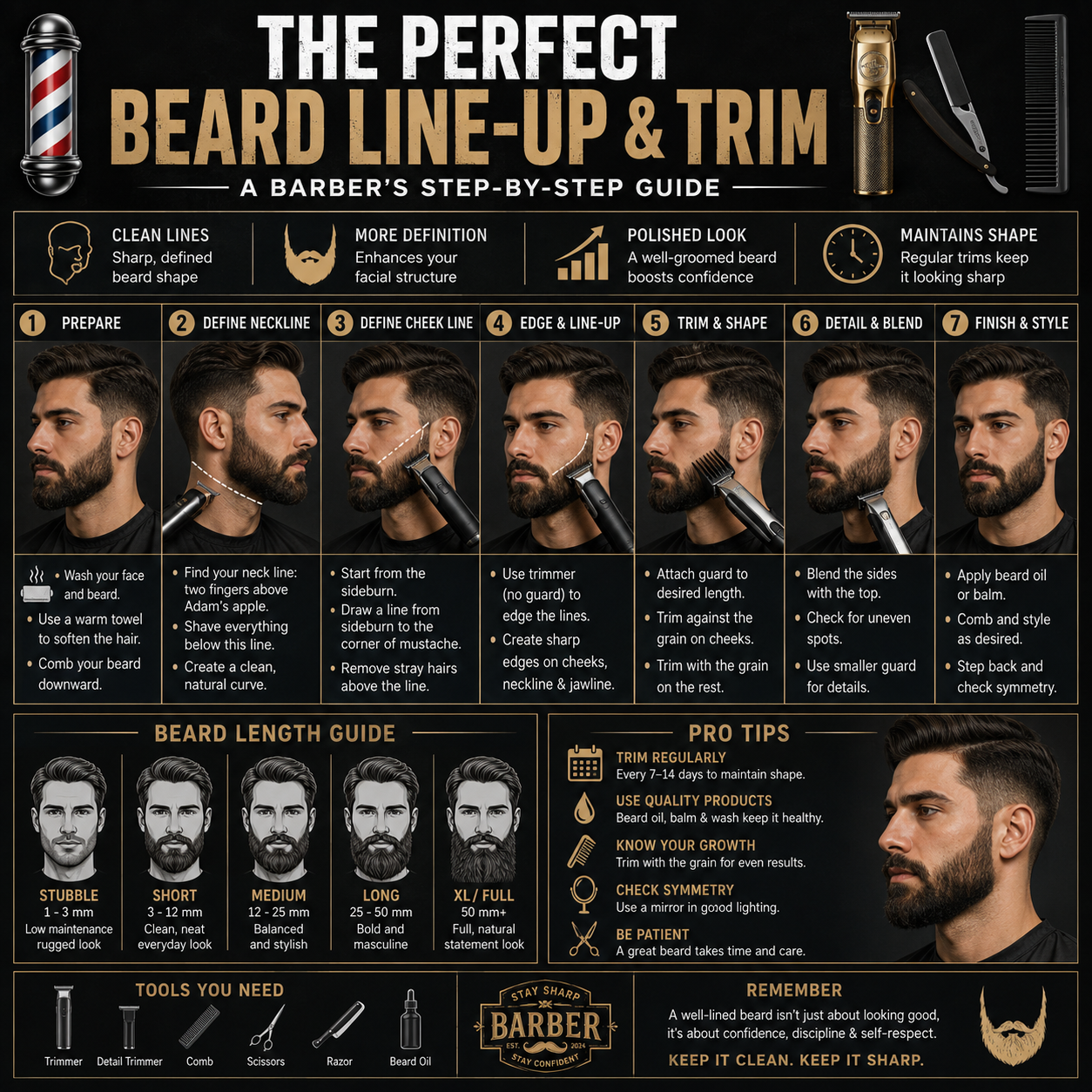
    One to three days of natural growth creates light stubble: a shadow across the jaw and upper lip that softens the face without committing to a defined beard style. Light stubble suits all face shapes and is widely considered the most broadly attractive growth stage by grooming research. It is maintained with a weekly full-face pass using an electric trimmer at the shortest guard setting (number one or two). This is the lowest-maintenance beard option that still creates visible facial hair presence.

    Classic short stubble beard on a man, clean professional look

    3. Designer Stubble (5 to 10 Days)

    Five to ten days of growth, kept at a consistent uniform length across the face, typically maintained with a clipper at a number two or three guard. The designer stubble creates the jaw shadow effect that defines facial structure without requiring any shaping or styling. It suits all face shapes and all professional environments outside the most conservative finance and government contexts. The key to designer stubble looking intentional rather than neglected is consistency: use the same guard length every time and trim every seven to ten days.

    4. Short Beard (2 to 6 Weeks)

    Two to six weeks of growth trimmed and shaped into a defined short beard. The short beard crosses the line from stubble to genuine beard territory: there is enough length to shape, edge, and define the beard style. Short beards typically sit between three-quarters of an inch and one and a half inches in length. They require a shaped neckline, clean cheek lines, and a weekly trim to maintain their proportions. All face shapes carry a short beard, but the specific shape of the beard, whether boxed, rounded, or pointed, should be determined by face shape. See our short beard styles guide for shape-specific detail.

    5. Circle Beard

    The circle beard connects a rounded chin beard to a full mustache in a continuous oval loop. It is the most common version of what most people call a “goatee.” It is kept at short to medium length and requires clean-shaved cheeks to maintain the defined loop shape. Medium maintenance: the boundary lines of the circle need razor or trimmer work every three to five days to stay sharp. Oval and oblong face shapes carry it best. For more context on the circle beard versus other goatee types, see our beard styles for men guide.

    6. Goatee

    The goatee in its strictest definition is chin-only facial hair: no mustache, no cheek hair, just hair on the chin below the lower lip. The term is widely misused to describe the circle beard (which includes the mustache), but the true goatee is the chin-only version. It requires clean-shaved cheeks, upper lip, and jaw outside the chin area. This is a high-maintenance style because of all the clean-shaved territory it requires. The chin hair is typically kept at one to three inches. Oval, round, and heart face shapes benefit most from the chin emphasis.

    7. Van Dyke

    The Van Dyke is a pointed chin beard disconnected from a floating mustache with clean-shaved cheeks between them. It is the most sophisticated goatee-adjacent style. The classic version uses a waxed, pointed mustache above a pointed chin beard. Modern variations use natural or light-waxed mustache styles. High maintenance: the disconnection line requires daily razor precision. Oval and round face shapes carry the chin-focused emphasis best. The Van Dyke has strong associations with artistic, intellectual, and historical contexts, and suits confident, style-aware men.

    8. Boxed Beard

    The boxed beard has straight, clean cheek lines and a straight neckline at the jaw. It is the most broadly professional beard style available. It keeps the beard’s natural volume but gives it deliberate rectangular proportions. Typically maintained at short-to-medium length (one to two inches). Medium maintenance: the straight lines require a razor or precision trimmer every three to five days. All face shapes carry the boxed beard, making it the safest full beard option for any professional context. See our complete beard guide for boxed beard shaping technique.

    Professional corporate short beard style on a man, clean shaped lines

    9. Corporate Beard

    The corporate beard is effectively a refined boxed beard at a shorter length, kept between three-quarters of an inch and one and a half inches, with extremely clean cheek lines and a precise neckline. It is the professional standard for men who want to wear a beard in conservative workplace environments. Medium-high maintenance: the precision lines require razor attention every two to three days. All face shapes carry it. The corporate beard should look entirely intentional and controlled. Any looseness or uneven growth breaks the professional impression.

    10. Full Beard

    The full beard covers the entire lower face, including cheeks, jaw, chin, and mustache, at medium to long length. It represents the most traditional, complete beard aesthetic. A well-maintained full beard at three to six months of growth is one of the most visually commanding styles a man can wear. Medium maintenance: trim the ends every three to four weeks, oil daily, brush to train the hair direction, and define the neckline. Oval, square, and oblong face shapes carry the full beard best. See our beard styles guide for full beard care routines.

    11. Garibaldi Beard

    A wide, full beard that grows to a natural rounded bottom, typically four to six inches in length, without being pointed or shaped into a ducktail. The Garibaldi looks natural and unstructured but still full and intentional. It is named after Italian general Giuseppe Garibaldi. Daily beard oil prevents the natural roundness from looking unkempt. Oval and oblong face shapes carry the wide, full Garibaldi best. This is a good “natural” full beard style for men who want length and volume without the precision maintenance of the ducktail or Verdi.

    12. Ducktail Beard

    The ducktail beard grows to medium-to-long length and is shaped at the chin into a central downward point, resembling a duck’s tail. The sides are kept shorter than the central chin section, creating the tapered, pointed bottom. This requires skilled barber shaping every four to six weeks to maintain the pointed profile. Daily beard oil and a boar bristle brush train the hair toward the centre point. Oval and square face shapes carry the elongated chin point best. The ducktail is one of the most distinctive shaped beard styles available. See our long beard styles guide for more shaped long beard options.

    13. Verdi Beard

    A rounded, full beard at medium length combined with a styled, slightly upturned mustache. The mustache is visually distinct from the beard rather than merging into it. Named after the composer Verdi. Mustache wax is required for the upturned style. The beard itself is trimmed to a consistent rounded shape. High maintenance overall due to the dual styling requirement. Oval and oblong face shapes carry the full rounded Verdi best. This is the most aristocratic and formally groomed of all the full beard styles and suits men who treat their beard as genuine personal expression.

    14. Balbo Beard

    The Balbo is a shaped chin beard with a disconnected floating mustache and clean-shaved cheeks. It is a complex, deliberate style that requires consistent precision maintenance. The soul patch below the lower lip connects to the chin beard, which extends along the lower jaw without full cheek coverage. The floating mustache sits above the mouth independently. High maintenance: both the disconnection line and the shaped chin beard require daily attention. Oval and oblong face shapes carry the chin-focused Balbo best. The Balbo is associated with style-forward, detail-oriented men.

    15. Bandholz Beard

    The Bandholz is a free, natural, fully grown beard allowed to reach its natural maximum length, typically ten or more inches, with an equally natural, large mustache that blends into the beard. Eric Bandholz, founder of Beardbrand, made this style famous as a symbol of modern beard culture. Medium maintenance despite the length: daily beard oil, regular brushing with a boar bristle brush, and occasional trimming of the neckline and stray hairs. Oval and oblong face shapes carry the large volume best. The Bandholz is a lifestyle statement rather than a haircut choice.

    16. Yeard

    A yeard is a beard grown for a full twelve months without significant trimming. The goal is to see the beard’s natural maximum development. The result varies considerably between men: some achieve six to eight inches of dense, full beard; others find their natural maximum at four to five inches. Daily beard oil and a boar bristle brush are the only required maintenance during the growth period. After twelve months, shaping decisions can be made based on what actually grew. Oval and oblong face shapes carry the large yeard best. This is the ultimate beard commitment style.

    17. Anchor Beard

    The anchor beard traces the outline of a ship’s anchor: a soul patch and chin beard below the mouth connected to a mustache above, with thin jaw-line outlines extending outward from the chin beard toward the ears, and clean-shaved cheeks. When viewed from the front, the beard outline forms the shape of an anchor. Very high maintenance: the precision line work requires daily razor attention. Oval and oblong face shapes carry the symmetrical anchor outline best. This is a highly distinctive, artistic beard style that requires genuine grooming commitment.

    18. Grey Beard

    Not a specific shape but a styling approach: wearing a beard at any style (full, boxed, short, ducktail) in its natural gray or white colour rather than colouring it. Gray beards have experienced a dramatic shift in cultural perception over the past decade and now read as distinguished and confident rather than old. The key to a great gray beard is condition. Gray hair is coarser and can appear wiry without regular oil application. Daily beard oil keeps gray hair soft and lustrous. Oval, oblong, and square face shapes carry gray beards best. See our grey beard styles guide for the specific shape options.

    19. Salt-and-Pepper Beard

    The transitional stage between fully pigmented and fully gray: the salt-and-pepper beard has mixed dark and gray hair throughout, creating a two-toned texture that many men find highly attractive. This is not a stage to rush past or colour over. The salt-and-pepper phase is widely considered the most visually striking natural beard colour for men over 40. Any beard shape suits salt-and-pepper colouring. Daily beard oil applied into the beard keeps the mixed texture cohesive and prevents the gray strands from looking dry or wiry against the darker strands.

    20. Beard Fade

    The beard fade is a modern barbershop technique where the beard transitions gradually from shorter at the sideburns and upper cheeks to longer at the chin and jaw. The fade creates a seamless visual gradient rather than a sharp boundary line between the hair and beard. This suits men who want a modern, clean aesthetic with a full beard. It requires a skilled barber every three to four weeks to maintain the fade gradient. Oval and square face shapes carry the beard fade best. The beard fade pairs well with a hair fade of matching intensity: both elements faded creates a cohesive, structured grooming look.

    Beard Style Face Shape Guide

    Face ShapeBest Beard StylesAvoid
    OvalAny style: most versatileNothing
    SquareFull beard, ducktail, circle beardVery short, wide stubble that emphasises jaw
    RoundGoatee, Van Dyke, anchor beardFull wide beards that add more roundness
    Rectangle/OblongBoxed beard, short beard, corporate beardVery long, pointed beards that add more length
    DiamondFull beard, Bandholz, GaribaldiNarrow chin beards that emphasise narrow jaw
    HeartShort beard, circle beard, goateeBeards that add significant width at the top

    Beard Products Guide

    ProductBest ForWhen to Use
    Beard oilAll beard lengths, especially long beardsDaily, after washing or showering
    Beard balmMedium and long beards needing light shape holdDaily, after oil application
    Beard waxMustache styling: handlebar, Verdi, Fu ManchuDaily for shaped mustache styles
    Boar bristle brushAll beard lengths: trains hair directionDaily, after oil/balm application
    Beard combLonger beards: detangles and distributes productDaily on medium and long beards
    TrimmerAll beard lengths: length maintenanceWeekly for stubble; bi-weekly to monthly for longer
    Beard washAll beard types: cleansing without dryingTwo to three times per week

    Frequently Asked Questions

    How do I choose the right beard style for my face?

    Use this rule: if you want your face to appear longer, choose a beard that adds length at the chin (ducktail, pointed goatee, Van Dyke). If you want your face to appear wider, choose a beard with volume at the sides (full beard, Garibaldi, Bandholz). If your face is already well-proportioned with an oval shape, any beard style works. Round faces benefit from chin-emphasis beards. Square faces benefit from length without added jaw width. The face shape table above gives specific recommendations for each shape.

    What beard style grows in fastest?

    The stubble and designer stubble styles develop in the shortest time: one to ten days. The circle beard, goatee, and Van Dyke are achievable within four to six weeks. The full beard and boxed beard require three to six months. The ducktail, Verdi, Bandholz, and yeard require six to twelve or more months. If you want to try a beard style without long commitment, start with the circle beard or boxed beard at four to six weeks. These give a clear sense of your beard’s density and growth pattern before committing to longer styles.

    How often should I trim my beard?

    Stubble: once per week. Short beard: every seven to ten days. Medium beard: every ten to fourteen days. Full beard: every three to four weeks. Long beard and yeard: every four to six weeks for neckline and stray hairs; full trim every six to eight weeks. These are general timelines. Your specific beard growth rate may require more or less frequent trimming. The key signal is when the beard starts to lose its intended shape rather than a fixed calendar schedule.

    What is the most attractive beard style?

    Research consistently shows that heavy stubble and short, well-maintained beards are perceived as most attractive across a broad range of observers. However, attractiveness is highly dependent on face shape, personal style, and grooming quality. A well-maintained full beard on the right face shape outperforms poorly maintained stubble every time. The most attractive beard style is always the one that is well-matched to the face, well-maintained, and clearly intentional. Any style on this list achieves that criteria when properly executed.

    This guide covers the full spectrum of beard style options. For deeper detail on specific categories, see our short beard styles guide, our long beard styles guide, our grey beard styles guide, and our beard and mustache styles guide.

  • 20 Best Beard and Mustache Styles for Men: The Complete Guide to Choosing and Growing Your Look (2026)

    20 Best Beard and Mustache Styles for Men: The Complete Guide to Choosing and Growing Your Look (2026)

    Choosing the right beard and mustache combination can completely change how your face looks. The beard you grow and the mustache that goes with it work together to frame your jawline, balance your face shape, and project your personal style. Get the pairing right and you look put-together and confident. Get it wrong and even a well-groomed beard can look off. This guide covers 20 of the best beard and mustache style combinations for men, with honest advice on what each style requires, which face shapes it suits, and how to actually pull it off.

    How to Pick the Right Beard and Mustache Combination

    Three things determine which beard and mustache combination will actually work for you. First is your face shape, because the right beard length and silhouette adds balance and proportion to your features. Second is your hair growth pattern, because some styles require density and coverage that not every man can grow. Third is your lifestyle, because a style that takes 15 minutes of daily maintenance sounds great until you are running late every morning. The best combination is the one that flatters your face, matches what you can actually grow, and fits into your real daily routine.

    20 Best Beard and Mustache Styles: Quick Reference Chart

    StyleBeard TypeMustache TypeBest Face ShapeMaintenance Level
    Full Beard with Chevron MustacheFull beardChevron, naturalOval, oblongMedium
    Full Beard with Handlebar MustacheFull beardHandlebarOval, squareHigh
    Boxed Beard with Natural MustacheBoxed, corporateNatural connectedAll face shapesMedium
    Van DykeChin beard onlyDisconnected mustacheOval, roundHigh
    Circle BeardChin goateeConnected mustacheOval, oblongMedium
    Stubble with Chevron MustacheHeavy stubbleChevronSquare, ovalLow to Medium
    Balbo BeardChin with floating mustacheDisconnected mustacheOval, oblongHigh
    Short Beard with Pencil MustacheShort trimmed beardPencil lineOval, oblongHigh
    Yeard with Natural MustacheFull year-grown beardNatural bushyOval, oblongLow to Medium
    Ducktail with Walrus MustacheDucktailWalrus, bushyOval, squareHigh
    Verdi BeardFull rounded beardStyled upturned mustacheOval, oblongHigh
    Anchor BeardChin anchor shapeConnected mustacheOval, oblongVery High
    Goatee with Horseshoe MustacheClassic goateeHorseshoeOval, squareHigh
    Stubble with Natural MustacheDesigner stubbleNatural connectedAll face shapesLow
    Extended Goatee with Fu ManchuExtended chin beardFu Manchu dropsOval, oblongVery High
    Short Beard with Handlebar MustacheShort trimmed beardHandlebar waxedOval, squareHigh
    Salt and Pepper Full Beard with ChevronGray full beardChevronOval, oblongMedium
    Bandholz with Walrus MustacheBandholz, free beardWalrus, naturalOval, oblongMedium
    Stubble and Stubble MustacheEven stubbleEven stubbleAll face shapesVery Low
    Corporate Beard with Thin MustacheCorporate, professionalThin natural lineAll face shapesMedium to High

    The 20 Best Beard and Mustache Styles for Men

    1. Full Beard with Chevron Mustache

    Full beard with chevron mustache style for men

    The full beard with chevron mustache is one of the most natural combinations a man can wear. The chevron mustache is wide, full, and sits just above the upper lip without going past it. It connects to the beard below without any gaps, so the whole look flows together as one piece. No wax is needed. No shaping tools. The mustache just grows into its natural shape with minimal guidance. For maintenance, trim the beard every one to two weeks and clean up the mustache corners occasionally to keep the width from spreading too wide. This combination works best on oval and oblong face shapes, though most men can pull it off with the right beard length.

    2. Full Beard with Handlebar Mustache

    Full beard with handlebar mustache style for men

    The handlebar mustache paired with a full beard is a bold, artistic choice that gets noticed. The handlebar is trained outward and curled slightly upward at the ends using wax, which creates a strong contrast against the fuller, rounder beard below it. This takes daily waxing and consistent grooming to keep the curl in place. The beard itself should be kept at medium length with clean cheek lines so the mustache remains the focal point. Oval and square face shapes carry this combination best because the strong horizontal mustache line balances a wider jaw. This is a statement look that suits men who want their grooming to reflect a distinct personality.

    3. Boxed Beard with Natural Mustache

    Boxed beard with natural mustache style for men

    The boxed beard with a natural mustache is the most professionally appropriate combination on this list. The beard is kept short to medium, with straight cheek lines and a clean neckline that give it a sharp, defined shape. The mustache connects to the beard naturally and is kept trimmed so it does not hang over the lip. This combination works in almost any workplace and suits every face shape. For maintenance, trim the beard every one to two weeks, shave the cheek lines clean with a razor, and trim the mustache weekly. If you are new to beards or want something low-drama with high impact, start here. See our beard styles guide for more detail on boxed beard shaping techniques.

    4. Van Dyke

    Van Dyke beard and mustache style for men

    The Van Dyke gets its name from the 17th-century Flemish painter Anthony van Dyck, who wore this style in his portraits. It combines a pointed chin beard with a mustache that sits completely disconnected from it, with the cheeks cleanly shaved in between. The gap between the mustache and chin beard is what defines the look. Keeping that gap clean requires daily razor work, which makes this a high-maintenance style. Oval and round face shapes benefit most from the Van Dyke because the chin beard adds visible length to the face. If you have a round face and want to look slimmer and taller without growing a full beard, this is one of the most effective styles you can choose.

    5. Circle Beard

    Circle beard and mustache style for men

    The circle beard is what most people picture when they say “goatee.” It connects a rounded chin beard to a full mustache in a continuous oval loop around the mouth. It is cleaner and neater than a full beard while still giving you real facial hair presence. Weekly razor work around the circular boundary keeps the shape defined. Beard oil applied to the goatee section keeps the hair soft and prevents flaking on the skin underneath. Oval and oblong face shapes carry the rounded shape best. The circle beard is one of the most popular styles globally because it works across age groups, face shapes, and professional environments. It is also one of the easiest to maintain once you know where the lines go.

    6. Stubble with Chevron Mustache

    Stubble with chevron mustache style for men

    Heavy stubble combined with a full chevron mustache is a smart combination for men who want character in their facial hair without committing to a full beard. The mustache is kept longer than the surrounding stubble, so it becomes the dominant feature while the stubble fills in the lower face with texture. Trim the stubble with a clipper at a consistent guard length every week and shape the mustache corners monthly to maintain the width. Square and oval face shapes carry this combination particularly well because the strong mustache line pairs naturally with a defined jaw. This is also a great option if your beard grows unevenly, since the short stubble hides patchiness effectively.

    7. Balbo Beard

    Balbo beard and mustache style for men

    The Balbo is named after Italian air marshal Italo Balbo and has a very specific shape. It combines a chin beard that extends along the lower jaw without touching the cheeks, a soul patch below the lower lip that connects to the chin section, and a floating mustache that sits completely above the lip with no connection to the beard below. The cheeks are fully shaved. Both the disconnected mustache and the shaped chin section need daily attention to stay clean, which makes this a high-maintenance style. Oval and oblong face shapes work best with the Balbo because the chin emphasis adds length. This style suits men who enjoy precision grooming and want a look that is clearly intentional.

    8. Short Beard with Pencil Mustache

    Short beard with pencil mustache style for men

    A short, trimmed beard paired with a pencil mustache is a European and old Hollywood combination that never fully goes out of style. The pencil mustache is a very thin line of hair sitting just above the top lip, requiring daily razor work along its top and bottom edges to maintain the narrow width. Combined with a short, clean beard, the result is a distinctive aesthetic associated with classic cinema and continental sophistication. This look needs daily attention and works best on oval and oblong face shapes, where the delicate mustache is proportional to the rest of the face. Men with wider faces may find the thin mustache disappears visually against the broader lower half of the face.

    9. Yeard with Natural Mustache

    Yeard with natural mustache style for men

    A yeard is a beard that has been grown for a full twelve months without significant trimming. Combined with a naturally grown mustache that has been left to develop to its full length, the result is a commanding, full beard and mustache combination that projects physical confidence. This is a lifestyle choice more than a style choice, and the men who wear it tend to treat their beard as a point of pride rather than just a grooming decision. Daily beard oil keeps the hair manageable and the skin healthy underneath. The mustache should be trimmed just enough to keep it from entering the mouth. Oval and oblong face shapes carry the volume best, though any man with strong facial hair density can grow into this look.

    10. Ducktail with Walrus Mustache

    Ducktail beard with walrus mustache style for men

    The ducktail is a medium to long beard that is shaped to a central point at the chin, like the tail of a duck. Combined with a wide, bushy walrus mustache that droops down over the top lip, this creates a rugged frontier aesthetic that reads as masculine and weathered. The ducktail requires regular shaping to maintain the pointed chin, while the walrus mustache grows naturally but needs trimming to stay off the teeth. Oval and square face shapes carry this combination well because the width of the walrus mustache balances a strong jaw while the pointed chin beard adds vertical length. This is a good combination for men who want something with character and history behind it.

    11. Verdi Beard

    Verdi beard and mustache style for men

    The Verdi beard is named after the Italian opera composer Giuseppe Verdi, who wore this combination throughout his later life. It features a full, rounded beard kept at medium length with a styled mustache that is waxed to hold a slight upturn or curl at the ends. The mustache is kept distinctly separate in appearance from the beard below it, so the two elements are visible as independent features rather than blending together. High maintenance is required for both. Oval and oblong face shapes carry the rounded fullness best. The Verdi has a formal, aristocratic quality that suits men who appreciate classical style and are willing to invest time in their grooming routine.

    12. Anchor Beard

    Anchor beard and mustache style for men

    The anchor beard traces the outline of a ship’s anchor across the lower face. A thin vertical strip runs from the lower lip down through the chin, connecting to a rounded chin beard below it. A thin line traces the jaw from the chin outward toward the ears. A connected mustache sits above the mouth. The cheeks are completely clean-shaved. When done precisely, the anchor shape is clearly visible from the front. This style requires daily razor work to keep every line sharp, making it one of the most high-maintenance options on this list. Oval and oblong face shapes carry the structure best. This is a sharp, assertive choice for men who enjoy precision in their appearance.

    13. Goatee with Horseshoe Mustache

    Goatee with horseshoe mustache style for men

    The horseshoe mustache extends from the corners of the upper lip downward past the mouth on both sides, dropping toward the chin in two parallel lines. Combined with a classic goatee on the chin, this creates a heavy, assertive facial hair combination that is closely associated with biker culture and hard rock. Regular razor work is needed to keep the two vertical horseshoe lines clean and parallel. Oval and square face shapes carry the strong downward lines best. This combination suits men who want maximum visual impact from their facial hair and are comfortable in environments where bold personal style is appreciated. It is not a subtle look, and it was not designed to be.

    14. Stubble with Natural Mustache

    Stubble with natural mustache style for men

    Stubble with a natural mustache at the same length is the simplest combination you can wear. The whole face, including the mustache area, is at the same growth stage. No shaping, no styling, no products required beyond a weekly clipper pass to keep everything even. This suits men who want the shadow effect of facial hair without any commitment to a specific style. It works on every face shape. The key to making stubble look intentional rather than neglected is consistency: pick a guard length that suits your features and stick to it every time you trim. Even, well-maintained stubble reads as a deliberate grooming choice, not as forgetting to shave.

    15. Extended Goatee with Fu Manchu Mustache

    Extended goatee with Fu Manchu mustache style for men

    An extended goatee grows past the chin and continues down the neck. The Fu Manchu mustache extends from the corners of the mouth downward in two long, narrow strips that can reach the chest. Combined, these two elements create one of the most dramatic and elaborate facial hair looks available. This requires significant hair density across both the chin and upper lip areas, plus daily maintenance to keep the long drops clean and shaped. Very high maintenance overall. Oval and oblong face shapes carry the strong vertical emphasis best. This is a theatrical style suited to men in creative, entertainment, or alternative lifestyle contexts where individuality is valued over convention.

    16. Short Beard with Handlebar Mustache

    Short beard with handlebar mustache style for men

    A short beard paired with a handlebar mustache gives you one dramatic grooming feature against a clean, natural base. The beard is kept short, two to four weeks of trimmed growth, while the handlebar is waxed and curled upward at the ends. The contrast between the natural beard and the deliberately styled mustache creates a craftsman aesthetic that has become popular in creative and culinary communities. Daily waxing keeps the handlebar curl in place. Weekly trimming keeps the beard length consistent. Oval and square face shapes carry the wide mustache ends best. If you want something interesting but do not want to commit to a full styled beard, this is a practical and distinctive choice.

    17. Salt and Pepper Full Beard with Chevron Mustache

    Salt and pepper full beard with chevron mustache style for men

    When a full beard and chevron mustache grow in with a natural gray or salt-and-pepper mix, the coloring itself becomes part of the style. The two-toned texture of dark and gray hair in a full beard reads as experience and authority in a way that fully colored facial hair simply cannot replicate. Many men who fight their gray actually look better when they embrace it, particularly in a full beard where the texture shows throughout. Medium maintenance applies: trim every two weeks and apply beard oil daily to keep the hair and skin in good condition. Oval and oblong face shapes carry the full volume best. For men over 40, this is often the strongest, most confident look available. See our grey beard styles guide for more gray beard ideas.

    18. Bandholz Beard with Walrus Mustache

    Bandholz beard with walrus mustache style for men

    The Bandholz is a free, natural, fully grown beard that is allowed to reach its natural maximum length without significant shaping. Eric Bandholz, founder of Beardbrand, made this style famous as a symbol of modern beard culture. Combined with a large, bushy walrus mustache that blends naturally into the beard, the result is the most voluminous and commanding combination on this list. Daily beard oil is essential to keep the long hair from becoming dry and brittle. Trim the neckline occasionally and keep the mustache trimmed just enough to stay clear of the mouth. Oval and oblong face shapes carry the large volume best, though any man with strong growth can achieve this look with patience.

    19. Stubble and Stubble Mustache

    Stubble and stubble mustache style for men

    Even, light stubble across the entire lower face is the most low-maintenance facial hair option available. The jaw, cheeks, neck, and mustache area are all at the same length, with no deliberate shaping or distinctions between sections. This is the right choice for men who want the shadow effect and jaw definition that facial hair provides without any styling commitment at all. A weekly clipper pass at a consistent guard length is all it takes. All face shapes carry it well because the shadow creates definition rather than adding specific shapes. Men with round or soft jawlines particularly benefit from even stubble because it draws the eye along the jaw and makes the face look more defined overall.

    20. Corporate Beard with Thin Mustache

    Corporate beard with thin mustache style for men

    The corporate beard is clean, shaped, and kept at short to medium length with straight cheek lines and a defined neckline. Paired with a naturally thin mustache that sits neatly above the upper lip without drooping over it, this is the safest and most broadly professional beard and mustache combination available. The cheek lines need razor attention every two to three days and the mustache needs weekly trimming to stay tidy. It works on every face shape, which makes it the right starting point for men in any professional environment who want to wear facial hair. See our short beard styles guide for more information on how to shape and maintain a professional beard.

    Face Shape Guide for Beard and Mustache Styles

    Face ShapeBest Beard and Mustache StylesWhy It Works
    OvalAny style works wellBalanced proportions suit all combinations
    SquareFull beard with chevron, ducktail with walrusLength at the chin softens a strong jaw
    RoundVan Dyke, circle beard, anchor beardChin emphasis adds visible length to the face
    Oblong or RectangleBoxed beard with natural mustache, corporate beardWidth and volume at the sides balance face length
    DiamondFull beard with handlebar, short beard with handlebarWidth at cheeks and mustache balances a narrow chin
    HeartStubble with chevron, circle beardChin definition balances a wider forehead

    Grooming Tips That Apply to Every Beard and Mustache Combination

    No matter which style you choose, a few fundamentals apply to every beard and mustache combination. Apply beard oil daily, not just when the beard looks dry. Oil applied to damp skin after washing absorbs properly and keeps both the hair and skin in good condition. Use a boar bristle brush to train the beard hairs to lie flat in the direction you want them to grow. For any mustache with a shaped end, invest in proper mustache wax rather than trying to substitute hair gel or pomade. Keep a quality trimmer with multiple guard attachments for length work and a safety or cartridge razor for clean boundary lines at the cheeks and neckline. And visit a skilled barber at least once to get the initial shape right before you start maintaining it yourself.

    Frequently Asked Questions

    What beard and mustache style is most popular right now?

    The boxed or corporate beard with a natural connected mustache is the most broadly popular combination at the moment. It is clean, professional, and works on almost every face shape, which makes it the default choice for men who want to wear a beard in a workplace setting. Among younger men, even stubble with no defined mustache is very common. For men who want something with more personality, the full beard with handlebar mustache and the Van Dyke have both seen strong interest in recent years.

    How do I know if my beard and mustache look good together?

    The combination works when both elements are at proportional lengths and the transition between them looks intentional. If the mustache disappears into the beard without any visible separation, trim the mustache shorter or let the beard grow out so the two sections have distinct lengths. If the mustache dominates the beard too much, let the beard grow out or trim the mustache down. A good barber can look at your face structure and your current growth and tell you in five minutes which combination will work best for you. That single consultation is worth more than any amount of research online.

    Can I grow a mustache without a beard?

    Yes, and solo mustaches have made a genuine comeback in recent years. The chevron, walrus, handlebar, and pencil mustache all work well on a clean-shaved face. The key with a solo mustache is keeping the cheeks, chin, and neck cleanly shaved at all times. Any stubble growth around a solo mustache makes it look like the beginning of a beard rather than a finished style. Daily shaving around the mustache is non-negotiable if you want it to read as deliberate.

    What products do I need for a beard and mustache?

    For the beard, you need beard oil for daily conditioning, beard balm for light hold when shaping, and a boar bristle brush for training the hair direction. For the mustache, you need mustache wax if you are wearing any style that requires a shaped or curled end, and a small mustache comb to keep the hair aligned through the day. For trimming, a quality clipper with multiple guard attachments handles all the length work and straight-edge scissors handle fine mustache trimming. For the boundary lines at the neckline and cheeks, a safety razor or cartridge razor gives cleaner results than a clipper on a low guard.

    The best beard and mustache combination for you is whichever one fits your face, your growth, and your life. Start with something simple and work toward more complexity as your confidence builds. For more style guidance, see our complete beard styles guide, our long beard styles guide, and our short beard styles guide.

  • Middle Part Hairstyles for Men: 20 Best Styles, How to Get the Part and Who It Suits (2026)

    Middle Part Hairstyles for Men: 20 Best Styles, How to Get the Part and Who It Suits (2026)

    Middle part hairstyles for men have made a full comeback. Once associated with the 1970s and the early-to-mid-1990s, the middle part is now one of the defining aesthetic choices of men’s hair in the 2020s. From the curtain bang and wolf cut to the slicked-back middle part and the textured natural split, the middle part has more contemporary variations than at any point in its history.

    This guide covers 20 of the best middle part hairstyles for men in 2026, with face shape guidance, styling technique, the products that work, and an honest answer to the question every man asks: does the middle part suit me?

    Does the Middle Part Suit You? The Face Shape Test

    Middle part face shape guide for men

    The middle part suits men with oval, oblong/rectangle, and diamond face shapes best. It divides the face with a central vertical line, and that symmetry flatters faces that are already relatively narrow and balanced. The middle part is less flattering for round and square faces because it makes the face appear wider rather than longer. Heart faces can carry it if the hair at the sides is kept full enough to balance the wider forehead. The key test: if your face is roughly as wide as it is long, consider a side part instead. If your face is visibly longer than it is wide, the middle part is probably working for you.

    20 Best Middle Part Hairstyles for Men: Quick Reference

    StyleLengthStyling TimeBest Face ShapeVibe
    Curtain BangsMedium5 minOval, oblong, diamondRomantic, effortless
    Wolf Cut Middle PartMedium to Long5 to 8 minOval, oblongRock, editorial
    Textured Natural Middle PartShort to Medium2 to 3 minOval, oblongClean, casual
    Slicked-Back Middle PartMedium5 minOval, rectangleSharp, assertive
    Wavy Middle PartMedium3 minOval, oblongRelaxed, beachy
    Curly Middle PartShort to Medium3 to 5 minOval, oblongNatural, vibrant
    Shaggy Middle PartMedium to Long3 minOval, oblong70s revival, cool
    Middle Part FadeShort2 minOval, squareModern, sharp
    Middle Part UndercutMedium3 to 5 minOval, oblongEdgy, structured
    Lob Middle PartLong3 to 5 minOval, oblongArtistic, bold
    Bun Middle PartLong2 to 3 minOval, diamondRelaxed, modern
    Middle Part with BeardShort to Medium3 minOval, oblongMature, balanced
    90s Curtain BangsMedium3 minOval, oblongRetro, nostalgic
    Middle Part Two-BlockMedium5 minOval, oblongK-pop, clean
    Middle Part French CropShort2 minOval, heartClean, structured
    Middle Part Man BunLong2 minOval, diamondRelaxed, artistic
    Feathered Middle PartMedium5 minOval, oblong70s, effortless
    Middle Part Buzz TopShort0 minOval, squareMinimal, modern
    Middle Part BraidedLong10 minOval, oblongCultural, striking
    Textured Middle Part CropShort to Medium2 to 3 minOval, oblongEveryday versatile

    The 20 Best Middle Part Hairstyles for Men

    1. Curtain Bangs

    The curtain bang is the defining middle part hairstyle of the 2020s. Hair is parted in the centre with the front sections falling to both sides, framing the face like curtains. The length is typically medium, with the curtain sections reaching somewhere between the eyebrows and the cheekbones. The sides can be left loose or tucked behind the ears. Five minutes with a round brush and a light blow-dry sets the shape. Light cream or sea salt spray maintains the lived-in look. Oval, oblong, and diamond face shapes carry it most naturally.

    2. Wolf Cut Middle Part

    The wolf cut, shaggy, layered, and textured, with a medium-to-long length, becomes especially striking when paired with a central middle part. The layers at the front fall into natural curtain sections while the back maintains a slightly longer, wilder profile. This is a rock aesthetic: think 1970s and 1990s guitar bands updated with a modern shaggy fade or undercut. Five to eight minutes with a diffuser and sea salt spray builds the volume and texture. Oval and oblong face shapes carry the volume and length best.

    3. Textured Natural Middle Part

    A short-to-medium textured cut with a natural middle part, the hair falls naturally from the centre without being product-heavy or aggressively styled. This is the most low-maintenance middle part option and suits men who want the aesthetic without the effort. Two to three minutes with matte clay creates the texture. The natural middle part often forms on its own with enough top length, no comb or product required after the initial styling. Oval and oblong face shapes benefit most from the balanced split.

    4. Slicked-Back Middle Part

    Slicked back middle part mens hairstyle

    An assertive, structured style: hair is parted precisely in the centre and then pushed cleanly backward on both sides. This creates a dramatic, symmetrical look with the face fully on display. Medium-hold pomade or strong-hold matte clay keeps the backward sweep in place. This suits men in creative industries, media, and sales who want a confident, memorable appearance. Oval and rectangle face shapes carry the full face exposure best. Keep the sides clean with a regular fade or taper for the strongest result.

    5. Wavy Middle Part

    Natural wave combined with a central part gives this style an effortlessly relaxed character. The wave falls from the centre part to both sides with natural movement rather than styled precision. Three minutes with a curl cream or sea salt spray on damp hair allows the natural texture to form. The sides are kept at medium length to let the wave develop fully. This is the strongest middle part for men who have naturally wavy hair and want to maximise it. Oval and oblong face shapes carry the flowing wave best.

    6. Curly Middle Part

    Curly hair and the middle part have a natural affinity: the curls fall symmetrically from the centre, creating a full, balanced silhouette. Curl cream or defining gel on damp hair keeps the curl pattern tight and frizz-free. The middle part line is set while the hair is wet, then left to dry without disturbance. Volume increases as the hair dries, creating the classic curly middle part silhouette. This suits all curl types, from loose wave to tight coil. Oval and oblong face shapes carry the full curl volume best.

    7. Shaggy Middle Part

    Shaggy medium-to-long hair with a central part is a direct revival of 1970s men’s hair aesthetic. The layers are textured and slightly uneven, the ends are soft rather than blunt, and the whole effect is effortlessly dishevelled. Three minutes with sea salt spray on mostly-dry hair creates the textured shag. This suits men in creative and casual environments who want their hair to look like it falls naturally into place. Oval and oblong face shapes carry the volume and length best. A light beard or clean shave complements the shaggy middle part effectively.

    8. Middle Part Fade

    Middle part fade mens hairstyle

    A short middle part combined with a high fade: modern, clean, and sharp. The top hair is kept short enough to part naturally in the centre but long enough to show the split clearly. The high fade removes all visual weight from the sides, making the central part the visual focus of the whole cut. Two minutes with matte clay sets the top. This is the most workplace-compatible middle part style on the list. Oval and square face shapes carry the high fade and central part contrast best.

    9. Middle Part Undercut

    An undercut, shaved or close-cut sides, with medium-length top hair parted down the centre. The contrast between the close sides and the longer, parted top creates a dramatic visual statement. The top hair can fall naturally as curtain sections or be pushed back and to the sides. Three to five minutes with matte pomade creates either effect. Oval and oblong face shapes carry the dramatic length-to-sides contrast best. This is a stronger, more assertive version of the standard curtain bang.

    10. Lob Middle Part

    A long bob with a central middle part: hair reaching the chin to collar length, parted exactly in the centre. This is a bold length commitment for most men but delivers one of the most striking silhouettes in men’s hair. The lob middle part suits oval and oblong face shapes exclusively, since shorter or wider faces struggle with the chin-length weight line. Three to five minutes with a round brush gives the ends a soft bend. Light cream keeps the texture smooth without stiffness. This is an artistic, editorial style.

    11. Middle Part Bun

    Long hair pulled back into a bun from a central part: the middle part visible at the front while the hair at the back is tied up neatly. This is a practical long-hair style for men who want the middle part aesthetic without the hair constantly in their face. Two to three minutes to set the part and tie the bun. The sides and front sections that fall from the part can be left loose as face-framing strands. Oval and diamond face shapes carry the high-pulled silhouette most naturally. Pairs well with a short, clean beard.

    12. Middle Part with Beard

    A short-to-medium middle part combined with a beard, the two elements balancing each other visually. The hair at the top provides the central structure while the beard provides the lower-face definition. This suits men over 30 who want the youthful middle part aesthetic tempered by the maturity of facial hair. Three minutes with matte clay for the hair, and a shaped beard. Oval and oblong face shapes carry the balanced hair-and-beard combination best. See our beard styles guide for the beard shape to pair with it.

    13. 90s Curtain Bangs

    The direct 1990s reference: the curtain bang as it appeared on teen-film and pop-music heartthrobs of that era, longer, floppier, and more deliberately brushed out to the sides. The 2020s revival keeps the same basic structure but executes it with more precise barbering: a cleaner undercut or taper, more intentional layering, and better products. Three minutes with a light blow-dry and sea salt spray recreates the look. Oval and oblong face shapes carry the longer, floppier curtain best. This is the most nostalgic style on the list.

    14. Middle Part Two-Block

    The two-block cut, Korean barbershop style with heavily disconnected sides and a longer, unstyled top, becomes especially striking with a central middle part. The dramatic undercut creates a strong contrast with the medium-length top, and the middle part gives the whole cut a soft, symmetrical framing quality. Five minutes with a styling cream and a light blow-dry sets the top. This is the defining middle part style of K-pop aesthetic and Korean street fashion. Oval and oblong face shapes carry the disconnected contrast best.

    15. Middle Part French Crop

    A French crop with the fringe parted in the centre rather than falling uniformly forward. This creates two small curtain sections at the front of an otherwise short, clean cut. It is the most subtle middle part option on this list: the split is suggested rather than dramatic. Two minutes with matte paste gives the split sections their definition. Oval and heart face shapes carry the balanced, compact central split best. This suits men who want to wear the middle part trend without committing to medium or long hair.

    16. Middle Part Man Bun

    Long hair worn in a man bun with a visible central part from front to bun: a slight variation on the standard man bun that adds the middle part’s symmetry. The part runs from the forehead to the base of the bun, with the two sections folded back cleanly. This requires less precision than the curtain bang but still benefits from a small-tooth comb to set the part cleanly before tying. Oval and diamond face shapes carry the high-bun silhouette best. The clean neckline from the undercut or fade is essential to the look’s overall sharpness.

    17. Feathered Middle Part

    The feathered middle part, hair blown or brushed outward and backward from the central split to create a wings effect, is a direct 1970s reference that remains genuinely attractive in 2026. Five minutes with a round brush and a hair dryer creates the feathered effect: direct the brush outward from the part as you dry each section. Light hairspray or flexible hold spray maintains the feather. Medium-length hair works best. Oval and oblong face shapes carry the wide, outward feather best. This is a retro-influenced style that works in both casual and creative environments.

    18. Middle Part Buzz Top

    A very short, almost buzz-length cut with enough length remaining for a subtle middle part line, typically a number three or four guard on top with a slight part visible. This is the most low-maintenance middle part option. No product required. The part is barely visible at short lengths but adds enough visual interest to distinguish the cut from a standard buzz. All face shapes carry it, with oval and square shapes benefiting from the slight elongating effect of the central part. Zero styling time.

    19. Middle Part Braided

    Long hair braided from a central middle part, the two halves of the hair divided by the part and each braided backward or forward. This can range from two simple plaits to more complex cornrow or Dutch braid styles. Ten or more minutes to execute the braiding, depending on complexity. This requires long hair and either braiding experience or a skilled stylist. Oval and oblong face shapes carry the symmetrical braided framing best. This is a culturally rich style with deep roots in multiple warrior and cultural traditions worldwide.

    20. Textured Middle Part Crop

    The most versatile everyday middle part style: a short-to-medium textured crop with the top hair naturally splitting in the centre. The texture prevents the split from looking overly precise or stiff, it reads as an organic part that happened naturally rather than a styled choice. Two to three minutes with matte clay. Faded or tapered sides. This suits all professional environments and all casual settings equally. Oval and oblong face shapes carry the balanced texture and central split best. This is the middle part at its most daily-wearable and broadly appropriate.

    How to Get a Middle Part

    Styling steps for a middle part hairstyle

    Start on damp hair, since the middle part sets most cleanly when the hair is slightly wet. Use a fine-tooth comb to find the natural centre of your hairline at the forehead, then draw the comb straight back from that point to the crown to establish your part line. Use your fingers or the comb to push each section to its respective side, then apply product, whether clay, cream, or sea salt spray, and style each side with your preferred technique. To train a natural part to fall in the centre permanently, do this every day for two to three weeks and hair will begin to fall there naturally without combing.

    Frequently Asked Questions

    Does the middle part suit every man?

    No. The middle part suits oval, oblong, and diamond face shapes best. It makes the face appear narrower, which is an advantage for those shapes and a disadvantage for round and square faces. Men with round or square faces will generally find a side part more flattering because it creates diagonal lines that balance the face’s width. The middle part can still be worn by any face shape, but oval and oblong faces carry it most naturally.

    How long does hair need to be for a middle part?

    At minimum, two to three inches of top hair is needed for the middle part to be visible and to allow the two sides to fall naturally. The curtain bang and most textured middle part styles need three to five inches. The wolf cut and shaggy middle part need five to seven inches. The lob, man bun, and braided styles require eight or more inches. If you are growing toward a curtain bang, most men reach the right length in four to six months from a short cut.

    What products work best for a middle part?

    The best products for a middle part are lightweight and natural-looking. Matte clay or matte paste gives texture and hold without stiffness. Sea salt spray adds volume and wave definition for natural and wavy hair types. Light cream or styling cream works for straight hair that needs a smooth, natural fall. Avoid heavy waxes, strong gels, and high-shine pomades because these make the middle part look overworked rather than effortless. The middle part’s appeal is its natural quality, and heavy product contradicts that.

    Can a middle part look professional?

    Yes. Several middle part styles are entirely professional. The textured natural middle part, the middle part fade, the middle part with beard, and the middle part French crop all suit professional environments in tech, healthcare, creative, and even some finance and law settings. The wolf cut, shaggy middle part, and lob middle part are better suited to creative and casual environments. The professional test for any middle part is cleanliness and intention: a well-shaped, product-enhanced middle part reads as professional, while an unstyled, shapeless split reads as neglect.

    The middle part is one of the most versatile aesthetic statements in men’s hair right now. Whether you go for the effortless curtain bang or commit to the full wolf cut, the central split gives any haircut a distinctive, contemporary edge. For more men’s hair inspiration, see our men’s hairstyles guide, our men’s haircuts guide, and our Asian hairstyles for men guide for more curtain bang inspiration.

  • Warrior Cut: 15 Best Warrior Haircuts for Men, History, Styles and How to Get Them (2026)

    Warrior Cut: 15 Best Warrior Haircuts for Men, History, Styles and How to Get Them (2026)

    A young man with the Warrior Cut hairstyle

    Warrior haircuts for men draw on thousands of years of human history. From Viking raiders to samurai warriors, Spartan soldiers to Celtic tribesmen, cultures across every continent developed distinctive hair traditions that communicated power, identity, and status on the battlefield. In 2026, these styles have been reimagined for modern men who want haircuts that carry that same energy of confidence and strength.

    This guide covers 15 of the best warrior haircuts for men, their historical roots, what they look like today, and how to get them at the barber. Whether you want a full commitment or just the aesthetic influence, there is a warrior-inspired cut here that fits your face, your lifestyle, and your barber’s skill set.

    What Makes a Haircut a Warrior Cut

    Warrior haircuts share three characteristics: they are bold, they are functional (keeping hair out of the face in combat), and they signal group identity. Historically, warrior hair communicated which tribe, army, or people you belonged to as clearly as any uniform. Modern warrior cuts keep the aesthetic boldness while adapting the styles to contemporary barbering techniques: fades, undercuts, and modern styling products give historic looks a sharper, more intentional edge than the original warriors ever had access to.

    15 Best Warrior Haircuts: Quick Reference

    StyleOriginModern VersionBest Face ShapeHair Length Needed
    Viking Undercut Top KnotNorse, 8th to 11th centuryUndercut + man bun/top knotOval, squareLong on top (6+ inches)
    Samurai Top Knot (Chonmage)Feudal JapanShaved sides, pulled-back topOval, diamondLong on top (6+ inches)
    MohawkNative American / punk revivalHigh fade mohawk or faux hawkOval, square, heartShort to medium top
    Viking BraidNorse, 8th to 11th centuryBraided undercutOval, squareLong on top (6+ inches)
    Spartan WarriorAncient GreeceHigh and tight, shaved sidesSquare, ovalShort to medium
    Celtic WarriorIron Age Britain/GaulTextured undercut, braided sidesOval, squareMedium to long
    Samurai Shaved HeadFeudal JapanBuzz cut or shaved with beardAll face shapesVery short
    Native American Warrior BraidPlains, Southwest tribesLong braids with undercutOval, rectangleLong (8+ inches)
    Egyptian Warrior SidelockAncient EgyptModern shaved sides with lockOval, diamondMedium to long one side
    Zulu WarriorSouthern Africa, 19th centuryHigh top fade with defined curlsOval, squareMedium curly/coily
    Roman SoldierRoman EmpireCrew cut, Caesar cutAll face shapesShort
    Viking Mohawk BraidNorse, 8th to 11th centuryMohawk with braid stripOval, squareMedium to long top
    Warrior FadeModern / cultural fusionHigh skin fade with designOval, squareShort to medium top
    Shogun Side PartFeudal JapanHard side part with high fadeOval, rectangleShort to medium top
    Barbarian Long HairGermanic tribesLong undercut, loose or braidedOval, rectangleLong (6+ inches)

    The 15 Best Warrior Haircuts for Men

    1. Viking Undercut Top Knot

    The Viking undercut top knot is the most recognisable Norse-inspired haircut of the modern era. Sides and back are shaved or undercut close, while the long top hair is pulled up and tied into a tight bun or top knot. Historical Norse warriors often had longer hair than the Hollywood version, braided and oiled, but the undercut top knot captures the aesthetic contrast of shaved sides and long top that defined many warrior cultures simultaneously. This requires at least six inches of top hair and an undercut from your barber. Oval and square face shapes carry it best. For more Viking style detail, see our Viking haircuts guide.

    2. Samurai Top Knot (Chonmage)

    The chonmage was the traditional hairstyle of Japanese samurai: the top of the head was shaved, and the remaining hair was oiled and folded forward into a small topknot. Modern interpretations shave or fade the sides very close and pull the long top hair straight back into a tight, elevated bun. This is a more precise, symmetrical look than the Viking top knot. It requires long, clean hair on top and very tight sides. Oval and diamond face shapes carry the symmetrical high bun best. A clean, minimal beard or clean shave complements this style most effectively.

    3. Mohawk

    The Mohawk is a central strip of hair running from forehead to nape with shaved sides, associated with the Haudenosaunee and other Native American peoples, as well as Celtic warriors who used lime paste to spike their hair before battle. The modern high-skin-fade mohawk is a barbershop staple. The faux hawk, with sides faded but not fully shaved and top hair styled upward into a central peak, is more office-compatible. Both are strong warrior-aesthetic cuts for oval, square, and heart face shapes. The mohawk is functionally bold: it makes no attempt at subtlety.

    4. Viking Braid

    Viking warriors braided their hair for practical and aesthetic reasons: braids stayed out of the face in combat and communicated status through their complexity. The modern Viking braid combines an undercut or high fade on the sides with long, braided top hair. Box braids, single braids from the crown, or multiple side braids all work in this aesthetic. This requires significant top hair length and a willingness to invest in braid maintenance. Oval and square face shapes carry it best. See our full Viking haircuts guide for more braided style options.

    5. Spartan Warrior

    Spartan warriors were known for their long hair, a tradition that distinguished them from helots and communicated warrior status. The modern Spartan-inspired cut, however, draws on the cinematic version: close-cropped sides, clean neckline, strong jaw emphasis. The high and tight is the closest modern barbershop interpretation. A clean shave or short, structured beard completes the Spartan aesthetic. Square and oval face shapes carry the severe, angular profile best. This is a cut about facial structure: it removes hair to let the face do the visual work.

    6. Celtic Warrior

    Celtic warriors were described by Roman historians as spiking their hair with lime paste and braiding their beards before battle, a deliberately intimidating appearance. The modern Celtic warrior haircut uses textured undercuts with medium-length top hair that can be styled upward or worn loose, often with braided side sections or face-framing braids. It sits between the Viking and mohawk aesthetics: wilder than the first, more structured than the second. Oval and square face shapes carry it most naturally. A full beard strongly complements this look.

    7. Samurai Shaved Head

    Not all samurai maintained the traditional chonmage. Many, particularly in later feudal periods, shaved the head entirely as an act of discipline and simplicity. The modern interpretation is a close buzz cut or clean shave paired with a structured beard, the beard providing the facial definition that the hair no longer does. This is one of the most versatile warrior-inspired cuts because it suits all face shapes and requires essentially no styling. The shaved or buzz-cut head with beard is a powerful, masculine look with deep roots across warrior cultures worldwide.

    8. Native American Warrior Braid

    Many Plains and Southwest Native American warrior traditions included long braided hair as a symbol of strength, identity, and spiritual connection. Modern men who want to wear this aesthetic respectfully typically do so with two long braids worn forward, combined with an undercut or hard part to give the style modern definition. This requires at least eight inches of top hair and regular braid maintenance. Oval and rectangle face shapes carry the long, symmetrical braid framing best. This is one of the most striking long-hair warrior cuts available to any man.

    9. Egyptian Warrior Sidelock

    Ancient Egyptian warriors, including royal guards and soldiers, often wore the sidelock of youth: a shaved or close-cropped head with a single lock of hair grown long on one side. Modern interpretations shave the sides very close with a high skin fade and leave one section of medium-to-long hair on the dominant side, styled forward or down. This is an asymmetric, avant-garde warrior cut that suits men in creative industries who want an artistically distinctive style. Oval and diamond face shapes carry the strong asymmetry best.

    10. Zulu Warrior

    Zulu warriors of 19th-century southern Africa were known for distinctive hairstyles that communicated regiment and rank. The modern interpretation draws on the high-top fade with defined, coily curls on top, a style that celebrates natural African hair texture while delivering the visual height and presence of warrior-tradition styling. The key is definition: curl cream or defining gel keeps the top tight and shaped. High skin fade on the sides creates the dramatic contrast. Oval and square face shapes carry the crown height best. This is a celebration of natural texture elevated to warrior aesthetic.

    11. Roman Soldier

    Roman legionaries kept their hair short and practical, no braids, no top knots, nothing that an enemy could grab in hand-to-hand combat. The Caesar cut, short and forward-falling fringe with uniform length all over, is named after Julius Caesar and directly reflects this Roman military aesthetic. The crew cut is the other modern equivalent. These are warrior cuts not through dramatic styling but through disciplined practicality. All face shapes carry them. For men who want warrior ancestry without aesthetic drama, the Roman approach is the strongest choice.

    12. Viking Mohawk Braid

    A specific Viking warrior style: a central Mohawk strip with the hair in that strip braided rather than left loose or spiked. Modern interpretations achieve this with a high fade on the sides and a braided central strip running from front to back. This is one of the more technically demanding warrior cuts to execute, requiring a skilled barber for the fade and braiding experience for the top. Oval and square face shapes carry the central braided strip best. This is a full commitment warrior look: not subtle, not office-appropriate, but striking.

    13. Warrior Fade with Design

    A modern fusion warrior cut: a high skin fade with a razor-cut design or geometric pattern shaved into the side. These designs, lightning bolts, tribal lines, chevrons, or personalised symbols, give a modern barbershop cut a warrior-aesthetic edge. The top can be short and textured or longer and styled up. This is the most accessible warrior cut because it starts with a standard high fade that any skilled barber can execute and adds the design element as a personalised layer. Oval and square face shapes carry the design and fade contrast best.

    14. Shogun Side Part

    A Japanese-inspired warrior cut drawing on feudal military aesthetics: a very hard, precise side part with a high fade or skin fade on the shorter side. The top hair is kept medium length and combed cleanly to one side, the asymmetry and precision of the parting giving this cut its warrior edge. Strong-hold matte pomade keeps the structure intact. This is one of the most workplace-compatible warrior cuts on the list: it reads as sharp and disciplined in professional environments. Oval and rectangle face shapes carry the strong asymmetric part best.

    15. Barbarian Long Hair

    Germanic barbarian tribes, Visigoths, Vandals, Franks, wore their hair long and loose as a marker of warrior identity and freedom from Roman cultural norms. The modern interpretation is a long undercut: sides cut close, top hair grown to six or more inches and left loose or lightly styled. The contrast between the clean undercut fade and the loose, slightly wild long top creates the barbarian aesthetic: controlled at the edges, free in the centre. Oval and rectangle face shapes carry long undercut hair best. See our long beard styles guide for the beard that completes this look.

    Face Shape Guide for Warrior Haircuts

    Face ShapeBest Warrior StylesWhy It Works
    OvalAny style, most versatileBalanced proportions suit all warrior cuts
    SquareViking top knot, mohawk, Zulu high topHeight and volume above jaw line create proportion
    RoundMohawk, faux hawk, high and tightVertical lines elongate the face
    Rectangle/OblongViking braid, barbarian long hair, Shogun side partWidth at sides reduces face length appearance
    DiamondSamurai top knot, undercut, side partHeight and symmetry balance wide cheekbones
    HeartMohawk (low), textured warrior fade, side partNarrow top balances the wide forehead

    Frequently Asked Questions

    What is the warrior haircut?

    The warrior haircut is not a single specific style: it refers to any haircut inspired by warrior culture traditions from history, including Viking braids, samurai top knots, Mohawks, Celtic undercuts, Roman crew cuts, and more. In modern barbershop culture, the term is often used for bold, masculine cuts that combine shaved or faded sides with dramatic top styling such as high top knots, prominent mohawks, or intricate braids. The unifying quality is boldness: warrior cuts make a statement rather than blending in.

    What did Viking warriors look like?

    Archaeological and historical evidence suggests Viking warriors had varied hairstyles. Longer hair was common among Norse men, often braided or tied back. Contrary to some Hollywood depictions, fully shaved heads were less common. Longer hair at the back with shorter or braided hair at the front appears in various historical accounts. Many also maintained beards. The modern Viking haircut, an undercut with long top and braids, combines multiple historical elements into a single cohesive aesthetic.

    Can a warrior haircut be professional?

    Several warrior-inspired cuts are entirely professional in modern workplace settings. The Roman crew cut, the Shogun side part, the high-and-tight, and the textured warrior fade with a subtle design are all workplace-compatible in most industries. More dramatic styles, the Viking top knot, the full mohawk, the barbarian long hair, suit creative, media, and casual industries but are unlikely to be appropriate in conservative finance, law, or government environments. See our professional hairstyles guide for more context.

    How long does hair need to be for a warrior cut?

    It depends on the style. The buzz cut, Roman crew cut, high-and-tight, and warrior fade with design all work at very short lengths under two inches. The mohawk and faux hawk need medium-length top hair of three to five inches. The Viking top knot, samurai chonmage, and braided styles all require at least six inches of top hair, typically twelve to eighteen months of growth from a short cut. The barbarian long hair and Native American braid styles need even more. If you are growing toward a warrior cut, grow the top first while keeping the sides clean with regular barber visits.

    Warrior cuts are about more than aesthetics: they carry history, intention, and confidence. The right warrior haircut for you is the one that feels authentic to wear every day, not just in the barber’s chair. For more bold men’s hair inspiration, see our Viking haircuts guide, our beard and mustache styles guide, and our 80s hairstyles for men for more era-influenced style ideas.

  • 20 Best Haircuts for Men Over 50: Styles That Look Sharp at Any Age (2026)

    20 Best Haircuts for Men Over 50: Styles That Look Sharp at Any Age (2026)

    Best Haircuts for Men Over 50

    Haircuts for men over 50 need to work harder than cuts for younger men. After 50, hair texture changes: it often becomes finer, grayer, and slower to grow back evenly. The right haircut uses these changes rather than fighting them. This guide covers 20 of the best haircuts for men over 50 in 2026, with specific guidance for thinning hair, gray hair, and how face shape should drive every style decision.

    The secret every good barber knows: shorter is usually better over 50, but not because short hides age. It is because short haircuts on finer, grayer hair look intentional and confident, and that is what actually reads as attractive and professional at any age.

    Why Hair Changes After 50 and What to Do About It

    Hair density typically decreases by 10 to 20 percent per decade after 40. The hair follicles that remain produce finer, more fragile strands that show the scalp more easily. Gray hair is structurally different from pigmented hair: coarser in texture but often thinner at the shaft, which means it can be simultaneously wiry and lacking volume. These changes do not require hiding. They require a different set of haircut strategies: shorter lengths that reduce weight on thinning sections, textured cuts that create the illusion of density, and styles that make gray hair a feature rather than something to work around.

    20 Best Haircuts for Men Over 50: Quick Reference

    StyleBest ForThinning HairGray HairMaintenance
    Silver Side PartOval, rectangleGoodExcellentLow
    Textured CropAll face shapesExcellentGoodLow
    Buzz CutAll face shapesExcellentExcellentVery Low
    Short Back and SidesAll face shapesGoodExcellentLow
    Ivy LeagueOval, rectangleGoodExcellentLow
    Crew CutAll face shapesGoodExcellentVery Low
    Modern Comb-OverOval, roundExcellentGoodLow
    Salt-and-Pepper PompadourSquare, ovalModerateExcellentMedium
    High and TightSquare, ovalExcellentExcellentVery Low
    Shaved Head with BeardAll face shapesExcellentExcellentVery Low
    French CropAll face shapesExcellentGoodLow
    Low Fade Side PartOval, rectangleGoodExcellentLow
    Scissor-Trimmed NaturalAll face shapesModerateExcellentLow
    Short QuiffSquare, ovalModerateGoodMedium
    Undercut Side SweepOval, heartModerateGoodMedium
    Business TaperAll face shapesGoodExcellentLow
    Defined Curl / WaveAll face shapesModerateExcellentLow
    Slicked-Back ShortRectangle, ovalModerateExcellentLow
    Number Two All OverAll face shapesExcellentExcellentVery Low
    Distinguished Long Side PartOval, rectanglePoorExcellentMedium

    The 20 Best Haircuts for Men Over 50

    1. Silver Side Part

    Senior man with modern haircut at barbershop

    The silver side part leans into gray hair as a feature, not a flaw. Hair is kept short to medium on the sides with a clean taper, and the top is combed cleanly to one side. The natural gray colour gives the parted style authority. A light pomade keeps it in place. This is the most broadly worn haircut among men over 50 who want to look polished and distinguished without excessive maintenance. Suits oval and rectangle face shapes best.

    2. Textured Crop

    The textured crop is one of the best haircuts for men over 50 with thinning hair. The short, slightly choppy top creates the illusion of density: scattered texture reads as fuller than smooth, flat hair ever can. Matte clay adds definition in two minutes. The sides are faded clean. This is clean enough for formal settings and relaxed enough for everyday wear. All face shapes carry it well. It replaced the crew cut as the go-to practical haircut for older men in the 2020s.

    3. Buzz Cut

    Active senior man with low-maintenance buzz cut outdoors

    The buzz cut is the ultimate thinning-hair solution for men over 50. When hair thins to the point where trying to cover the scalp becomes the main hair project, a uniform buzz takes the decision off the table entirely. It looks deliberate, confident, and low-maintenance. All face shapes carry it. Gray buzz cuts have become a visual signature of confident older men, from Hollywood actors to senior executives. The shorter the guard length, the more important the beard becomes as a facial feature.

    4. Short Back and Sides

    The traditional short back and sides is a timeless cut that suits all ages and all face shapes. For men over 50, it works because it reduces visual weight at the temples, where thinning is most common, while keeping enough length on top for some styling versatility. No strong product required. The neckline is kept clean. For gray hair, this cut simply lets the natural colour do the visual work. Pairs well with a short, well-shaped beard.

    5. Ivy League Cut

    The Ivy League cut, a longer crew cut with enough top length for a side part or forward sweep, has been associated with professional authority for decades. For men over 50, it carries those associations effortlessly. Gray hair gives the Ivy League a natural gravitas that younger men simply cannot achieve. Minimal product. All professional environments. Rectangle and oval face shapes benefit most from the balanced proportions. Easy home maintenance between barber visits.

    6. Crew Cut

    Gray hair crew cut with side taper

    The crew cut is universally appropriate, universally flattering, and completely maintenance-free. For men over 50 who want to spend zero time on their hair, this is the best default. The gradual taper from front to crown and short faded sides give the cut its characteristic shape. No product required. All face shapes carry it. Gray crew cuts look naturally sharp: the uniform cut works with the uniform colour in a way that longer, unevenly greying styles do not.

    7. Modern Comb-Over

    Not the desperate cover-up of the past: the modern comb-over is a clean, controlled sweep paired with a skin or high fade that makes the asymmetric style look intentional and stylish. For men over 50 with early-stage thinning at the crown, this is the most effective style that still looks distinctly styled. Matte pomade keeps the sweep in place. Oval, round, and square face shapes carry it best. The key is keeping the fade very clean, as that contrast is what makes the style modern rather than dated.

    8. Salt-and-Pepper Pompadour

    A low, controlled pompadour in salt-and-pepper gray is one of the most striking haircuts available to men over 50. The contrasted colouring gives the front volume visual depth that a solid-coloured pompadour cannot match. Keep the height modest, under two inches, for a professional result. Strong-hold matte pomade lifts and holds the front section. Square and oval face shapes carry the front height best. This is a statement cut for men who want their hair to contribute to their image rather than simply be managed.

    9. High and Tight

    Originally military, the high and tight reads as disciplined and physically confident, associations that become more powerful rather than less as men age. For men over 50, it eliminates any visible thinning at the temples entirely. Zero styling. Home maintenance is straightforward. Square and oval face shapes carry it most strongly. For men who pair this with a well-maintained beard, the combination is one of the most visually striking grooming choices available to any man over 50.

    10. Shaved Head with Beard

    When thinning has progressed significantly, shaving the head entirely and committing fully to a well-shaped beard is often the strongest possible grooming decision for men over 50. The beard becomes the primary facial feature: it adds structure, definition, and personality that the hair no longer provides. Keep the beard at short to medium length and have it shaped professionally. All face shapes carry this combination. See our beard styles guide for the specific shape that suits your face.

    11. French Crop

    The French crop, short textured hair with a choppy, forward-falling fringe, works particularly well for men over 50 with thinning hair at the crown because the fringe brings visual focus forward. This disguises crown thinning more effectively than almost any other short cut. Matte paste gives the top definition in two minutes. The faded sides clean the whole look up. Heart and oval face shapes benefit most from the forward fringe. Regular barber visits every four to five weeks maintain the shape.

    12. Low Fade Side Part

    A conservative side part combined with a low, clean fade. The low fade is the least dramatic fade type: it keeps most of the hair’s natural length while cleaning the neckline and temple line. This suits conservative professional environments and older men who want a modern update on a traditional cut without committing to a high fade or skin cut. Light pomade defines the part. Rectangle and oval face shapes suit it best. It is one of the most broadly worn haircuts for men over 50 in office settings.

    13. Scissor-Trimmed Natural

    A scissor-cut, lightly shaped natural style with no clipper fades or razor lines. This suits men over 50 with thick, wavy, or curly gray hair that has natural volume and movement. The barber shapes rather than removes, cleaning the outline while preserving natural texture. Light cream or sea salt spray maintains the shape without product heaviness. This suits men who want their natural hair to have a styled appearance without looking artificially groomed. All face shapes carry it.

    14. Short Quiff

    A compact, restrained quiff: hair lifted and pushed upward at the front while sides are faded clean. For men over 50, the key is “short,” meaning the top should stay close to the head, with just one to two inches of lift at the front. A higher quiff reads as a younger man’s style; a compact quiff reads as sophisticated. Medium-hold matte clay achieves the look in five minutes. Square and oval face shapes carry the front height best. Pair with a clean short beard for the strongest result.

    15. Undercut Side Sweep

    An undercut with longer top hair swept to one side, creating a clean, asymmetric profile that suits men who want a more assertive style statement. For men over 50 in creative or media industries, this reads as confident and contemporary rather than trying too hard. Matte pomade keeps the sweep in place. Oval and heart face shapes carry the asymmetric top well. This requires more hair density than the buzz cut or textured crop, so it suits men over 50 who have not experienced significant thinning.

    16. Business Taper

    Barber tapering thinning hair for senior client

    The business taper, a gradual length reduction from top to sides and back, is the most formally conservative haircut on this list and the safest choice for conservative banking, law, and government environments. For men over 50 in senior roles, it projects exactly the grooming standard their position implies. No product required for shorter versions. Gray hair gives the business taper natural authority. All face shapes carry it, with oval and square shapes benefiting most.

    17. Defined Curl or Wave

    For men over 50 with naturally curly or wavy hair, a well-shaped defined curl or wave look is entirely appropriate and professional. The key is intentional shaping: a clean taper on the sides with well-defined, frizz-free curls or waves on top. Gray curls have a natural visual authority that younger curly hair cannot match. Curl cream or defining gel keeps the texture sharp without crunchiness. All face shapes carry it when executed cleanly. This suits men who have always worn their natural texture and want to continue doing so with more precision.

    18. Slicked-Back Short

    Short hair slicked cleanly backward, a compressed version of the classic slicked-back look that works at shorter lengths. For men over 50, the shorter length makes this less dramatic and more professional than the full slicked-back undercut. Matte pomade gives a modern finish. This suits men in senior leadership roles, media, and sales who want a confident, authoritative appearance. Rectangle and oval face shapes carry the rearward sweep best. The clean neckline is essential: get it trimmed every two to three weeks.

    19. Number Two All Over

    A uniform clipper cut at a number two guard length all over, the simplest, most maintenance-free haircut available. For men over 50 who want to minimise grooming time entirely while still looking neat, this is a strong option. Home maintenance requires only a clipper. All face shapes carry it. A well-shaped beard paired with the number two all over is one of the most practical and visually cohesive grooming combinations for older men. Zero product. Zero styling time.

    20. Distinguished Long Side Part

    For men over 50 with enough remaining hair density to support a longer style, a classic long side part, with hair parted cleanly on one side and combed across the top with enough length to sweep fully, creates the most traditionally distinguished appearance available. Gray or white hair at this length projects natural authority. Light pomade or medium-hold cream keeps the part in place. This requires real hair density to execute well: it is not a thinning-hair style. Oval and rectangle face shapes carry it best. For more context, see our guide to haircuts for older guys with thinning hair.

    Face Shape Guide for Men Over 50

    Face ShapeBest StylesAvoid
    OvalAny style, most versatileNothing
    SquareTextured crop, modern quiff, salt-and-pepper pompadourVery flat, wide styles that emphasise jaw width
    RoundHigh and tight, short quiff, modern comb-overVery short all-over that emphasises roundness
    Rectangle/OblongIvy League, low fade side part, French cropHigh-volume quiffs that add more length
    DiamondSide part, undercut, shaved head with beardStyles that add width at the cheekbones
    HeartFrench crop, textured crop, low fade side partHigh top volume that emphasises forehead width

    Thinning Hair Guide for Men Over 50

    Thinning PatternBest Haircut ApproachTop Style Picks
    Receding hairline onlyShort front, clean templesModern comb-over, textured crop, French crop
    Crown thinning onlyForward texture, avoid revealing crownFrench crop, textured crop, Ivy League
    Overall density lossShort all over, maximise textureBuzz cut, crew cut, number two all over
    Significant overall lossShave it, commit to beardShaved head with beard, number two with beard
    Minimal thinningAny style works, choose by face shapeSilver side part, Ivy League, pompadour

    What to Tell Your Barber

    Barber consultation with mature client about haircut schedule

    Tell your barber your exact thinning pattern, whether that is crown, temples, or overall thinning, before they start cutting. This shapes every decision they make. Ask for a matte finish product recommendation too: shine products emphasise scalp visibility through thin hair and work against you. Always request a tight neckline, since a clean neckline is the single most visible sign of regular grooming upkeep. If you colour your hair, mention it before the cut, as coloured hair behaves differently under scissors and clippers. Book a trim every four to five weeks: fine hair grows unevenly and loses its shape more quickly than thick hair. Finally, ask your barber to scissor-thin the top if it feels heavy, since thinning shears add texture that makes fine hair appear fuller without removing significant length.

    Frequently Asked Questions

    What is the best haircut for a 50-year-old man?

    The best haircut for a 50-year-old man depends on his hair density, face shape, and lifestyle. For men with moderate hair density, the textured crop, silver side part, and Ivy League are the strongest all-round choices. For men with significant thinning, the buzz cut, shaved head with beard, or number two all over work best. The common thread: shorter is almost always better for fine or thinning hair, and gray hair should be leaned into rather than hidden.

    Should men over 50 keep short hair?

    Not necessarily, but shorter hair is usually more practical and flattering for men over 50 because hair density and texture typically change with age. Very long hair on fine, thinning hair tends to emphasise the thinning rather than hide it. That said, men over 50 with naturally thick, healthy hair can absolutely maintain longer styles: they just require more product and styling time to manage well.

    Does gray hair look better short or long?

    Gray hair typically looks sharper at short to medium lengths. Short gray hair is visually cohesive: the uniform colour reads as intentional and confident. Long gray hair requires very good texture and density to avoid looking unkempt. The exception is naturally wavy or curly gray hair, which can look striking at medium length when shaped and defined with product. For most men over 50, keeping gray hair short is the lower-maintenance, higher-impact choice.

    What haircut makes a man look younger after 50?

    Counterintuitively, trying to look younger through hair choices often achieves the opposite. The cuts that make men look most vital after 50 are those that look confident and intentional for their actual age: the textured crop, silver side part, salt-and-pepper pompadour, and shaved head with beard. These styles own the gray and work with the natural hair texture rather than against it. What reads as “younger” is actually grooming confidence, which short, well-maintained cuts deliver best.

    How often should men over 50 get haircuts?

    Every three to five weeks for short styles; every five to seven weeks for medium styles. Fine hair loses its shape faster than thick hair, so shorter styles may need more frequent trims to maintain their proportions. At minimum, get the neckline cleaned up every three weeks: a messy neckline makes even a good haircut look ungroomed. For men who maintain their own buzz cuts or clipper cuts at home, a professional visit once every two months for a shape-up keeps everything looking intentional.

    Should men over 50 shave their head if they are going bald?

    When thinning has progressed to the point where the hair remaining is visibly sparse and uneven, yes: shaving the head is almost always the stronger grooming choice. A cleanly shaved head paired with a well-shaped beard is widely considered one of the most attractive and confident grooming combinations for men over 50. The key is committing fully: a partially shaved head with an uneven beard reads as neglected, while a clean shave with a well-shaped beard reads as deliberate and self-assured. See our short beard styles guide for the beard shape to pair with it.

    Final Thoughts

    The best haircut for men over 50 is the one that works with what you have, suits your face, and can be maintained consistently. That is what confidence looks like in a haircut: not chasing youth, but owning where you are. Explore our professional hairstyles guide and our professional haircuts for men guide for more workplace-ready style options.

  • 20 Best Professional Hairstyles for Men: The Complete Workplace Style Guide (2026)

    20 Best Professional Hairstyles for Men: The Complete Workplace Style Guide (2026)

    Professional Hairstyles for Men

    Professional hairstyles for men do more work than most people realize. Research consistently shows that grooming affects first impressions at job interviews, client meetings, and leadership evaluations. The right professional haircut communicates attention to detail, self-discipline, and confidence before you say a single word. This guide gives you the full picture.

    Below are 20 of the best professional hairstyles for men in 2026, complete with a face shape guide, an industry-by-industry breakdown, maintenance tips, and practical advice. Whether you work in banking, healthcare, tech, or creative fields, there’s a style here that fits both your environment and your face.

    What Makes a Hairstyle Professional

    A professional hairstyle meets four criteria: it looks intentional (the barber or stylist clearly shaped it), it stays in place through a working day, it suits the face and head shape of the man wearing it, and it fits the culture of the workplace. Conservative environments like banking, law, and government have a narrower definition of professional than creative or tech industries. The good news: in 2026, that definition has expanded for almost every sector.

    Businessman with a tapered side part professional hairstyle standing in an office hallway

    Professional Men’s Hairstyle Quick-Reference Chart

    StyleLengthStyling TimeIndustry FitFormality Level
    Classic Side PartShort to Medium3 to 5 minAll industriesHigh
    Ivy League CutShort to Medium3 minAll industriesHigh
    Business TaperShort2 minFinance, law, governmentVery High
    Crew CutShort0 to 2 minAll industriesHigh
    High and TightVery Short0 minMilitary, healthcare, financeVery High
    Pompadour (Low)Medium5 minCreative, media, salesMedium to High
    Textured Crop FadeShort2 to 3 minTech, creative, healthcareMedium to High
    Modern QuiffShort to Medium5 minSales, creative, mediaMedium to High
    Slicked-Back UndercutMedium3 to 5 minCreative, media, salesMedium
    French CropShort2 minAll industriesMedium to High
    Low Fade Side PartShort to Medium3 minFinance, law, healthcareHigh
    Short Back and SidesShort0 to 2 minAll industriesHigh
    Modern Comb-OverShort to Medium3 minFinance, law, governmentHigh
    Scissor-Trimmed NaturalShort to Medium2 minAll industriesMedium to High
    Low Pompadour FadeMedium5 minSales, creative, techMedium
    Clean Buzz CutVery Short0 minAll industriesHigh
    Man Bun (Neat)Long2 to 3 minCreative, tech, mediaLow to Medium
    Textured Side PartShort to Medium3 minAll industriesMedium to High
    Low Undercut Side SweepMedium3 to 5 minCreative, tech, salesMedium
    Natural Coil / Defined CurlShort to Medium5 minAll industriesMedium to High

    The 20 Best Professional Hairstyles for Men

    1. Classic Side Part

    The classic side part is the benchmark of professional men’s grooming. Hair is longer on top, typically two to three inches, parted cleanly on one side and combed across. The sides are tapered or faded clean. It suits every industry and all face shapes. A light pomade or medium-hold matte cream keeps the part in place through a full work day. This is the safest, most broadly accepted professional haircut available to any man in any role.

    2. Ivy League Cut

    The Ivy League is a slightly longer crew cut with enough length on top for a side part or a forward sweep. It has strong associations with academic and professional prestige. Easy to maintain with a light pomade or nothing at all. This haircut transitions from the office to after-work social situations without adjustment. Suits rectangle and oval face shapes particularly well.

    3. Business Taper

    Executive side part banker haircut

    The business taper gradually decreases hair length from top to sides and back, a subtler effect than a sharp fade. It is the most formally conservative haircut for men and suits banking, legal, and government environments perfectly. The neckline is clean and straight. No product is required for shorter versions. For longer top hair, a light gel or pomade keeps everything in place. Square and oval face shapes suit the tapered sides best.

    4. Crew Cut

    The crew cut tapers sides and back short while graduating from longer hair at the front to shorter at the crown. It is universally worn and universally accepted. No product required for maintenance. Any man who wants to put no thought into his hair and still look sharp should own this cut. Suits all face shapes and all workplace cultures. Very easy to maintain at home between barber visits.

    5. High and Tight

    Originally military, the high and tight shaves the sides very high, often up to the temples, with a flat, short top. It projects maximum cleanliness and discipline. Favored in military, healthcare, and conservative finance environments. Zero styling required. Home maintenance is straightforward with clippers. Square and oval face shapes carry it most strongly. It is the most assertively groomed cut on this list.

    6. Textured Crop Fade

    Textured crop taper fade startup hairstyle

    A short, textured crop with a fade on the sides, slightly choppy or forward-falling on top. This is the dominant modern professional haircut in tech, healthcare, and creative industries. Two minutes with matte clay gives the top its signature look. It is clean enough for client meetings and stylish enough for creative environments. Oval, square, and heart face shapes benefit most. This replaced the traditional crew cut as the go-to modern professional cut.

    7. Modern Quiff

    A shorter, more restrained quiff than the rockabilly original. Hair is lifted and pushed upward at the front while sides are faded clean. The modern quiff reads as confident and polished when kept compact. Five minutes with medium-hold matte clay achieves the look. It suits sales, media, and creative roles where visual personality matters. Square and oval face shapes suit the front height best. Avoid very high, dramatic quiffs in conservative finance or legal environments.

    8. French Crop

    Short textured hair with a choppy, forward-falling fringe. The French crop is clean and instantly professional in almost every environment. Matte paste gives the top definition in two minutes. The fringe sits forward naturally, creating a clean visual hairline. It suits all face shapes and is one of the most requested cuts across age groups in 2026. Needs barber attention every four to five weeks to maintain the shape.

    9. Low Fade Side Part

    A clean side part combined with a low fade. Conservative enough for banking or law, modern enough for tech or media. The low fade is the least dramatic fade type, keeping most of the hair’s length while removing bulk at the neckline and temple. A light pomade defines the part cleanly. Rectangle and oval face shapes suit it best. This is the ideal middle ground for men who need to look professional in both conservative and modern work environments.

    10. Short Back and Sides

    The traditional “short back and sides” instruction to the barber produces a tidy, low-maintenance cut that works in any professional context. Hair is cut short on the sides and back, with slightly more length left on top. It is not a specific style so much as a foundation. The barber shapes the top to suit the face. Minimal product. All face shapes carry it. Consistently appropriate across all professional environments.

    11. Modern Comb-Over

    Not the desperate comb-over of the past. The modern comb-over is a clean, controlled sweep of short hair to one side, with a high fade or skin fade on the opposite side. It suits all face shapes and works in both formal and smart-casual settings. Matte pomade keeps everything in place. This is an excellent choice for men with early-stage hair thinning. Oval and rectangle faces benefit most from the asymmetric sweep.

    12. Slicked-Back Undercut

    An undercut with the top hair slicked straight back. Clean, commanding, and assertively modern. This suits creative, media, and senior leadership roles where projecting personal authority is part of the job. Matte pomade gives a modern finish; medium shine pomade a more formal effect. Oval and rectangle face shapes carry it best. Daily reapplication keeps the shape sharp.

    13. Low Pompadour Fade

    A compressed, low-volume pompadour with faded sides. The volume at the front is kept modest, making this appropriate for sales, creative, and customer-facing roles. Strong-hold matte pomade lifts the front section without excessive height. Five minutes of styling. Square and oval face shapes suit the front height well. Avoid higher, more dramatic pompadour heights in conservative professional environments.

    14. Scissor-Trimmed Natural

    A scissor-cut, lightly textured natural style with no razor fade, no clipper lines, just clean proportions and natural movement. This suits men with straight to wavy hair who want a professional look without barber-shop sharpness. A sea salt spray or light cream keeps it looking shaped without product heaviness. All face shapes carry it. Best suited to environments where natural and relaxed professional are acceptable, including tech, education, healthcare, and creative fields.

    15. Clean Buzz Cut

    A uniform, close-cropped buzz cut that is clean and deliberate, projecting confidence rather than neglect. The buzz cut suits all industries because its very simplicity reads as intentional. Zero product. Zero styling. Easy home maintenance. For men who want to focus entirely on beard grooming rather than hair styling, this gives maximum results for minimum effort. All face shapes carry it, with square and oval shapes benefiting most.

    16. Textured Side Part

    A side part with added texture. The top hair is not combed smooth but rather tousled slightly for a modern, dimensional finish. This sits between the classic side part and the modern quiff in formality. Three minutes with matte cream achieves the look. It suits all industries except the most conservative finance and law environments. Oval and diamond face shapes carry the texture and structure combination well.

    17. Low Undercut Side Sweep

    A low undercut with the top hair swept dramatically to one side, longer on top than a standard undercut, creating a sweeping, asymmetric profile. It suits men in creative roles, media, and customer-facing sales positions. Matte pomade or wax keeps the sweep in place through a full workday. Heart and oval face shapes carry the asymmetric top well. More casual than the classic side part but still clearly professional.

    18. Natural Coil / Defined Curl

    Curly crop professional office hairstyle

    For men with naturally curly or coily hair, a well-shaped, defined curl look is entirely professional in 2026. The key is intentional shaping. A fade or taper on the sides combined with defined, frizz-free curls on top makes a clean and polished statement. A curl cream or defining gel keeps the texture sharp. This suits all industries when executed cleanly. It is a professional statement about natural texture being worthy of the workplace, and in 2026, that statement is widely accepted.

    19. Neat Man Bun

    A neat, tight man bun is acceptable in many modern professional environments, particularly tech, media, creative, and healthcare. The key word is neat: the bun should be tight, clean, and paired with a fresh undercut or fade on the sides. A messy bun reads as unprepared. A tight, elevated bun reads as deliberate. Oval and diamond face shapes carry the bun most naturally. Pair with a clean short beard for the best professional result.

    20. Classic Pompadour

    Curly crop professional office hairstyle

    The classic pompadour, with volume at the front swept upward and back, remains a professional statement cut in 2026 when kept at a moderate height. For men in sales, media, law at senior levels, and creative fields, it projects confidence and individuality. Strong-hold pomade creates the shape. The height should stay moderate, under three inches, for professional environments. Square and oval face shapes suit it best. For more context, see our professional haircuts for men guide.

    Face Shape Guide for Professional Men’s Hairstyles

    Face ShapeBest Professional StylesWhy It Works
    OvalAny style, most versatileBalanced proportions suit all cuts
    SquareTextured crop, modern quiff, low pompadour fadeSoft texture and height balance the jaw
    RoundHigh and tight, faux hawk, modern quiffVertical lines and height elongate the face
    Rectangle/OblongIvy League, low fade side part, French cropWidth at sides reduces face length appearance
    DiamondSide part, undercut, man bunWidth at jaw and crown balances cheekbones
    HeartFrench crop, textured crop, modern comb-overWidth at chin balances the wide forehead

    Industry-by-Industry Professional Hair Guide

    IndustryAcceptable RangeBest ChoicesApproach with Caution
    Banking and FinanceConservative to moderateBusiness taper, Ivy League, side partUndercuts, man buns, fades with designs
    LawConservative to moderateSide part, crew cut, modern comb-overSlicked-back undercut, pompadour
    HealthcareClean, low-maintenanceBuzz cut, crew cut, textured crop fadeVery long styles, man bun
    TechWide range acceptedAny style, including man bunNone, all styles accepted
    Creative and MediaVery wide rangeUndercut, pompadour, man bunNone, personality welcomed
    Government and MilitaryVery conservativeHigh and tight, business taper, crew cutAnything beyond conservative short cuts
    SalesSmart-casual to sharpModern quiff, low pompadour, textured cropVery long, unstructured styles
    EducationModerate to relaxedScissor-trimmed natural, side part, crew cutExtreme fades or designs

    Frequently Asked Questions

    What is the most professional haircut for men?

    The classic side part, Ivy League cut, and business taper are the three most formally professional haircuts for men. All three are accepted without question in every professional environment from conservative finance to government service. The crew cut and high and tight follow closely. For modern professional environments like tech and healthcare, the textured crop fade has become the new standard.
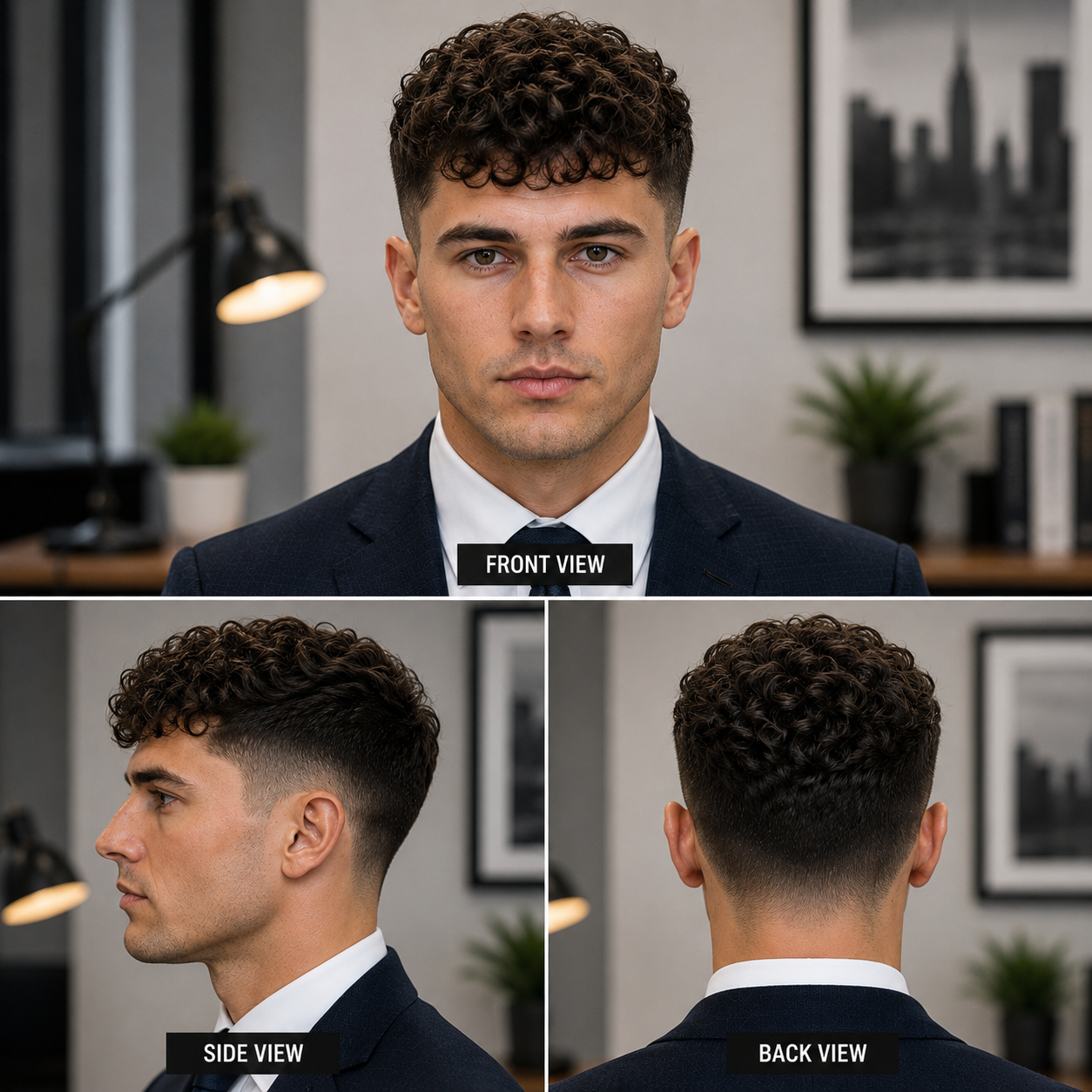
    Can men have long hair in a professional setting?

    Yes, in many professional environments. Tech, creative, education, and media industries routinely accept men with longer hair, particularly when it is kept clean and styled. A neat man bun is acceptable in most of these settings. Conservative finance, law, and government have stricter expectations. The key in all cases is intentional grooming. Looking shaped and clean always reads more professionally than looking neglected.

    What hairstyle makes a man look more professional?

    Any short, clean cut with defined edges and consistent upkeep will make a man look more professional. The side part, textured crop, and business taper are the strongest choices. Equally important: a well-maintained neckline cleaned up every two to three weeks, product that holds without looking greasy, and regular barber visits. Grooming consistency signals reliability, which is ultimately what professional communicates.

    How often should professional men get haircuts?

    For short cuts with fades or tapers, every two to three weeks keeps the neckline and fade looking sharp. Medium-length styles can go three to four weeks between visits. Longer styles typically need attention every six to eight weeks to prevent the ends from looking ragged. If you have an important meeting or interview coming up, schedule your cut about five to seven days beforehand so the style has time to settle.

  • 20 Best Teen Hairstyles for Boys in 2026: The Complete Haircut Guide

    20 Best Teen Hairstyles for Boys in 2026: The Complete Haircut Guide

    Best Teen Hairstyles for Boys 2026

    Teen hairstyles for boys in 2026 cover more ground than ever. From barbershop classics reinvented for a new generation to social-media-driven looks that change season by season, finding the right cut means balancing personal style, school dress codes, face shape, and the amount of time a teenager will actually spend styling in the morning. This guide cuts through the noise with 20 proven styles, real face shape guidance, and exactly what to say at the barber.

    The best teen boy haircuts share a few qualities: they look intentional without requiring professional-level styling effort, they work across a range of school and social environments, and they suit the natural hair texture of the teenager wearing them. The styles dominating social media and barbershops right now lean textured, slightly dishevelled, and confident, far from the slicked-back formality of previous generations.

    Teen Haircut Quick-Reference Chart

    StyleHair LengthStyling TimeDifficultyBest For
    Textured CropShort2 minEasyAll-round versatility
    Skin FadeShort to Medium0 to 2 minEasyLow maintenance
    Curtain BangsMedium5 minMediumTrendy, social-media appeal
    Buzz CutVery Short0 minEasyZero-effort
    Fade with DesignShort0 minEasyCreative expression
    Edgar CutShort2 minEasyBold, modern edge
    Curly High Top FadeShort to Medium5 minMediumCurly and coily hair
    Shaggy Mid-LengthMedium to Long5 minMediumRelaxed, indie style
    Man BunLong2 minEasyLong hair management
    UndercutMedium5 minMediumContrast and structure
    Faux HawkShort to Medium5 minMediumBold without full mohawk
    Side Swept UndercutMedium3 minEasy to MediumSwept dramatic look
    High Fade with Top DesignShort0 minEasyStatement look
    French CropShort2 minEasyClean, school-safe
    Box Braids or CornrowsMedium to LongLow dailyMediumProtective, low-daily maintenance
    Wavy Surfer HairMedium to Long5 minEasyNatural wavy texture
    Slicked-Back UndercutMedium3 minEasySmart casual
    High and TightVery Short0 minEasyAthletic, clean
    Wolf CutMedium to Long5 to 10 minMediumTrendy layered look
    Ivy League or Side PartShort to Medium3 minEasySmart, school formal

    The 20 Best Teen Hairstyles for Boys in 2026

    1. Textured Crop

    Textured crop with skin fade teen boy haircut

    The textured crop is the most requested teen boy haircut in 2026. Short on the sides with a slightly longer, choppy, textured top, it looks deliberate without requiring significant effort. Matte clay or texturising paste gives the top its signature messy-but-intentional look in about two minutes of styling. It works for straight, wavy, and slightly curly hair, and is school-safe enough for virtually every setting while still looking sharp for social occasions. Suits oval, square, and heart face shapes best.

    2. Skin Fade

    Low taper fade with natural texture teen boy haircut

    The skin fade takes the sides down to skin level and blends into slightly longer hair on top. For teens, the top can be styled any way: slicked back, forward, or left completely natural. It is a barbershop staple that looks fresh for two to three weeks before needing a touch-up, and zero daily styling is required once it is done. Mid and high skin fades work best for round faces; low fades suit square faces. This is the most common foundation cut for most other styles on this list.

    3. Curtain Bangs and Middle Part

    Curtain fringe middle part teen boy haircut

    Curtain bangs, medium-length hair parted in the middle and falling to either side of the face, are the dominant teen trend of the mid-2020s. This look suits teens with straight to wavy hair and oval, heart, or diamond face shapes. A blow dryer and round brush set the curtain shape in five minutes. Without heat, natural drying with a small amount of leave-in creates a more relaxed version. School-appropriate and highly social-media visible, it needs trimming every five to six weeks to maintain the frame around the face.

    4. Buzz Cut

    Buzz cut with skin fade teen boy haircut

    Zero effort, zero product, zero styling time, and still one of the sharpest teen looks available. The buzz cut cuts all hair to a uniform length. For teens who do sport, swim, or simply do not want to think about hair, this is the optimal solution. Grade 2 or 3 is the most flattering length for most face types. Suits square and oval face shapes best and can be maintained at home with clippers every two weeks. It also pairs well with any facial hair teens may be developing.

    5. Edgar Cut

    Edgar cut with line up teen boy haircut

    The Edgar cut features a very short fade with a blunt, horizontal fringe on top, creating a sharp, geometric look. It is bold, distinctive, and currently very popular among Hispanic and Latino teen communities, though worn widely across all backgrounds. Matte clay keeps the blunt top flat and defined. The horizontal fringe adds width, which suits square and round face shapes particularly well. School dress codes rarely block this cut, though the blunt line needs retrimming every three to four weeks to stay sharp.

    6. Curly High Top Fade

    Curly top skin fade teen boy haircut

    For teens with naturally curly or coily hair, the high top fade lets curls flourish on top while fading the sides clean. The contrast between the voluminous curls and the tight sides is visually striking and celebrates natural texture rather than fighting it. A curl cream or defining gel keeps the top curls shaped and frizz-free. Oval and round face shapes benefit most from the added volume at the top. Sides need touching up every two to three weeks. This is one of the most stylish looks for Black teen boys in particular.

    7. French Crop

    French crop with blunt fringe teen boy haircut

    A short, textured top with a slightly forward-falling, choppy fringe, the French crop is clean, school-safe, and genuinely stylish. It suits a wide range of face shapes and hair textures, and matte paste or clay gives the top definition in under two minutes. The fringe sits forward naturally, creating a visual hairline that suits teens with slightly higher foreheads. Barber attention every four to five weeks keeps it in shape. One of the most reliably smart-looking options across all settings and occasions.

    8. Wolf Cut

    Wolf cut teen boy haircut

    The wolf cut is medium-to-long layered hair with a choppy, slightly mullet-influenced shape: volume at the crown, layers falling through the mid-lengths, and lighter ends. It is currently one of the most searched haircuts for teen boys across all social platforms. It suits teens with naturally wavy or slightly curly hair, as the texture brings the layers to life. Sea salt spray and a diffuser create the finish without heat damage. Heart and oval face shapes carry it best.

    9. Shaggy Mid-Length

    Long layered shag bro flow teen boy haircut

    Loosely layered, mid-length hair with a natural, undone texture, this look is effortlessly cool and completely low-effort once grown in. Sea salt spray and air drying is the entire styling routine. It suits teens who prefer a relaxed, indie aesthetic and works best on straight to wavy hair textures. Oval and rectangle face shapes suit it most naturally. Needs a trim every eight weeks to prevent the shape from becoming too heavy at the bottom. For teens growing it out, the shaggy mid-length is the best style to ride out the awkward in-between phase.

    10. Undercut

    Teen boy undercut layered hairstyle

    A sharp undercut, shaved or closely clipped sides with longer hair left on top, creates strong visual contrast. The top can be styled forward, backward, to the side, or left natural, making this a highly adaptable base cut that suits multiple styling directions. Matte pomade or wax gives control. Sides need a touch-up every two to three weeks. Diamond and oval face shapes benefit most from the sharp contrast. School-appropriate in most dress codes.

    11. Side Swept Undercut

    Side part hard line teen boy haircut

    An undercut with the top hair swept dramatically to one side, longer on top than a standard undercut, creating a sweeping, asymmetric effect. This suits teens who want a more dramatic look without going full mohawk. A strong-hold matte pomade keeps the sweep in place all day. Heart and oval face shapes carry it well. Barber visit every three weeks for the fade. This look photographs extremely well and is a consistent social-media favourite for good reason.

    12. Faux Hawk

    Faux hawk with shadow fade teen boy haircut

    A faux hawk lifts the central strip of hair upward while keeping faded sides, giving the visual impact of a mohawk without the full commitment. Strong-hold clay or gel creates the central ridge. The height can range from subtle to dramatic. Square and oval face shapes suit it best, as the vertical line enhances the structure. School dress codes may restrict very high versions, but a moderate two-inch-high faux hawk is usually compliant. Weekly at-home styling with clay maintains the shape between barber visits.

    13. Box Braids and Cornrows

    Box braids and cornrows are both protective styles that offer weeks of low daily maintenance once installed by a skilled braider. For teen boys with natural hair, these styles combine genuine style with real practicality. Box braids can be worn at shoulder length or pulled back; cornrows run close to the scalp in straight or geometric patterns. Both suit oval and diamond face shapes particularly well. Light oil every few days keeps the scalp comfortable. Installation takes two to four hours and results last four to six weeks.

    14. Wavy Surfer Hair

    Medium-to-long, natural wavy hair worn loosely, the quintessential beach-inspired teen look. Sea salt spray and air drying is the entire routine: no heat, no product beyond spray, no barber visit more than every eight weeks. This suits teens with naturally wavy or lightly curly hair. Oval and rectangle face shapes carry it most naturally. The appeal of this style is its effortless, unhurried quality, and it looks best when not over-styled or over-thought.

    15. High and Tight

    A military-inspired cut that shaves the sides very high, often up to the temples, with a short, flat top. Zero styling required. Extremely low maintenance. Perfect for teen boys who play sport, swim, or simply want to spend no time on their hair. Square and oval face shapes suit it best. The sharp edges project confidence and cleanliness. Easy to maintain at home between barber visits with clippers, which makes it one of the most cost-effective styles on this list.

    16. Ivy League and Side Part

    Ivy League crew cut teen boy haircut

    A clean, neat side part with slightly longer hair on top and tapered sides, classic, school-smart, and endlessly appropriate. For teens who need to look polished regularly at school events, job interviews, or family occasions, this delivers every time. A light pomade or matte cream defines the part and keeps the top in place. Rectangle and oval face shapes suit it most naturally. It is the most versatile smart-casual option on this list, working equally well at a job interview and a weekend event.

    17. Slicked-Back Undercut

    An undercut with the top hair slicked straight back using a medium-to-strong pomade: clean, commanding, and effortlessly stylish. It suits teens attending formal events or who prefer a grown-up aesthetic. The shine level of the pomade changes the overall feel: matte is more casual, medium shine is more formal. Oval and rectangle face shapes carry it best. This style needs daily reapplication of product to stay sharp, so it suits teens willing to invest a few minutes each morning.

    18. Man Bun

    For teens growing their hair longer, the man bun is a practical and stylish way to manage mid-to-long hair. A small elastic ties the hair at the crown or nape. It suits teens at the awkward in-between hair growth stage particularly well. Minimal product needed. Oval and diamond face shapes carry the bun shape most naturally. Pairs well with an undercut for a cleaner profile. The teen man bun works best when slightly messier and less structured than the adult version.

    19. High Fade with Top Design

    High fade pompadour teen boy haircut

    A barber-cut design, geometric lines, lightning bolts, stars, or patterns shaved into a high fade. The design is the statement. This suits confident teens who want their haircut to reflect their personality. Designs last two to three weeks before the fade grows out. It is entirely school-safe in most dress code environments since the design sits on the sides rather than the top. Any face shape can carry this, as the design enhances rather than changes the cut’s overall structure.

    20. Burst Fade Mullet

    Burst fade mullet teen boy haircut

    The burst fade mullet is 2026’s most talked-about haircut for teen boys: a rounded burst fade behind each ear that merges into a longer, textured back section, creating a modern take on the mullet that is bold without being extreme. The top is kept short and textured, the sides burst-faded to skin, and the back left noticeably longer with layers. Matte clay on top, sea salt spray on the back, finished in five minutes. Square and oval face shapes carry it best. This cut rotates through barbershop request lists quickly because it looks very different depending on how the barber executes the burst and the back length.

    Face Shape Guide for Teen Boys

    Face ShapeBest Teen HaircutsWhy It Works
    OvalAny style, most versatileBalanced proportions suit all cuts
    SquareTextured crop, faux hawk, curly top fadeSoft texture and height balance the jaw
    RoundFaux hawk, high top fade, side swept undercutVertical lines and height elongate the face
    Rectangle or OblongShaggy mid-length, wavy surfer, curtain bangsWidth at the sides reduces face length
    DiamondUndercut, side part, man bunWidth at jaw and crown balances cheekbones
    HeartWolf cut, French crop, Edgar cutWidth at chin balances the wide forehead

    What to Tell the Barber

    Messy quiff teen boy haircut

    Always bring a photo: barbers read pictures faster than descriptions every time, and showing the exact look you want eliminates misunderstandings before the first clipper stroke. When you sit down, name the fade height specifically, whether that is low, mid, high, or skin fade, since these terms mean very different things and affect the entire look. Specify the top length in inches or a guard number. Mention if the school has a dress code that restricts certain styles, so the barber can work within those limits. Tell them your hair texture, whether straight, wavy, curly, or coily, so the cut is designed around how your hair actually behaves. And before you leave, ask for a product recommendation for your specific hair type, since the right product makes the difference between a cut that looks great for a week and one that lasts until the next visit.

    Frequently Asked Questions

    What is the most popular teen boy haircut in 2026?

    The textured crop, curtain bangs, and skin fade are the three most worn teen boy haircuts in 2026. The wolf cut and Edgar cut are also seeing strong growth in popularity on social platforms. The textured crop remains the single most requested cut across the widest range of teen demographics, particularly because it works on most hair textures without requiring professional-level product application.

    What haircut suits a teenage boy with a round face?

    The faux hawk, high top fade, and high and tight all add vertical emphasis that elongates a round face. The key principle: avoid styles that add width at the sides without height on top. Any cut with a fade and some top height will work well for round faces, as the vertical line created by height is what balances the circular proportions.

    How often should a teenage boy get a haircut?

    Every four to six weeks for most short to medium styles. Longer styles like the wolf cut, shaggy mid-length, and surfer hair can go eight to ten weeks between cuts. Fades look best when touched up every two to three weeks, which many teen boys do partially at home with clippers. A monthly barber visit maintains the overall shape while home trims handle the sides.

    What is the easiest teen haircut to style?

    The buzz cut and high and tight require zero styling. The textured crop needs two minutes with matte clay. The wavy surfer look needs only sea salt spray and air drying. For teens who want style with zero morning effort, any uniform short cut or grown-out natural texture style is the answer. The textured crop is the best balance point: it looks styled but takes almost no time.

    What teen hairstyles work for curly hair?

    The curly high top fade, the wolf cut, the shaggy mid-length, and box braids all work exceptionally well for curly-haired teen boys. The key is finding a barber who understands curly hair specifically, since cutting curly hair dry or with the curl’s natural shape rather than straight gives far better results. Curl cream and a diffuser are the two most useful styling tools for curly teen hair.

    Final Thoughts

    The best teen hairstyle is the one a teenager will actually maintain and feel confident in. Use the face shape guide to narrow down what will work structurally, then choose from those options based on the daily effort the teen is willing to invest. Any of the 20 styles above delivers a sharp, age-appropriate look for 2026. For more style inspiration, see our guides to Black boy haircuts, professional haircuts for men, Asian hairstyles for men, and our full men’s haircuts guide.

  • Latest Beard Styles for Men (2026): The Complete Guide to Choosing, Shaping and Owning Your Look

    Latest Beard Styles for Men (2026): The Complete Guide to Choosing, Shaping and Owning Your Look

    The latest beard styles for men in 2026 cover a wider range than ever, from clean sculpted stubble to full Viking territory. But knowing which trend is currently dominating barbershop conversations is only half the picture. The other half is knowing which style actually works for your face, your hair texture, and the life you live. This guide gives you both.

    Below you will find a breakdown of every major beard style category trending right now, with a face shape guide, maintenance chart, grooming tips, and a detailed FAQ covering everything you need to choose, shape, and own your look in 2026.

    What’s Trending in Beard Styles for 2026

    Face shape beard style chart for men 2026

    Several clear directions are dominating men’s grooming in 2026. Defined, sculpted stubble remains the most popular choice for professionals. The full beard with hard lines, blended at the cheeks with a sharp neckline, has surpassed the natural wild beard look. Longer styles are growing but are increasingly paired with intentional shaping at the cheeks and jaw. The salt-and-pepper beard continues to gain cultural cachet as men embrace grey rather than fighting it.

    The beard-and-mustache combination is also seeing renewed interest, with detailed mustache styling including handlebar, chevron, and pencil being treated as a separate art form again. Beard fading at the barbershop has become a standard service, blending the beard into a skin fade for a sculpted, modern finish.

    The Complete Beard Style Guide by Length

    Stubble (1 to 3mm)

    Stubble remains the most versatile and widely worn beard style in 2026. At 1 to 3mm, it creates definition at the jawline without significant maintenance commitment. It suits almost every face shape and works across virtually all professional environments. Light stubble at 1mm gives a rugged shadow effect. Heavy stubble at 3mm looks more deliberately styled. The key is consistent trimming since stubble requires more frequent upkeep than longer styles. Use an adjustable trimmer every two to three days. A sharp neckline completes the look instantly. For more detail, see our short beard styles guide.

    Short Beard (5 to 10mm)

    The short beard sits between stubble and a full beard, enough length to show shape and intention without requiring significant growth time. This length suits most face shapes and is the most office-safe beard option available. At this length, face shape begins to matter more: the boxed beard suits square faces, the rounded short beard softens rectangular faces. Trim every four to seven days with a fixed-length guard. Apply a small amount of beard oil daily to prevent itching and keep skin healthy. This is the ideal starting point for men growing toward a longer style.

    The Boxed Beard

    Barber beard lineup and trim for boxed beard style

    The boxed beard has clean, horizontal lines at the cheeks and a sharp, horizontal neckline, creating a rectangular, structured shape. It is one of the most popular professional beard styles of 2026. The structured lines make the jaw appear broader and stronger, particularly on oval and round faces. The neckline should sit one to two finger-widths above the Adam’s apple. Cheek lines are either natural or given a subtle trim for cleanliness. Beard fading at the barbershop gives the finest finish.

    The Circle Beard

    The circle beard connects a neatly trimmed mustache with a rounded chin patch, creating a circular frame around the mouth. It is clean, symmetrical, and works in professional settings where a full beard would not. It suits oval and diamond face shapes best since the circular shape creates symmetry where these faces already have good proportions. The key is keeping the connection between mustache and chin patch seamless and the outer edges clean. Weekly trimming with a detail trimmer maintains the shape easily.

    The Goatee

    The classic goatee, hair only on the chin with no cheek coverage, experienced a major revival in the early 2020s and remains a stylish choice in 2026. Modern goatees are worn tighter and cleaner than the late-90s version. They suit round and oblong faces particularly well, adding vertical emphasis at the chin. The extended goatee adds a soul patch and extends further down the chin. All goatee styles require precise daily edging to maintain clean borders.

    The Van Dyke

    The Van Dyke combines a pointed goatee with a disconnected mustache, where the two elements do not connect at the corners of the mouth. It creates a distinctive, artistic look that suits confident men who want something more than the standard styles. It works best on oval and diamond face shapes. The goatee is typically trimmed to a point. Modern Van Dykes are worn tighter than the traditional version. This style requires significant daily attention to keep the disconnected mustache from merging with the chin section.

    The Full Beard

    The full beard covers cheeks, jaw, and mustache with connected, uniform coverage. It is the most versatile long style, and length can range from 1 inch to 6-plus inches. Modern full beards in 2026 are worn with deliberately shaped cheek lines and a defined neckline even at longer lengths. The wild look has given way to intentional grooming at greater length. Beard oil daily and balm for styling are essential. The full beard suits oval, square, and diamond face shapes best. For complete guidance, see our beard styles for men guide.

    The Garibaldi Beard

    The Garibaldi is a full, wide beard with a rounded bottom, typically four to six inches in length. It has a natural, unhurried look but requires maintenance to keep the rounded shape intact. It is one of the best long beard options for rectangular face shapes as the width balances a long jaw. Weekly brushing with a boar bristle brush trains the hair in the right direction. Beard balm keeps the shape. Trim the bottom monthly to maintain the rounded line and prevent split ends.

    The Ducktail Beard

    The ducktail is a full beard tapered to a subtle central point at the chin, resembling a duck’s tail when viewed from the side. It is one of the most stylish long beard options for men who want length with visible intentionality. The sides are trimmed shorter than the center, creating the pointed effect. It suits oval and oblong faces well. Monthly barbershop visits to maintain the taper are strongly recommended. Beard oil and a comb keep the daily texture in check. See our long beard styles guide for more options like this.

    The Verdi Beard

    The Verdi is a rounded full beard with a styled, prominent mustache inspired by the Italian opera composer. It strikes a balance between distinguished and eccentric. The mustache is typically curled or shaped with wax, extending slightly past the corners of the mouth. The beard is kept clean and rounded. This suits oval and diamond face shapes well. It is one of the most distinctive beard styles a man can wear in 2026 and works particularly well with salt-and-pepper colouring.

    The Bandholz Beard

    The Bandholz is a year-or-more long full beard allowed to grow naturally, with grooming focused on oil, conditioning, and minimal trimming. It is the beard that defined the craft-grooming movement. At full growth, it reaches chest level. It suits men with oval or rectangular face shapes and naturally thick, even hair growth. Daily beard oil, weekly washing, and boar bristle brushing are non-negotiable at this length. Trimming the neckline monthly keeps it from looking unkempt while still honoring the natural growth.

    The Corporate Beard

    A clean, well-defined medium beard kept at a professional length, typically half an inch to one inch, with precise cheek lines and a sharp neckline. This is the beard style most accepted across conservative work environments, including banking, law, and corporate management. The sharp neckline is non-negotiable. Weekly trims keep everything clean. Beard oil prevents skin irritation under the collar. It suits square, oval, and rectangle face shapes equally well and reads as polished in almost any setting.

    The Balbo Beard

    The Balbo separates a floating mustache from a chin beard. Unlike the Van Dyke, the chin section is wider and fuller, covering more of the jaw. It suits oval and diamond faces particularly well by adding structure at the jaw. It requires precise daily edging at the cheek and mustache junction. Modern Balbos are worn cleaner and tighter than classic versions. This is a confident style choice for men who want structured facial hair without full cheek coverage.

    The Salt-and-Pepper Beard

    Grey and mixed-colour beards are having their moment in 2026, and rightly so. The salt-and-pepper effect is visually striking, adds perceived authority and distinction, and pairs naturally with almost any haircut. Men who embrace their grey beard rather than dyeing it consistently receive more positive feedback than those who fight the grey. Keep it clean, well-oiled, and shaped. Use a purple-toned beard shampoo to prevent yellowing. This suits all face shapes and all beard lengths. For detailed guidance, see our grey beard styles guide.

    The Mustache as a Solo Style

    The standalone mustache, no beard and just mustache, is experiencing a genuine 2026 revival in certain style communities. The chevron (thick, wide, natural), the handlebar (curled at the ends), and the pencil (thin, precise) are the three most worn. The chevron suits almost every face shape. The handlebar suits oval and diamond faces. The pencil suits oval and oblong faces. All three require daily wax and consistent trimming to look intentional rather than accidental. See our beard and mustache styles guide for more detail.

    Face Shape Guide: Which Beard Style Suits You

    Face ShapeGoalBest Beard StylesAvoid
    OvalAnything works, maintain proportionsFull beard, boxed beard, any lengthExtreme widths that distort balance
    SquareSoften strong jaw anglesRounded full beard, circle beard, GaribaldiVery angular, sharp-edged styles
    RoundAdd length and vertical emphasisGoatee, Van Dyke, ducktail, long beardWide full beards with no length
    Rectangle/OblongAdd width, reduce length appearanceGaribaldi, boxed beard, wide full beardLong pointed beards that extend the face
    DiamondAdd width at jaw to balance cheekbonesFull beard, Balbo, VerdiVery narrow chin patch styles
    HeartAdd width at chin to balance wide foreheadFull beard, Garibaldi, wide goateeThin goatees that narrow the chin further

    Beard Maintenance Guide by Style Length

    Beard oil and balm grooming care routine for men
    StyleTrim FrequencyDaily ProductKey Tool
    Stubble (1 to 3mm)Every 2 to 3 daysStubble balm or noneAdjustable trimmer
    Short beard (5 to 10mm)Every 5 to 7 daysBeard oilTrimmer + detail blade
    Medium beard (1 to 2 inches)Weekly trimBeard oil + balmTrimmer + scissors
    Full beard (2 to 4 inches)Bi-weekly trimBeard oil + balmBoar bristle brush + scissors
    Long beard (4+ inches)Monthly trimBeard oil (daily) + wash (weekly)Brush + wide-tooth comb
    Yeard / BandholzNeckline only monthlyHeavy beard oil + conditionerBoar bristle brush + wide comb

    How to Choose Your Beard Style in 2026

    Start with your face shape since the guide above tells you which styles work for your proportions. Then consider your growth pattern: patchy cheeks suit styles that avoid heavy cheek coverage like the goatee, Van Dyke, and Balbo. Match your workplace expectations since conservative environments require shorter, more defined styles while creative fields allow more freedom. Think honestly about maintenance commitment since stubble needs trimming every two days while a Bandholz needs daily oil and weekly washing. Try growing for two to three months before trimming to your chosen style to get a full picture of your growth pattern. And get professional shaping first from a barber who specialises in beard work to establish the lines you then maintain at home.

    Frequently Asked Questions

    What beard style is most popular in 2026?

    The boxed medium beard, defined stubble, and the full beard with hard lines are the three most requested styles in barbershops in 2026. Stubble remains the most common because of its minimal commitment and universal appeal. Among longer styles, the Garibaldi and ducktail are the strongest-performing options this year.

    How do I know which beard style suits my face shape?

    Use the face shape guide above. The core principle: round faces benefit from vertical emphasis (goatee, long beard); rectangular faces benefit from width (Garibaldi, wide full beard); square faces benefit from rounded shapes that soften the jaw. Oval faces suit almost anything. When in doubt, a full boxed beard at medium length works for every face shape and is the safest starting point.

    What is the easiest beard style to maintain?

    Heavy stubble at 3mm is the easiest to maintain long-term. It requires trimming every three to four days with a fixed-length guard and daily beard oil to prevent skin dryness. No shaping tools needed. A longer full beard, counterintuitively, also requires less frequent trimming than stubble, but the daily conditioning and brushing routine adds time. The hardest styles to maintain are those with precise lines: the Van Dyke, circle beard, and pencil mustache all need daily edging.

    Can beard styles make you look younger or older?

    Yes, significantly. A well-groomed full beard or stubble adds maturity and authority, which men in their 20s often want but men over 50 may want to moderate. For younger-looking results, keep beards short and clean. For a distinguished look, embrace medium to full length with clean lines. Grey beards add distinction at any length. Avoid very long, ungroomed beards regardless of age since these rarely read as youthful or intentional.

    How long does it take to grow a full beard?

    Most men see a recognisable full beard within four to eight weeks. Full thickness and length, enough to properly evaluate shape and density, typically takes three to six months. Terminal length (maximum growth) varies enormously between men, from four inches to twelve or more. Genetics, diet, and testosterone levels all affect growth speed and density. Resist trimming for the first four to six weeks to give your natural growth pattern time to show itself fully.

    What products do I need for a well-groomed beard?

    At minimum: a beard oil (conditions skin and hair daily), a quality trimmer with adjustable guards, and a beard comb. For longer beards add beard balm (holds shape and provides light conditioning), a boar bristle brush (trains growth direction and distributes oil), beard wash for 2 to 3 times per week, and scissors for precision trimming. Avoid regular hair shampoo on the beard since it strips the natural oils that keep facial hair healthy and skin comfortable.

    Final Thoughts

    The best beard style in 2026 is the one that suits your face, fits your lifestyle, and that you will actually maintain consistently. Trends matter less than fit. Use the face shape guide, pick a style whose maintenance you can realistically commit to, and get a professional to establish the lines before you take over at home.

    Related reading: Beard Styles for Men · Short Beard Styles · Long Beard Styles · Grey Beard Styles · Beard and Mustache Styles